By using this site, you agree to the Privacy Policy and Terms of Use.
Accept
What's The JamWhat's The Jam
  • Home
  • Latest News
    • UK News
    • World News
  • Super ViralHot
  • Lifestyle
    • Health and Fitness
    • Photography
    • Property
  • Humor
  • Celebrity
  • Weird
  • Videos
  • All Topics
    • Babies and Kids
    • Celebrity
    • Comedy and Humor
    • Documentary and Reportage
    • Fails
    • Health and Fitness
    • Holidays and Travel
    • Influencers and Models
    • Latest Videos
    • Life Hacks
    • Lifestyle
    • Nature and Wildlife
    • Pets and Animals
    • Photography
    • Property
    • Real Life
    • Sport
    • Strange and Bizarre
    • Super Viral
    • UK News
    • World News
Search
  • Health and Fitness
  • Holidays and Travel
  • Nature and Wildlife
  • Pets and Animals
  • Photography
  • Babies and Kids
  • Comedy and Humor
  • Fails
  • Real Life
  • Strange and Bizarre
  • Submit News
  • Customize Interests
  • Bookmarks
  • Newsletter
  • Who Are We
  • Privacy
  • Terms
  • Write For Us
  • Advertise
  • Contact
© 2023 What's The Jam. All Rights Reserved.
Reading: Scientists discover 31 BIZARRE new sea creatures
Share
Notification Show More
Aa
What's The JamWhat's The Jam
Aa
  • News
  • World
  • Viral
  • Funny
  • Weird
  • Celebrity
  • DIY
  • Lifestyle
  • Sport
  • Videos
Search
  • Home
    • News
    • World
    • Super Viral
    • Videos
  • All Topics
    • Babies and Kids
    • Celebrity
    • Comedy and Humor
    • Documentary and Reportage
    • Fails
    • Health and Fitness
    • Holidays and Travel
    • Influencers and Models
    • Life Hacks
    • Lifestyle
    • Nature and Wildlife
    • Pets and Animals
    • Photography
    • Property
    • Real Life
    • Sport
    • Strange and Bizarre
  • Quick Links
    • Customize Interests
    • Bookmarks
    • Privacy Policy
    • Terms of use
    • Write For Us
    • Advertise
    • Contact
Have an existing account? Sign In
Follow US
  • Privacy
  • Terms
  • Write For Us
  • Advertise
  • Contact
© 2023 What's The Jam. All Rights Reserved.
Scientists discovered 31 new marine species in just two weeks while exploring the ocean's mysterious midwater zone off Brazil - including a pelagic octopus feasting on a red jellyfish.
World News

Scientists discover 31 BIZARRE new sea creatures

Will Millar
Last updated: 2026/06/17 at 12:28 PM
Will Millar
Share
8 Min Read
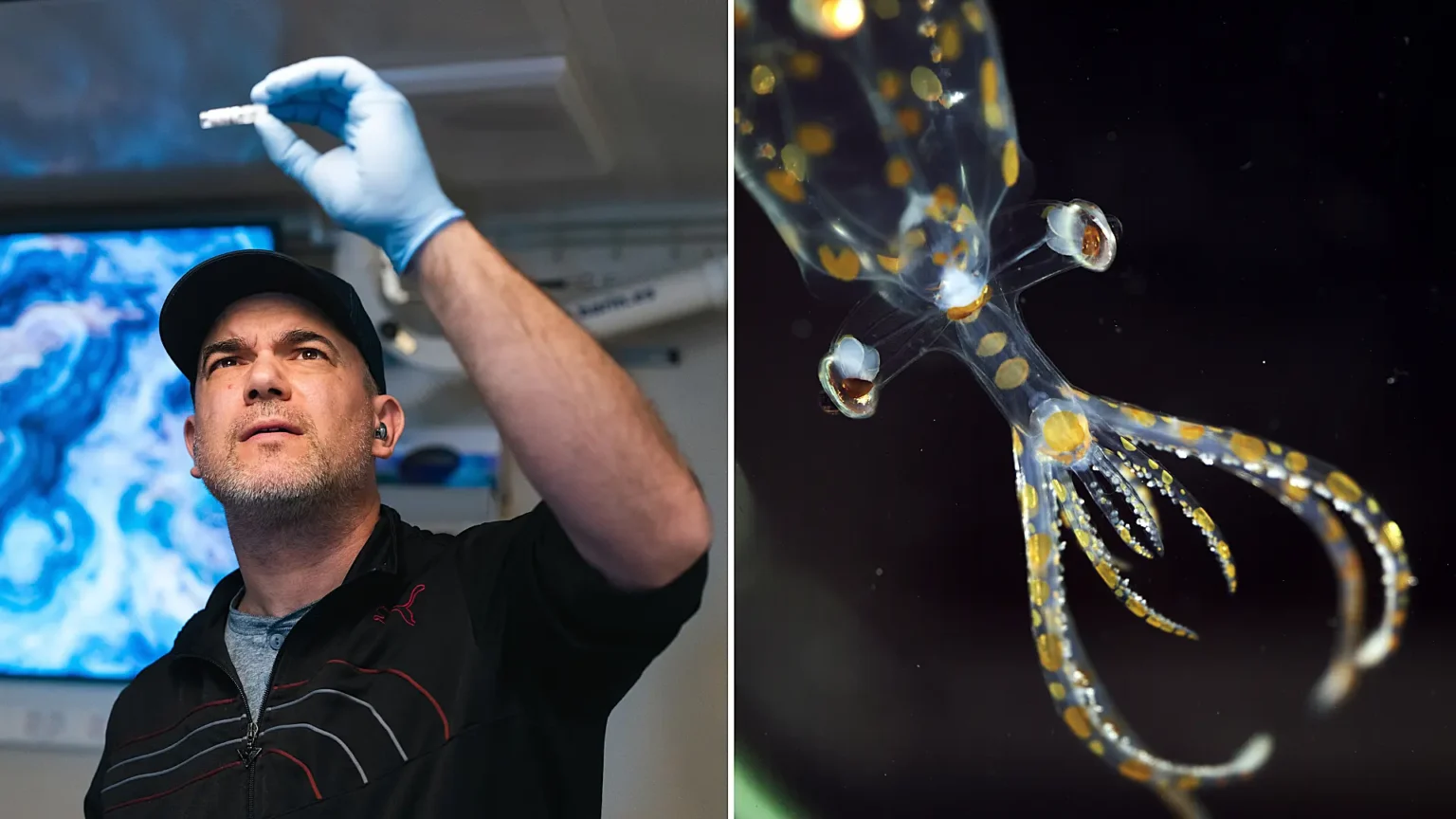
Principal Investigator Dr. John Burns (Bigelow Laboratory for Ocean Sciences) examines a sample, which will be used for his genetic sequencing work in the main lab of R/V Falkor (too). In tandem with high-resolution imagery gathered at depth, the team sequenced genomes from collected specimens on board the vessel, enabling them to rapidly identify new species.. (Jam Press/Alex Ingle/Schmidt Ocean Institute)
SHARE

Scientists have discovered 31 new marine species in just two weeks after exploring one of the most mysterious parts of the ocean.

The incredible finds were made during an expedition to international waters off the coast of Brazil, where researchers investigated the vast “midwater” zone – a little-understood region between the sunlit surface and the deep seafloor.

Despite being the largest habitable ecosystem on Earth, the midwater remains one of the least explored places on the planet.

READ MORE: Religious statues covered up after botched restoration slammed by locals

- Advertisement -

An international team working aboard the research vessel Falkor (too) uncovered dozens of previously unknown creatures using cutting-edge imaging technology and onboard DNA analysis, as reported by creatorzine.com.

The newly discovered species include a crustacean related to crabs and lobsters, a fast-moving gossamer worm, nine jellyfish, seven siphonophores, seven comb jellies, four larvaceans and two giant single-celled organisms known as rhizarians.
Scientists discovered 31 new marine species in just two weeks while exploring the ocean's mysterious midwater zone off Brazil - including a pelagic octopus feasting on a red jellyfish.
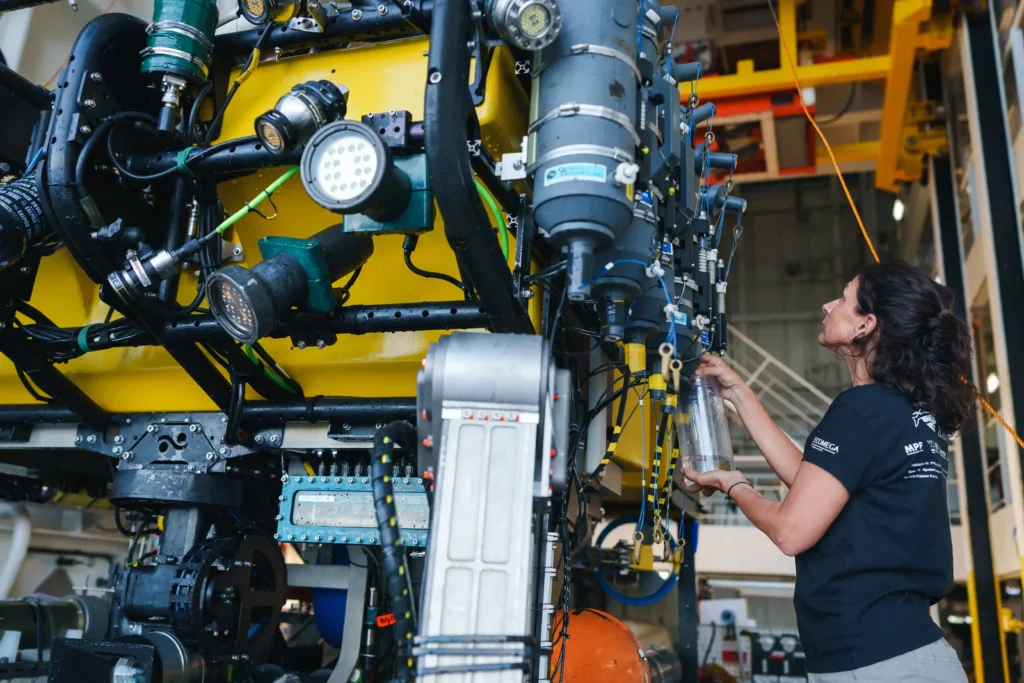
Dr. Silvina Botta (Universidade Federal do Rio Grande in Brazil) retrieves water samples from ROV SuBastian for stable isotope analysis — a chemical way to study how carbon moves through the ocean. Expedition researchers also collected biological samples, which were used for genetic sequencing and contributed to the Museu de Zoologia da Universidade de São Paulo, allowing scientists from anywhere to study them further.

Among the strangest finds was a pelagic octopus spotted feasting on a bright red jellyfish around 800 metres below the surface.

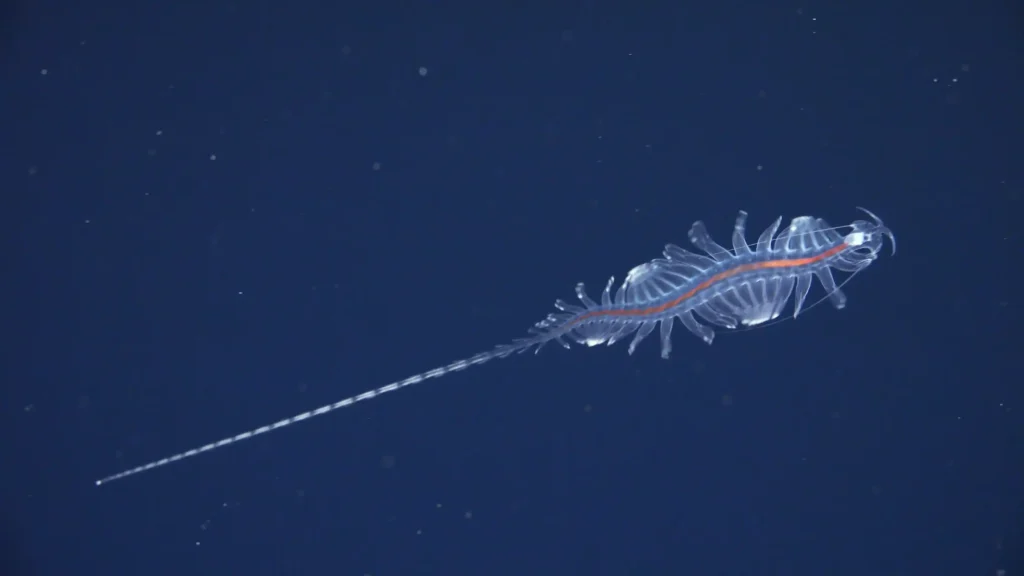
Researchers also identified a previously unknown species of gossamer worm – a transparent creature that appeared capable of moving much faster than scientists expected.

The expedition revealed far more marine life than experts had anticipated.

- Advertisement -

Scientists also encountered glass squid and a host of other rarely seen deep-sea creatures.

Using advanced underwater cameras and onboard DNA sequencing technology, researchers were able to identify and confirm 31 species during the voyage itself – a process that would once have taken months or even years.
Scientists discovered 31 new marine species in just two weeks while exploring the ocean's mysterious midwater zone off Brazil - including a pelagic octopus feasting on a red jellyfish.
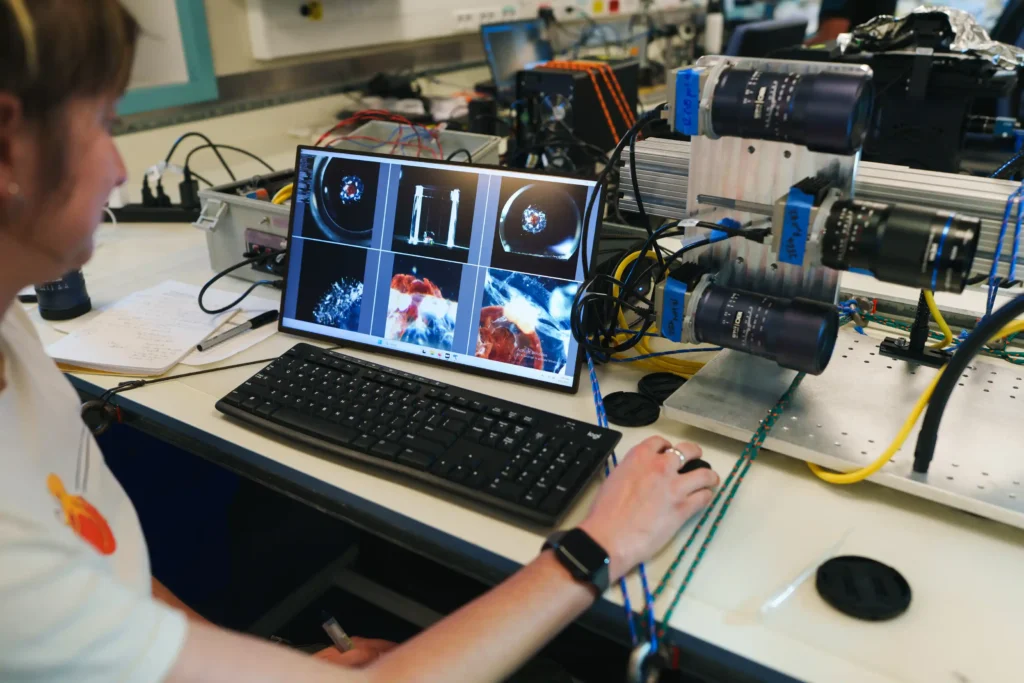
Research Engineering Technician Emily Clark (MBARI, Monterey Bay Aquarium Research Institute) uses a custom-built camera array to photograph midwater creatures in great detail from multiple angles. The science team used cutting-edge technology both underwater at depth and on the ship, including advanced microscopes, DNA sequencing, stable isotope analysis, and multiple imaging systems.

Experts say formally identifying a new species can often take decades.

- Advertisement -

But the combination of cutting-edge technology and specialist knowledge allowed many of the discoveries to be verified within days.

The team used a range of sophisticated equipment, including laser-based imaging systems capable of creating detailed 3D scans of delicate sea creatures without harming them.

Many midwater animals have soft, jelly-like bodies that are easily destroyed by traditional sampling methods, making them notoriously difficult to study.

Researchers also tested experimental technology, including a virtual reality observation chamber and a specialised microscope known as a “gravity machine”, which allows tiny organisms to be studied in conditions similar to their natural environment.
Scientists discovered 31 new marine species in just two weeks while exploring the ocean's mysterious midwater zone off Brazil - including a pelagic octopus feasting on a red jellyfish.
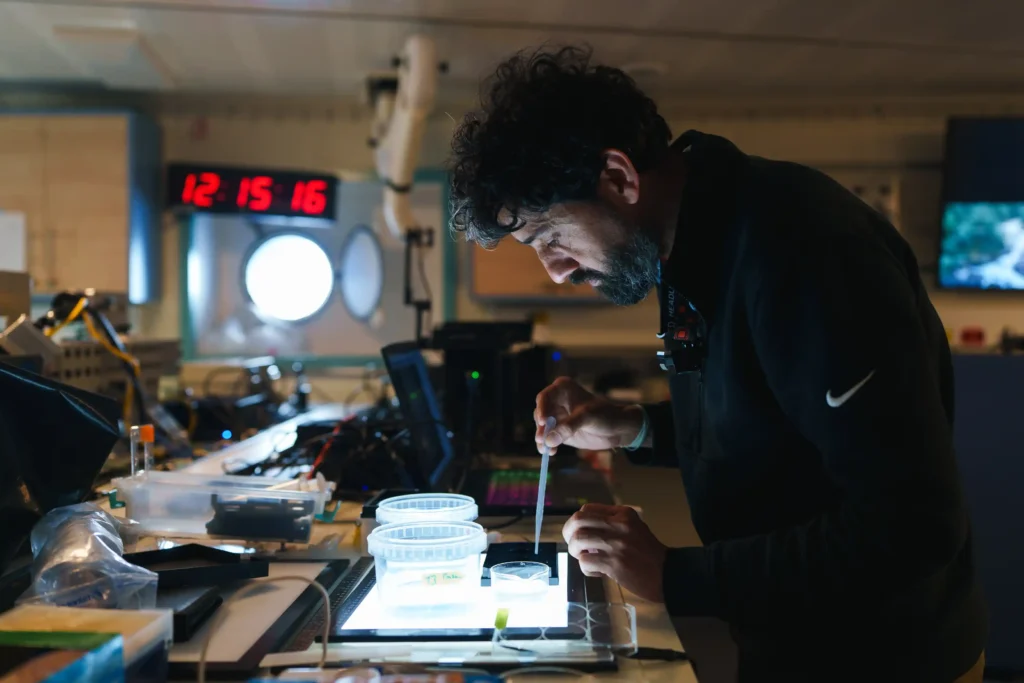
Dr. Manu Prakash (Stanford University) at work in the Main Lab on R/V Falkor (too). Prakash’s lab developed a confocal microscope that was used extensively during the expedition to image the microscopic 3D structures of tiny live animals. The advanced imaging device provides image data to map out the complex, three-dimensional internal structures of tiny sea creatures. (Jam Press/Alex Ingle/Schmidt Ocean Institute)

In another breakthrough, the team achieved what they believe is a world first by capturing three-dimensional images of living cellular structures inside a giant single-celled organism known as a protist.

Scientists believe the achievement could unlock new ways of understanding how deep-sea life survives under extreme pressure and permanent darkness.

Alongside the high-resolution images, genomes from collected specimens were sequenced onboard the vessel, helping researchers rapidly determine which creatures were completely new to science.

The expedition involved scientists from organisations including the Smithsonian National Museum of Natural History, Bigelow Laboratory for Ocean Sciences, Stanford University and Monterey Bay Aquarium Research Institute.

(Jam Press/Schmidt Ocean institute)

Researchers say the discoveries are a reminder of just how little is known about the oceans, despite them covering more than 70% of Earth’s surface.

They believe countless more species could still be waiting to be discovered in the tropical South Atlantic – one of the least-studied parts of the world’s oceans.

Scientists hope the findings will improve our understanding of marine biodiversity and the vital role deep-sea ecosystems play in regulating the Earth’s climate.


READ MORE: Vintage Mercedes-Benz owned by Hollywood power couple Tom Hanks and Rita Wilson goes under the hammer for £315,000

Scientists discovered 31 new marine species in just two weeks while exploring the ocean's mysterious midwater zone off Brazil - including a pelagic octopus feasting on a red jellyfish.
Dr. Dhugal Lindsay of JAMSTEC (Japan Agency for Marine-Earth Science and Technology) installs a shadowgraph camera on ROV SuBastian. This imaging system collects detailed imagery of organisms as they’re collected, capturing the shadows cast by an object to reveal internal and external structures of transparent organisms that might not otherwise be apparent.
Scientists discovered 31 new marine species in just two weeks while exploring the ocean's mysterious midwater zone off Brazil - including a pelagic octopus feasting on a red jellyfish.
Genomic Technician Kei Chloe Tan (Tohoku University in Sendai, Japan) logs midwater sightings during dives with the remotely operated vehicle (ROV) SuBastian. Inside the control room of an oceanographic research vessel, a team of pilots, scientists, and technicians works to maneuver the ROV and gather data. (Jam Press/Alex Ingle/Schmidt Ocean Institute)
Scientists discovered 31 new marine species in just two weeks while exploring the ocean's mysterious midwater zone off Brazil - including a pelagic octopus feasting on a red jellyfish.
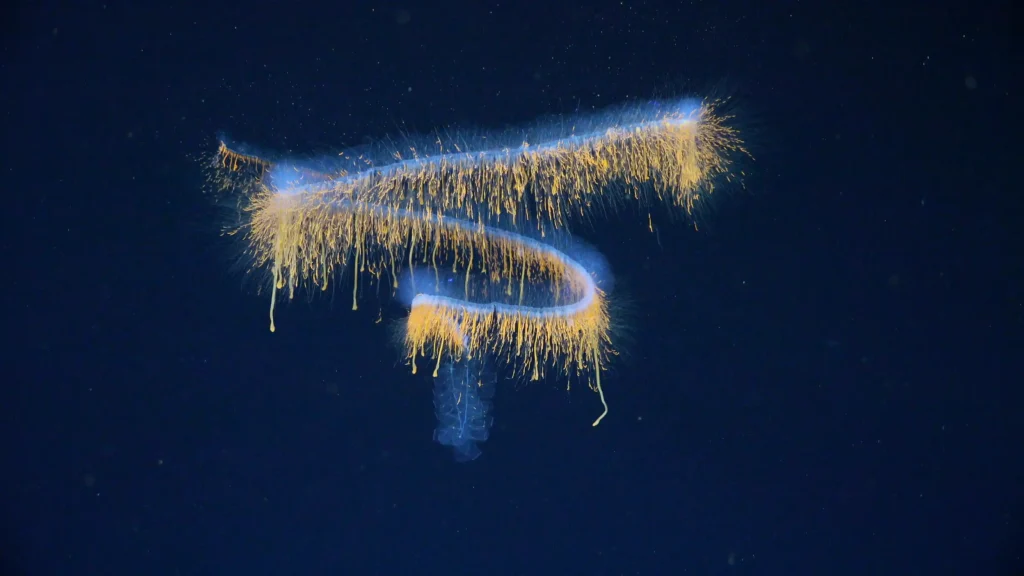
The team collected footage of this siphonophore at 552 meters depth. The imaging systems tested on R/V Falkor (too) allowed researchers to create millimeter-scale, 3D renderings of the creature in its natural habitat. Most species identifications take place ashore, using samples or small pieces, but these systems allow scientists to see and study the entire animal as it lives in the water. Based on images and measurements collected at sea, Dr. Dhugal Lindsay of JAMSTEC (Japan Agency for Marine-Earth Science and Technology) is confident that this animal belongs to an undescribed genus, perhaps even a new family of physonect siphonophores. Based on the detailed anatomical and genetic data collected in the water and on board, scientists will be able to compare this animal to those collected elsewhere around the globe and give this physonect a name. (Jam Press/ROV SuBastian/Schmidt Ocean Institute)
Scientists discovered 31 new marine species in just two weeks while exploring the ocean's mysterious midwater zone off Brazil - including a pelagic octopus feasting on a red jellyfish.
This is a new species from the genus Tomopteris, commonly known as gossamer worms. Tomopterids spend their entire lives in the water column, living just below the surface to over 4000 meters. Little is known about their lives despite prior studies of their unusual, brilliant yellow bioluminescence. The expedition science team tested new technology that provides scientists with new, non-invasive ways to study these remarkable animals. (Jam Press/ROV SuBastian/Schmidt Ocean Institute)

Have a story to tell? Hello@whatsthejam.com
TAGGED: animals, Brazil, discovered, news, Science, shocking, Video

Sign Up For Daily Newsletter

Be keep up! Get the latest breaking news delivered straight to your inbox.
[mc4wp_form]
By signing up, you agree to our Terms of Use and acknowledge the data practices in our Privacy Policy. You may unsubscribe at any time.
Share This Article
Facebook Twitter Copy Link Print
Share
What do you think?
Love0
Sad0
Happy0
Sleepy0
Angry0
Dead0
Wink0
Previous Article A family who moved to Dubai for a fresh start were stranded in 40C heat with three children and 10 suitcases after being conned out of thousands by property scammers. Family with three kids arrive to find new home abroad is a SCAM
Next Article A humanoid robot was filmed on its knees begging for cash on a street in China, holding a donation bowl and QR code with a sign saying it had no money to recharge. Bizarre moment ROBOT begs for cash in street
Leave a comment Leave a comment

Leave a Reply Cancel reply

Your email address will not be published. Required fields are marked *

Stay Connected

235.3k Followers Like
69.1k Followers Follow
11.6k Followers Pin
56.4k Followers Follow
136k Subscribers Subscribe
4.4k Followers Follow
- Advertisement -
Ad imageAd image

Latest News

Football mad Brit uses bangers and mash to predict World Cup results
Sport 17 June 2026
KFC launches its biggest-ever boneless menu with football-themed buckets, 27 pieces of chicken, new dipping sauces and limited-time World Cup deals.
KFC launches biggest-ever boneless menu shake-up including football-themed feast
UK News 17 June 2026
ASDA extends delivery hours until midnight at selected stores during the World Cup, offering late-night grocery deliveries, pizza deals, snacks and drinks.
ASDA extends delivery hours as supermarkets battle to cash in on World Cup frenzy
UK News 17 June 2026
A British trad wife says she became a "high tier" spouse by never arguing with her husband - and now charges up to £25,000 to teach other women how to do the same.
‘I’m a high tier wife and I teach other women to be the same – I never argue with my husband’ 
Real Life 17 June 2026

You Might also Like

Sport

Football mad Brit uses bangers and mash to predict World Cup results

17 June 2026
KFC launches its biggest-ever boneless menu with football-themed buckets, 27 pieces of chicken, new dipping sauces and limited-time World Cup deals.
UK News

KFC launches biggest-ever boneless menu shake-up including football-themed feast

17 June 2026
ASDA extends delivery hours until midnight at selected stores during the World Cup, offering late-night grocery deliveries, pizza deals, snacks and drinks.
UK News

ASDA extends delivery hours as supermarkets battle to cash in on World Cup frenzy

17 June 2026
A British trad wife says she became a "high tier" spouse by never arguing with her husband - and now charges up to £25,000 to teach other women how to do the same.
Real Life

‘I’m a high tier wife and I teach other women to be the same – I never argue with my husband’ 

17 June 2026
A rescue schnauzer believed to have Britain's longest eyelashes is searching for a forever home after being saved from a heartbreaking start - her stunning lashes have already caused a stir.
Pets and Animals

Rescue dog with Britain’s longest eyelashes searches for paw-fect forever home

17 June 2026
Waitrose is the first UK supermarket to sell British-grown samphire all year round - using glasshouse tech to break the salty sea vegetable's traditional 12-week season.
UK News

Waitrose becomes first UK supermarket to sell British-grown vegetable all year round

17 June 2026
A rare bubblegum-pink grasshopper has been spotted in a Somerset garden - the once-in-a-lifetime find is caused by a genetic mutation that affects just one in 500 grasshoppers.
UK News

Rare pink grasshopper spotted in garden in once-in-a-lifetime find

17 June 2026
A humanoid robot was filmed on its knees begging for cash on a street in China, holding a donation bowl and QR code with a sign saying it had no money to recharge.
World News

Bizarre moment ROBOT begs for cash in street

17 June 2026
//

What’s The Jam is your one stop website for the latest viral and weird news from around the world.

 
Have a story to tell? Hello@whatsthejam.com

Quick Link

  • Customize Interests
  • Bookmarks
  • Write for Us
  • Newsletter
  • About Us

Top Categories

  • UK News
  • World News
  • Latest Videos
  • Lifestyle
  • Super Viral

Sign Up for Our Newsletter

Subscribe to our newsletter to get our newest articles instantly!

[mc4wp_form]

What's The JamWhat's The Jam
Follow US
© 2023 What's The Jam. All Rights Reserved.
Go to mobile version
adbanner
AdBlock Detected
Our site is an advertising supported site. Please whitelist to support our site.
Okay, I'll Whitelist
Welcome Back!

Sign in to your account

Lost your password?