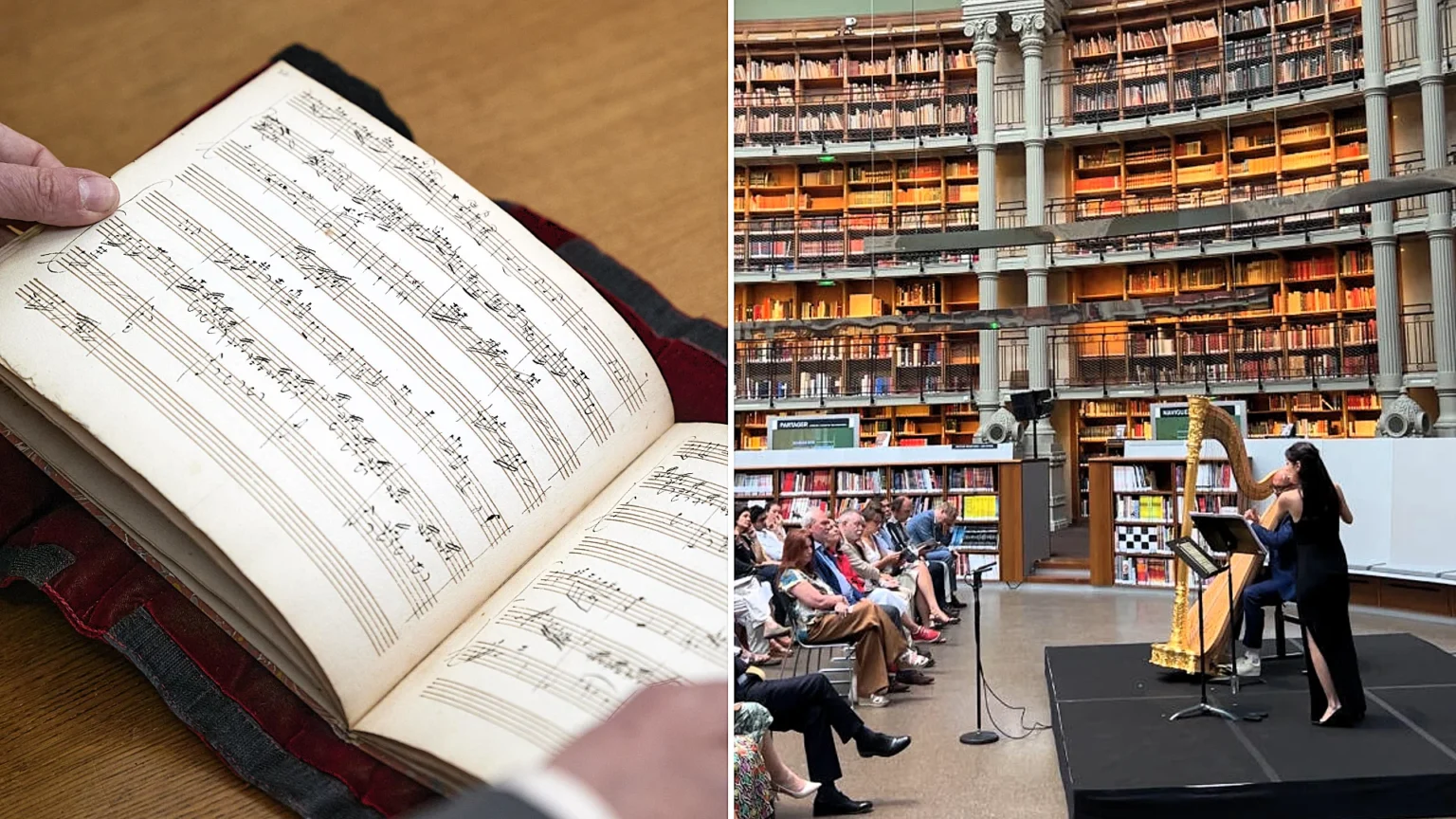

A forgotten manuscript written by Mozart has been discovered in a library archive after lying unnoticed for centuries – and its music has finally been heard for the first time.
The previously unknown work was identified at the Bibliothèque nationale de France (BnF) in Paris after experts realised a handwritten music notebook contained original compositions and teaching material created by Wolfgang Amadeus Mozart during his final stay in the French capital in 1778.
The remarkable find is shedding new light on the composer’s life and teaching methods, with specialists describing it as one of the most important Mozart discoveries in decades.
READ MORE: Terrified tourists pelted with red-hot lava on volcano ridge hike
- Advertisement -
The manuscript consists of a 44-page notebook containing composition exercises and seven pieces for flute and harp, as reported by Whats The Jam.
Researchers believe it was used during lessons Mozart gave to Marie-Louise-Philippine de Bonnieres de Guînes, an accomplished harpist and daughter of the Duc de Guînes.
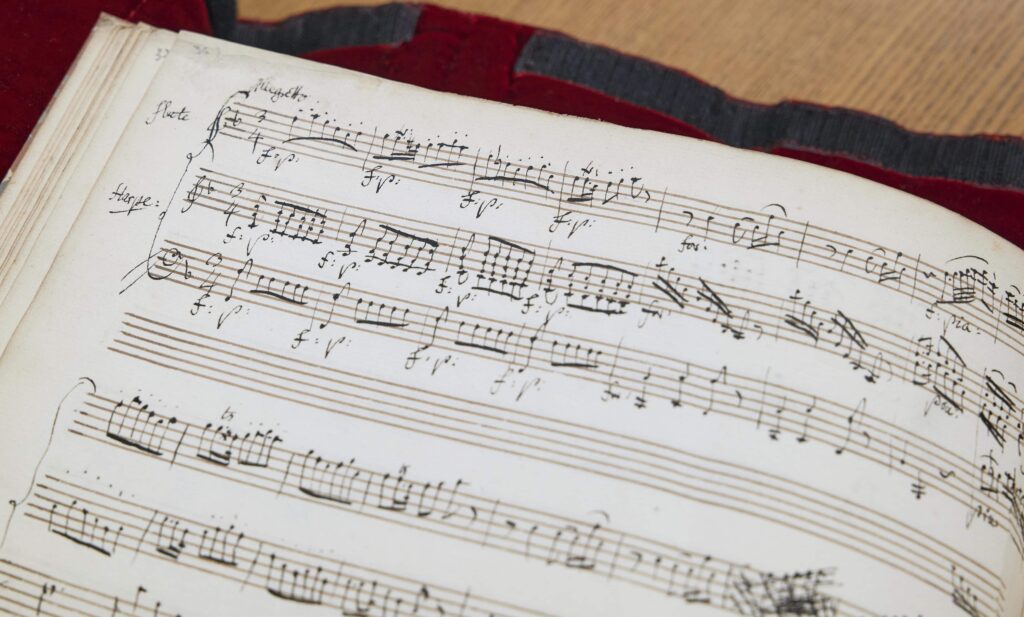
The notebook was discovered in February by François-Pierre Goy, curator of the BnF’s pre-1800 music collections.
While examining an anonymous and untitled manuscript dating from the late 18th century, he recognised handwriting belonging to Mozart.
The attribution was later confirmed by experts including Armin Brinzing, director of the Bibliotheca Mozartiana at the Mozarteum in Salzburg.
- Advertisement -
Gilles Pécout, president of the BnF, said: “In the view of specialists, this is one of the most important discoveries in recent decades.
“First, it sheds light on Mozart’s final stay in Paris, and second, it reveals the day-to-day activities of Mozart as a young teacher in dialogue with his pupil.”
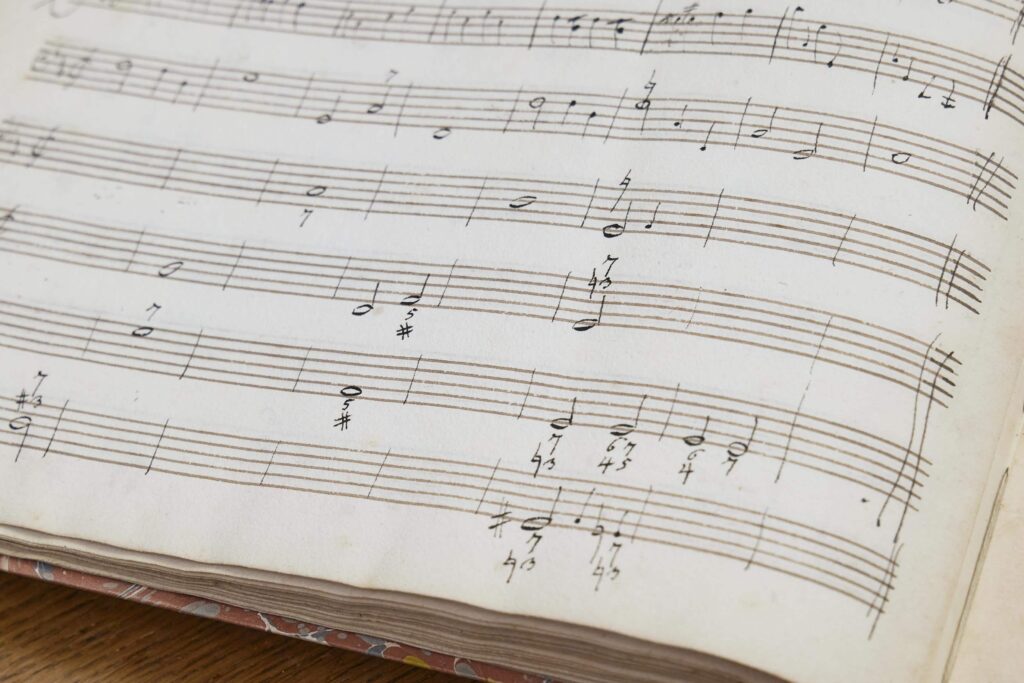
The notebook offers a rare glimpse into how Mozart taught composition.
- Advertisement -
Researchers say it contains exercises matching techniques Mozart described in a letter to his father in May 1778, in which he criticised his pupil’s lack of musical invention.
Apart from a handful of exercises written entirely in his student’s hand, teacher and pupil appear to have worked through much of the notebook together.
Experts believe several pieces may have originated from ideas first proposed by Mozart himself.
The discovery is particularly significant because it appears to contain the final lessons Mozart ever taught.
The last exercise remains unfinished and the notebook ends with six blank pages.
Historians believe the lessons came to an end when Mademoiselle de Guînes married on July 26, 1778.
The manuscript also provides fresh insight into the origins of Mozart’s Concerto for Flute and Harp, K299 – one of the few works he composed featuring the harp.
Researchers believe the lessons took place between May and July 1778 while Mozart was living in Paris.
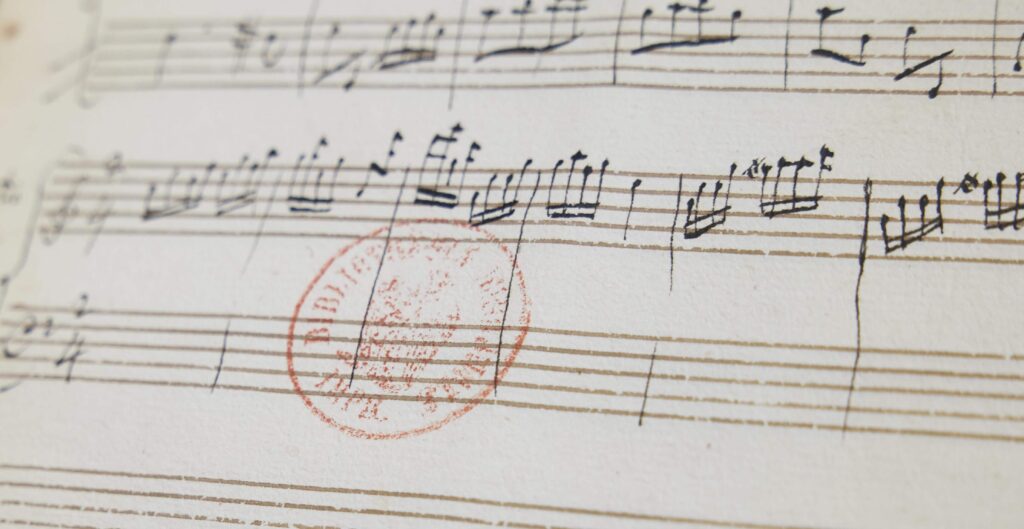
Although the notebook entered the library’s collection after documents were confiscated from the Duc de Guînes’ residence during the French Revolution, its significance went unnoticed for more than 200 years.
The score has now been brought back to life through a collaboration between the BnF and Radio France.
It was recorded by musicians from the Orchestre Philharmonique de Radio France and performed publicly for the first time at the BnF’s Richelieu site.
Sibyle Veil, president and chief executive of Radio France, said: “It is an exceptional honour for any musical ensemble to bring a forgotten work by Mozart back to life.
“With this world premiere, Radio France fully reasserts its public service mission – to bring great works to life.”
The discovery is also notable because only a handful of Mozart manuscripts are held directly by the BnF.
Most of the composer’s surviving autograph scores are housed in Salzburg and Berlin.
Researchers say the notebook not only reveals previously unheard music but also provides an unprecedented look at Mozart’s approach to teaching composition during the final months of his stay in Paris.
For music historians, it offers a rare opportunity to hear a voice from the past that had remained silent for nearly 250 years.
READ MORE: Ballet-dancing android suddenly crashes to the stage mid-performance