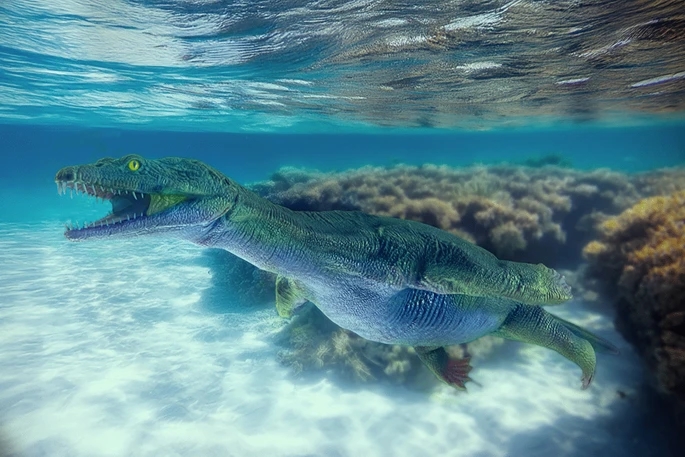
Reconstruction of Lariosaurus valceresii while swimming with forelimbs positioned at the end of the rowing phase. 3D model by S. Megahed (ArchonXR) background created with generative fill. (Jam Press/Silvio Renesto/Cinzia Ragni/Fabio Magnani)
Scientists have uncovered a 240-million-year-old ‘sea monster’ – complete with its skin still intact.
The fossilised beast, known as a Lariosaurus, was studied by experts at the University of Insubria in Italy.
It’s the first time skin has ever been found on the species, giving palaeontologists a rare chance to learn how the prehistoric reptile lived, as reported by What’s The Jam.
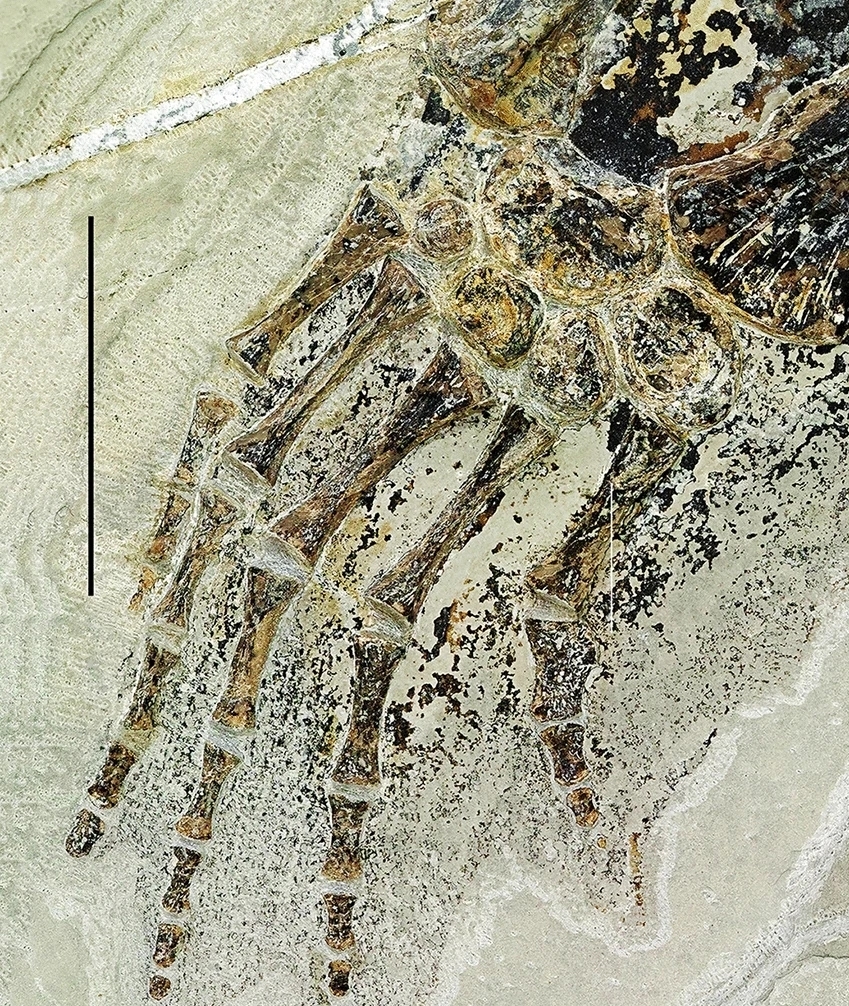
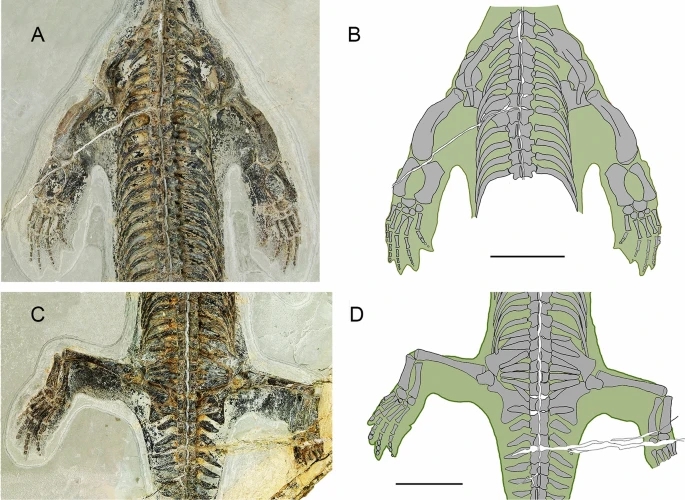
The incredible find showed the creature had webbed hands and feet, meaning it could glide through the water much like a crocodile does today.
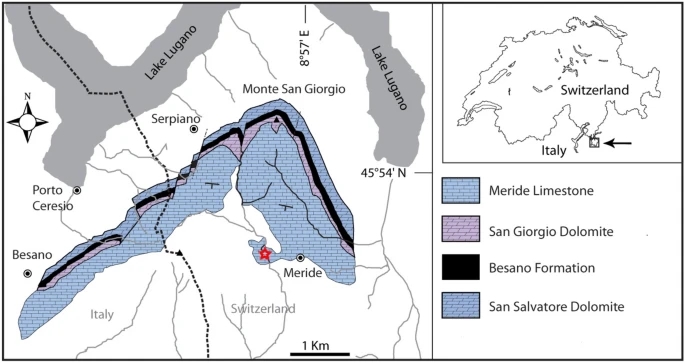
The fossil was dug up from Monte San Giorgio in Switzerland – now a UNESCO World Heritage site, but 240 million years ago, it was a tropical lagoon.
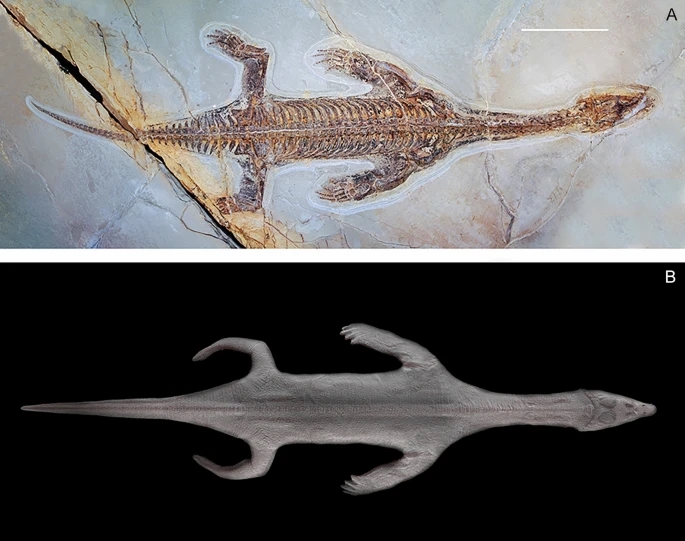
Lariosaurus valceresii, (A) MCSN 8713 as preserved, dorsal view; (B) 3D reconstruction of the body, based on the skin profile. 3D model by S. Megahed (ArchonXR). Scale bar equals 100 mm. (Jam Press/Silvio Renesto/Cinzia Ragni/Fabio Magnani)
Normally, soft tissue like skin withers away over millions of years, making this discovery “incredibly rare”.
Scientists say conditions at the site – including poor water circulation and a lack of scavengers – helped preserve the reptile in near-perfect condition.
Palaeontologists Silvio Renesto, Cinzia Ragni and Fabio Magnani, who led the study, called it a unique chance to peek into the past.
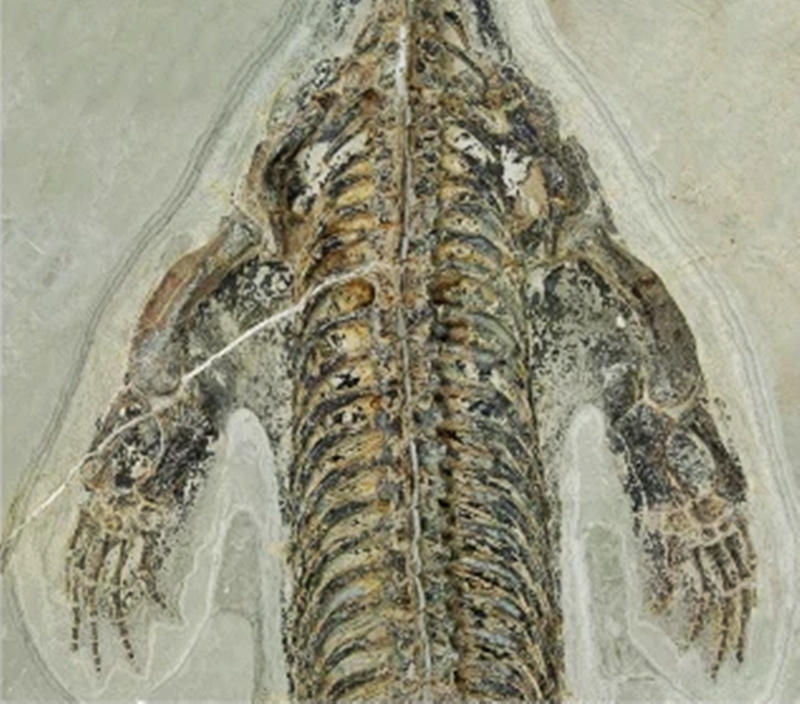
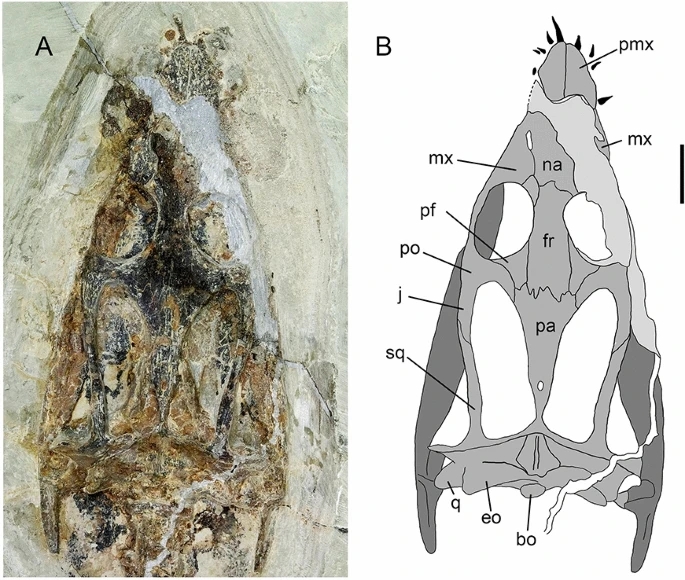
Lariosaurus valceresii, specimen MCSN 8713. Actual profile and silhouette of the skin around the anterior. (Jam Press/Silvio Renesto/Cinzia Ragni/Fabio Magnani)Lariosaurus valceresii, MCSN 8713. Detail of the left manus showing skin forming a webbed hand with the outline of the digit extremities. (Jam Press/Silvio Renesto/Cinzia Ragni/Fabio Magnani)Lariosaurus valceresii, MCSN 8713. Skull as preserved (A) and interpretative sketch (B). Bones: bo basioccipital, eo exoccipital, fr frontal, j jugal, mx maxilla, na nasal, pa parietal, pf postfrontal, pmx premaxilla, po postorbital, q quadrate, sq squamosal. Postorbital–jugal suture not visible. Scale bar: 10 mm. (Jam Press/Silvio Renesto/Cinzia Ragni/Fabio Magnani)Lariosaurus valceresii, specimen MCSN 8713. Actual profile and silhouette of the skin around the anterior (A, B) and posterior (C, D) limbs and girdles. Scale bars equal 50 mm. (Jam Press/Silvio Renesto/Cinzia Ragni/Fabio Magnani)The Map of the Monte San Giorgio area (Ticino, Southern Switzerland), showing the carbonate AnisianLadinian sequence. The red star indicates the location of”Val Mara”excavation site, where MCSN 8713 was found. (Jam Press/Silvio Renesto/Cinzia Ragni/Fabio Magnani)