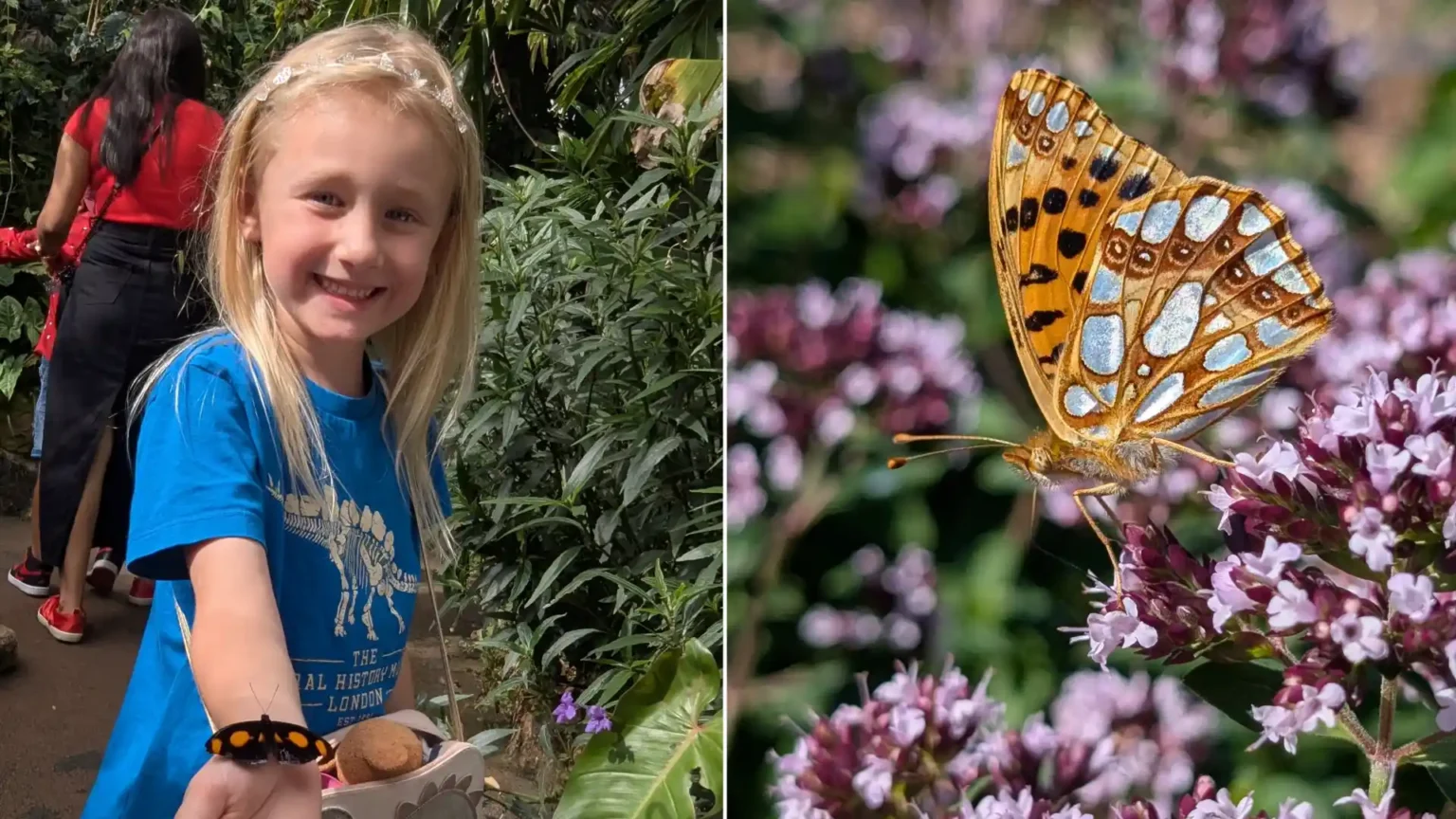


An eagle-eyed six-year-old has spotted one of Britain’s rarest butterfly visitors during a family day out.
Young nature lover Lola discovered the regal-looking Queen of Spain fritillary while exploring the Eden Project’s Outdoor Gardens.
The species is widespread across mainland Europe, but only tiny numbers normally make the journey across the Channel.
READ MORE: Pub worker stunned as family of ducks waddles in off street
The Eden Project believes Lola’s discovery is one of only a handful recorded in England this year, as reported by What’s The Jam.
Her sighting has since been verified by Cornwall’s county butterfly recorder at Natural England.
Lola said she was “really happy to have spotted a rare-to-the-UK butterfly”.
Mum Sarah said her daughter had always been fascinated by butterflies and kept a record of every species she discovered.


She said: “Lola keeps a list of all the different butterflies she’s spotted.
“It’s been such a lovely way to enjoy nature and the outdoors together.
“It was definitely a highlight of the trip for Lola and one she will always remember.
“We felt very lucky to be visiting such a wonderful place and to spot a beautiful butterfly.”
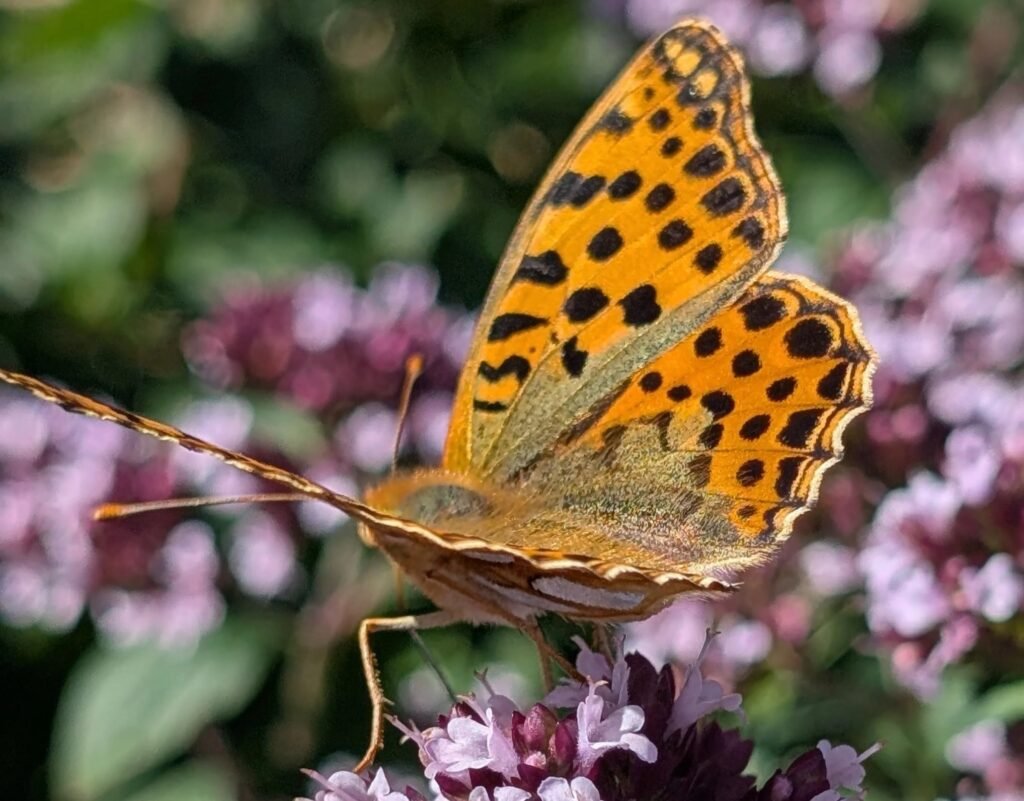
The Queen of Spain fritillary – scientifically known as Issoria lathonia – is instantly recognisable when it closes its wings.
Its orange and black upper wings resemble those of several other fritillaries, but its undersides are decorated with unusually large, reflective silver spots sometimes described as “mirrors”.

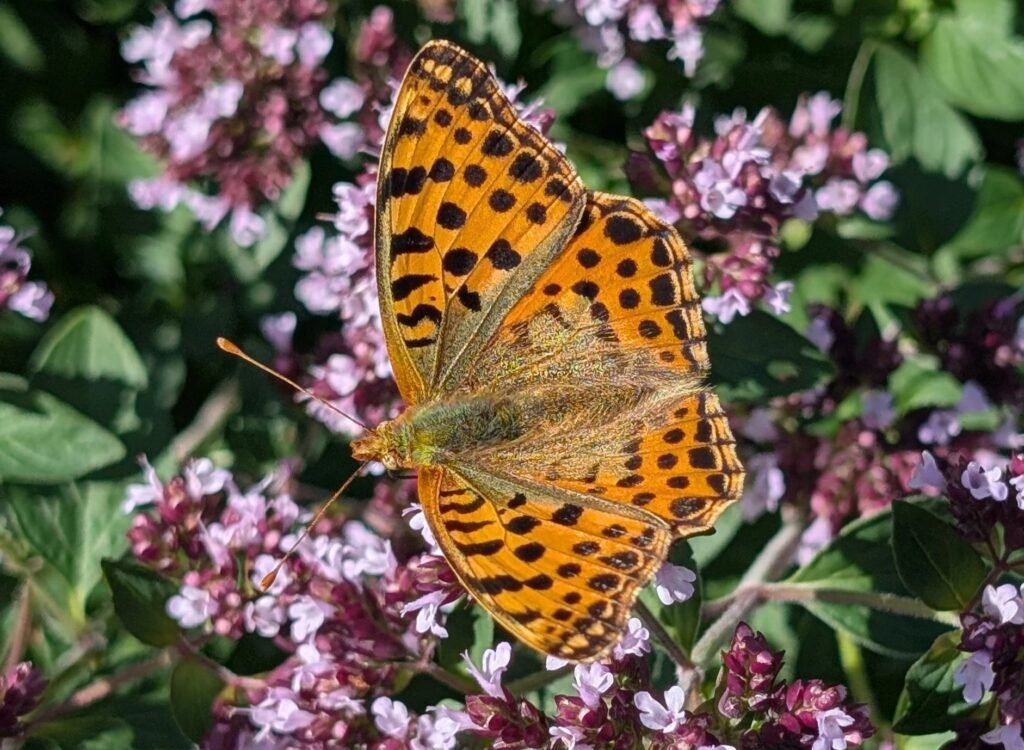
The medium-sized butterfly has a wingspan of approximately 38mm to 46mm.
Its caterpillars feed predominantly on violets, particularly field pansy and wild pansy, while the adults favour warm, open and dry habitats.
It is considered a scarce migrant to Britain, with the UK Butterfly Monitoring Scheme saying only one or two are reported in most years.
Although occasional arrivals may lay eggs and produce another generation, the species has never established itself as a permanent British resident.
A small breeding colony became established in Suffolk during the late 1990s, but it survived for only a short time.
Most British sightings are made in southern and eastern coastal areas after the insects fly across from continental Europe.
The majority are recorded around September, although occasional arrivals have been seen as early as May.
Experts say sustained warm weather this summer has created better flying conditions for migrant butterflies attempting the crossing.

Julie Kendall, outdoor horticulture manager at the Eden Project, said: “It’s fantastic to have a rare butterfly like the Queen of Spain fritillary found in our gardens.
“We pride ourselves on providing such rich, diverse habitats that can support nature of all shapes and sizes – including non-native species that are now finding new homes here as our climate changes.
“Sightings like this are a brilliant reminder that gardens have a real part to play as staging posts for wildlife on the move.”
Richard Fox, head of science at Butterfly Conservation, said the discovery was “very exciting”.
He said: “It’s a beautiful butterfly and a rare visitor to our shores.
“Sightings like this always capture people’s imaginations and generate more interest in butterflies, which is a great thing.
“Butterflies do like hot and sunny weather, so this summer has provided great flying conditions for lots of species.”
READ MORE: Cheeky bear strolls into fire station before pinching crew member’s bag