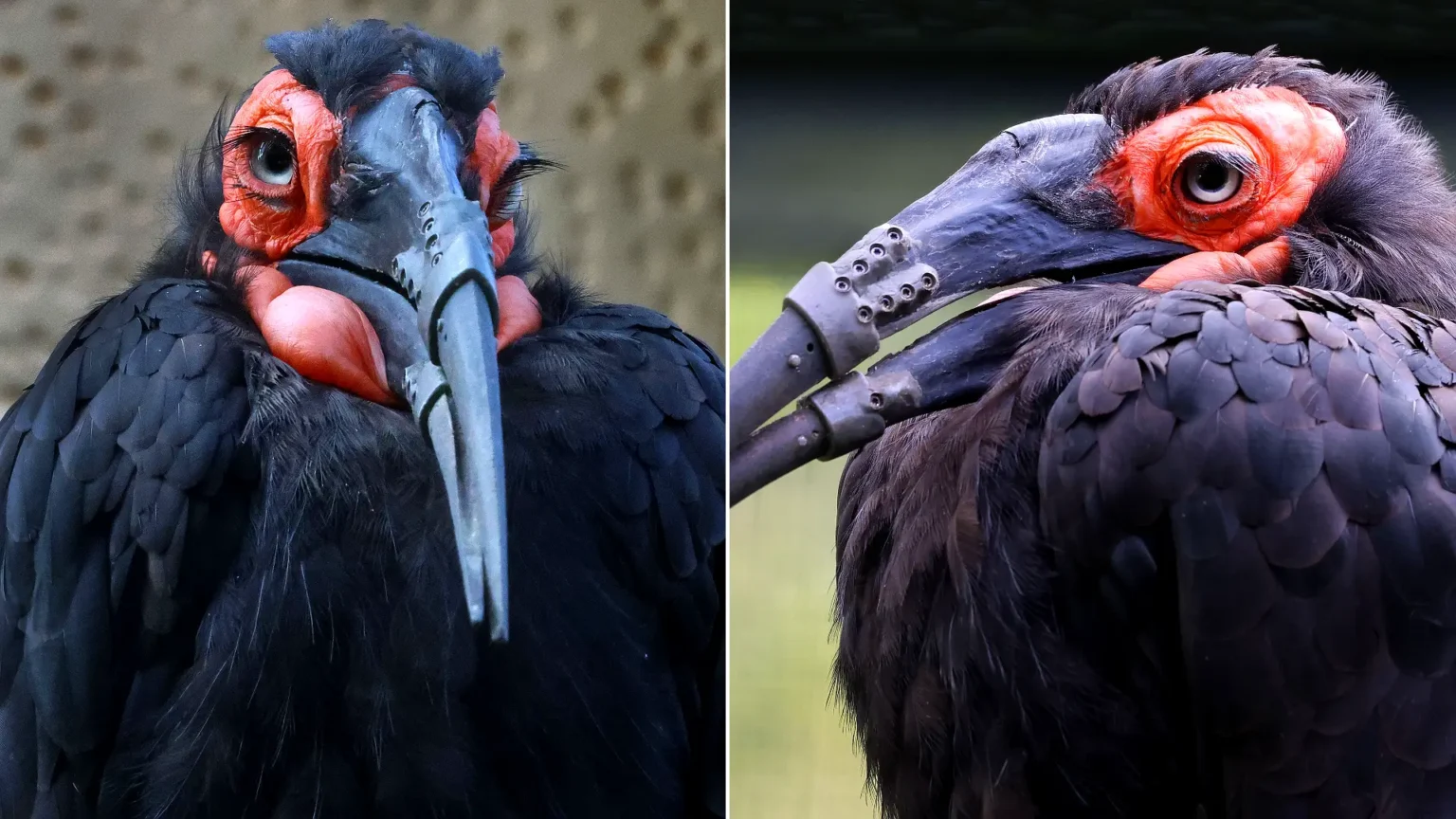


A bird left with two broken stumps where its beak should be has been given a second chance in a world-first operation.
The male southern ground hornbill received two custom-made, 3D-printed prostheses to replace the shattered upper and lower sections.
According to the veterinary team, it is the first known case anywhere in the world in which both parts of a bird’s beak have been restored in this way.
READ MORE: Ex-Premier League star who landed record £8m deal now ‘unemployed’
And the pioneering replacement was an almost immediate success, with the hornbill beginning to use its new beak on the day of surgery, as reported by What’s The Jam.
By the following morning, it had independently picked up a small mouse from the ground.
Within days, it had also started preening its feathers again.

The bird had previously been left with two stumps after breaking both sections of its beak.
Although it could still get by, the devastating injury restricted everyday behaviours such as finding food and caring for its plumage.
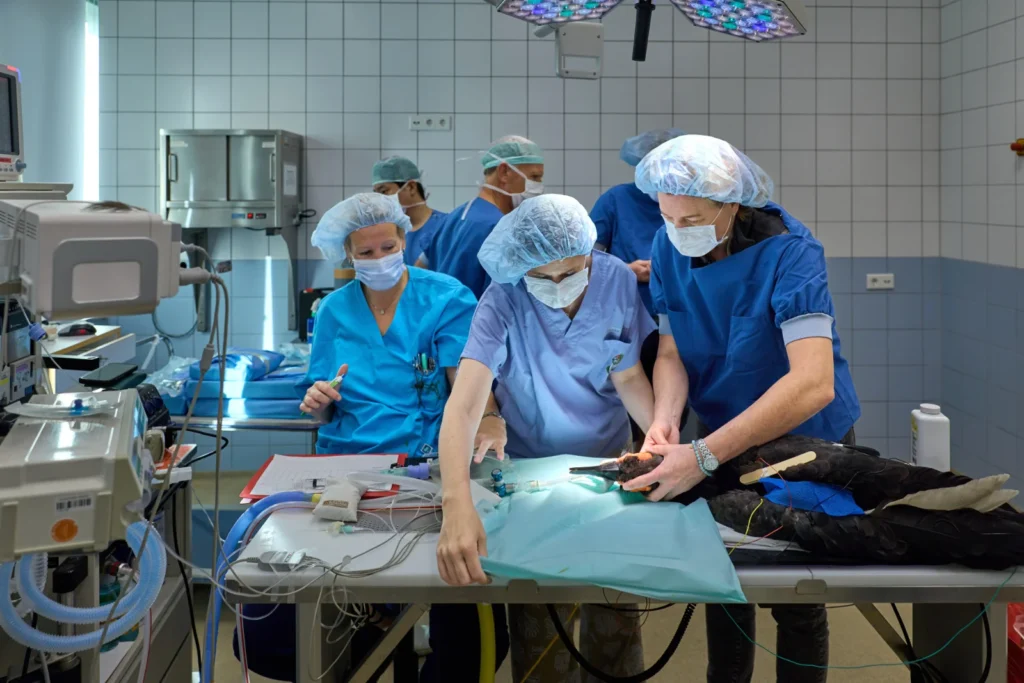
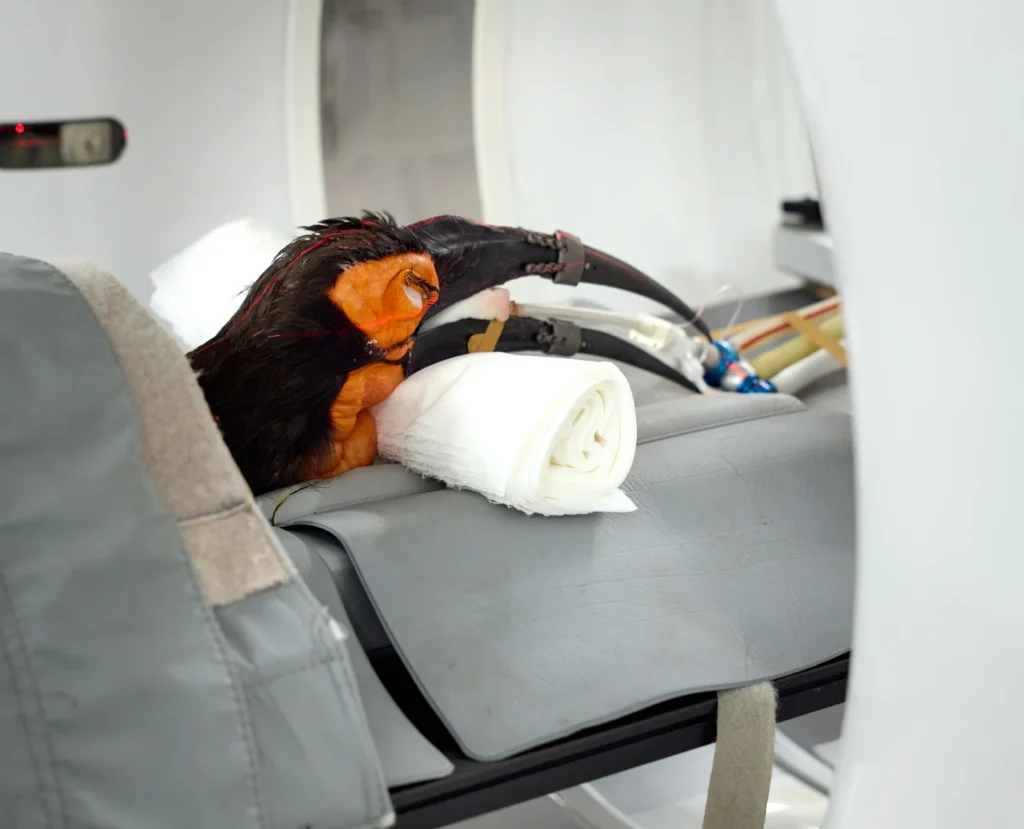
Specialists used a CT scan and preserved pieces of the original beak to reconstruct its natural shape.
Two plastic prostheses were then created using a 3D printer and secured with titanium components and screws during surgery.
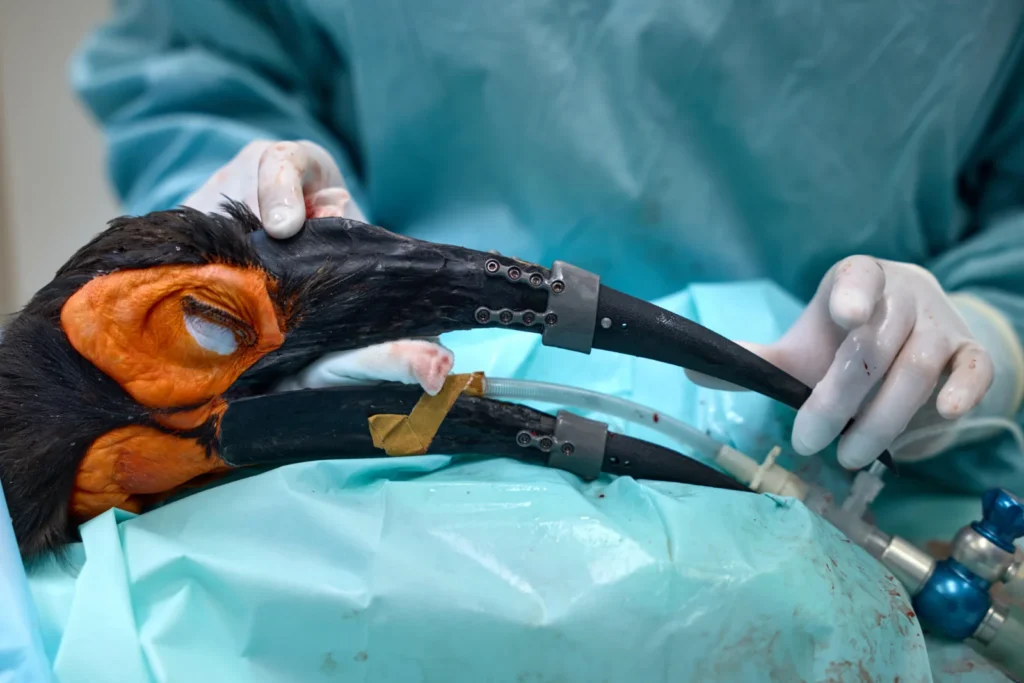
The procedure involved ARTIS Zoo in Amsterdam, Utrecht University’s Faculty of Veterinary Medicine, 3D Lab UMC Utrecht and Amnovis.
Veterinary surgeons Bjorn Meij and Lucinda van Stee carried out the operation at Utrecht University’s veterinary hospital.
Joëll Magré of 3D Lab UMC Utrecht developed the printed beak sections, while Amnovis manufactured the titanium components.

Martine van Zijll Langhout, head of the veterinary department at ARTIS, said: “For me, the most important question is: can an animal display the behaviour that is natural to its species?
“A complete beak gives him far more opportunities to express that natural behaviour.
“And that is exactly what we want to achieve.”
Southern ground hornbills use their powerful beaks extensively to preen themselves and search for food, including by probing and striking the ground.

Beak injuries are a recognised problem among the birds because of the demands placed on the structure.
The hornbill is now back at ARTIS, where keepers and vets are monitoring its recovery and watching how it adapts.
They hope the prostheses will continue working over the long term, although their durability has yet to be established.
If successful, the innovative procedure could open up new possibilities for treating serious beak injuries in other birds.
READ MORE: Bungling Ferrari driver gets supercar STUCK in narrow street