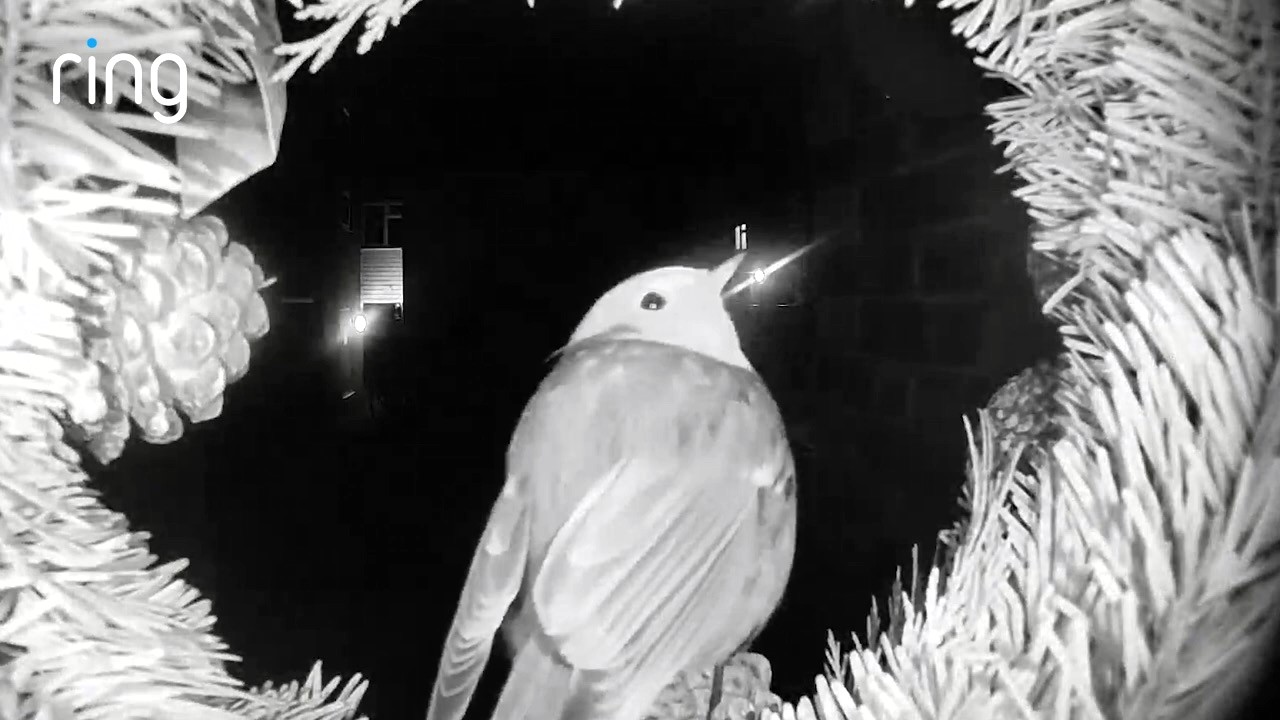

Robins are said to be bringing a touch of “festive luck” after swooping in to perch on Christmas wreaths across Britain.
One delighted homeowner was stunned after spotting the red-breasted visitor captured on his doorbell camera.
Mark Tappenden received an early-morning alert from his Ring doorbell and watched back footage showing a robin calmly sitting on the family’s Christmas wreath.
READ MORE: Camouflaged snapper waits four hours in his garden to capture incredible images of red kite
- Advertisement -
The magical moment taps into centuries-old British folklore.
Robins landing on wreaths are traditionally believed to symbolise good luck, renewal and hope for the year ahead, with many seeing them as messengers from loved ones who have passed away during the winter months.
“All the family and friends loved watching it,” said Mark, from Harlow, London.
“My sister said it was our mum visiting, as she passed away quite a number of years ago.”
Another homeowner in the same town also captured a similar heart-warming sight.
- Advertisement -
Tim Grindell, from Harlow, London, filmed a robin visiting his wreath three times, as reported by What’s the Jam.
He said: “I was working at home at the time and sent it to my wife and family.
“This included my father-in-law who’s an avid birdwatcher and Swindon Town fan, their nickname is The Robins.
- Advertisement -
“The robin came back twice since too.”
Experts say the sightings are especially meaningful at this time of year.
Dr Clare Jonas, a research communication and researcher development specialist, said: “The robin is a common yet special sight in our gardens, especially in winter.
“Spotting a robin is believed to bring messages of hope, renewal, and remembrance of loved ones during the colder months.
“If you have good-luck superstitions like these, research shows that experiencing one could even boost your confidence and help you achieve your goals.”
Ring has also offered a practical tip, advising homeowners to position wreaths carefully so they do not block the camera’s view and to remove excess baubles for clearer footage.
READ MORE: New Lucifer bee with devil-like horns discovered for first time – and named after Netflix show