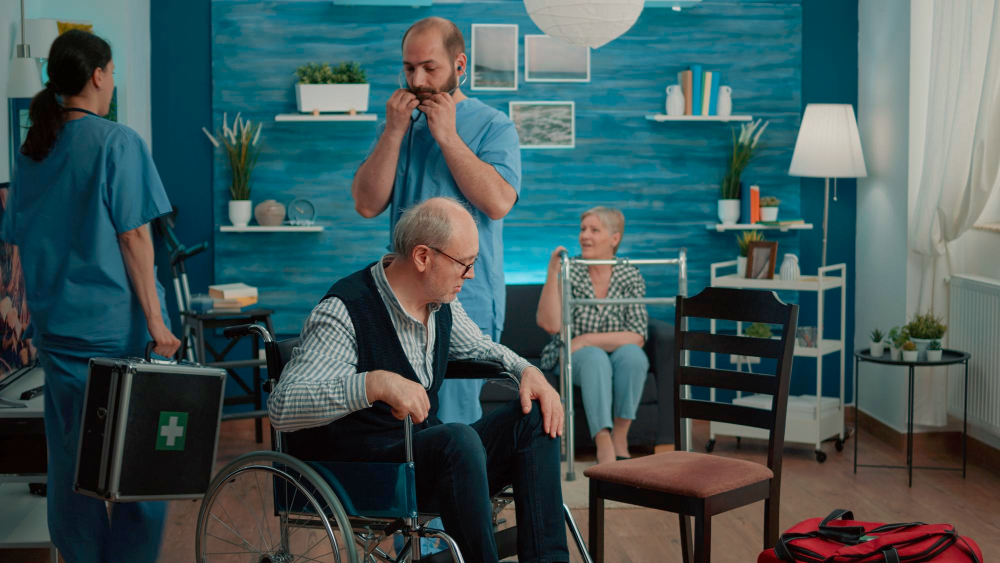

According to the National Council on Aging, up to 5 million older Americans experience abuse each year, with many of these cases occurring in nursing homes and care facilities. About 15.3% of complaints involve gross neglect. Around 50% to 75% of residents fall per year, with about 1,800 reported deaths each year.
According to regulations, the patients in nursing homes must be provided with medical care, food, hygiene, and safe living conditions. It can be said that the facility’s duty to patients is breached when the employees or administrators do not offer proper care. Understaffing, lack of training, or even brutality may result in injuries, disease, or even quite possibly the death of the patients.
Can you sue a nursing home for neglect? Legal action against a nursing home facing charges of neglect can be instigated when a resident is injured or adversely affected as a result of improper care, an unsafe environment, or a lack of basic amenities. The victims themselves or their families can claim monetary compensation against a hostile institution. The claim can hold a facility liable and demand it pay for mental and emotional damages.
How can we recognize a case of negligence in nursing homes? What provisions of the law can be enforced to protect seniors on the emotionally unstable brink? Let’s talk about the steps involved in taking legal action against a nursing home based on grounds of neglect.
- Advertisement -
What Constitutes Nursing Home Neglect
Neglect can occur if any staff member or facility fails in providing adequate care to a resident, leading to injury or putting a person at actual imminent risk. Recognizing the acts of neglect is very important since it usually occurs by omission rather than by abuse.
Physical neglect is often manifested in unexplained bruises and injuries, the appearance of bedsores resulting from neglect, frequent infections, and a reduction in body weight. People show emotional signs through their sudden behavior changes, their decision to stop participating in their normal activities, their experience of depression, and their state of extreme fearfulness.
How a facility sustains its environment can reflect the resident’s actual living conditions. If a resident has an unclean appearance, improper clothing, and extremely unsanitary surroundings, then you may think of moving them to a cleaner facility. The major areas of elderly neglect in medication misuse include issues such as bad administration of medications, the wrong medications being used, drug misbranding, or a failure to get the medication ordered by physicians.
According to Jacksonville elder law attorney Douglas A. Oberdorfer, nursing home care and home health care are notoriously expensive. As such, it can be frustrating to observe that your loved one is being neglected when the service of these facilities is not cheap. It is critical to consult a lawyer if you see signs of senior abuse. The lawyer working in elder law should work to protect senior citizens from neglect and exploitation, including any form of abuse.
The Federal Legal Framework Governing Nursing Home Care
Under 42 U.S.C. § 1396r, the Nursing Home Reform Act was established as a series of enforceable federal rules important to nursing facilities receiving Medicare or Medicaid payments. Care standards were their first actual form of enforceable law. Care services planning was required and residents were granted certain rights.
- Advertisement -
The federally certified facilities must deliver complete resident care services together with necessary nursing services to comply with the Nursing Home Reform Act and its associated regulations. The regulations have established penalties that include civil fines and denial of federal funding and legal action against organizations that fail to comply.
In Health and Hospital Corporation of Marion County v. Talevski, the U. S. Supreme Court expressed its view on the enforceability of federal nursing home law provisions through civil rights claims under 42 U. S. C. § 1983. The Court confirms that in certain cases, individuals might want to institute an action to enforce rights under federal spending statutes like the Nursing Home Reform Act. This verdict underlines the manner in which federal care standards will be enforced not only through financial penalties, but also through private legal action if the facilities do not meet their required responsibilities.
The Long-Term Care Ombudsman Program, established under the Older Americans Act (42 U.S.C. § 3058g), is present in each state. This program affords another option for hearing complaints about nursing facility care.
- Advertisement -
Recognizing When a Civil Lawsuit May Be Appropriate
Nursing home abuse plaintiffs or their respective attorneys must lay out proof that the facility owed a duty of care to the plaintiff. It must be demonstrated that the said care was breached and what terms were exactly violated. There must also be proof that shows how the breach caused injuries or real money damages.
The defendant must produce records in support of its defense through the medical history and inspection reports of the facility. The accused party may also benefit from their first case by collecting statements that include testimonies from witnesses, such as residents, staff, and family members. Present advocacy statements from residents and family members documented communication about care problems that staff members sent to facility management.
Families that suspect neglect should start documenting observations as soon as concerns emerge, such as dates, the condition of the resident, and staff or management responses.
What Damages Are Recoverable
Compensatory damages will take care of all economic damages, which include past medical expenses, future medical costs, rehabilitation expenses and the potential existence of another dedicated medical facility and all non-economic damages which include pain and suffering, loss of dignity, and mental anguish. The surviving relatives can file wrongful death claims when their claims arise from the same negligence that caused the resident’s death.
Under aggravated circumstances, some jurisdictions will allow punitive damage awards, i.e., damage awards designed to actually deter the wrongful kind of conduct that resulted in such damages. Keep in mind that there are several restrictions on these awards as per individual state laws.
Statute of Limitations
State governments establish time limits for nursing home maltreatment claim submissions, which differ across different states throughout the United States. The statute of limitations for a particular case can be established through three legal methods: the state’s overall negligence laws, the medical malpractice statute and its wrongful death provisions, and the specific elder abuse laws of the state.
The discovery rule must work in conjunction with disability and fraud operations within the facility system to suspend the statute of limitations. The importance of early legal advice shows through the fact that missed deadlines will end an active legal claim.
The Role of an Elder Law or Personal Injury Attorney
A lawyer doing nursing home abuse can scrutinize the well-documented occurrence of mishandling to see if a viable claim is present. They will also highlight all potentially liable parties, including the facility, the management company, and its employees. The lawyer may provide assistance during the common complications in litigation.
Many families also benefit from hiring counsel to help handle the regulatory complaint process in connection with filing their civil suit, as state survey findings or ombudsman investigations can help support a legal case.
Nursing home residents have “federally protected rights” in regard to receiving a high standard of care. When these rights are violated, families can use legal resources. The most significant actions are recognizing neglected victims early, collecting an extensive complaint, passing complaints to the right federal or state bodies, or speaking to an attorney before legal proceedings begin.
Image by DC Studio on Magnific