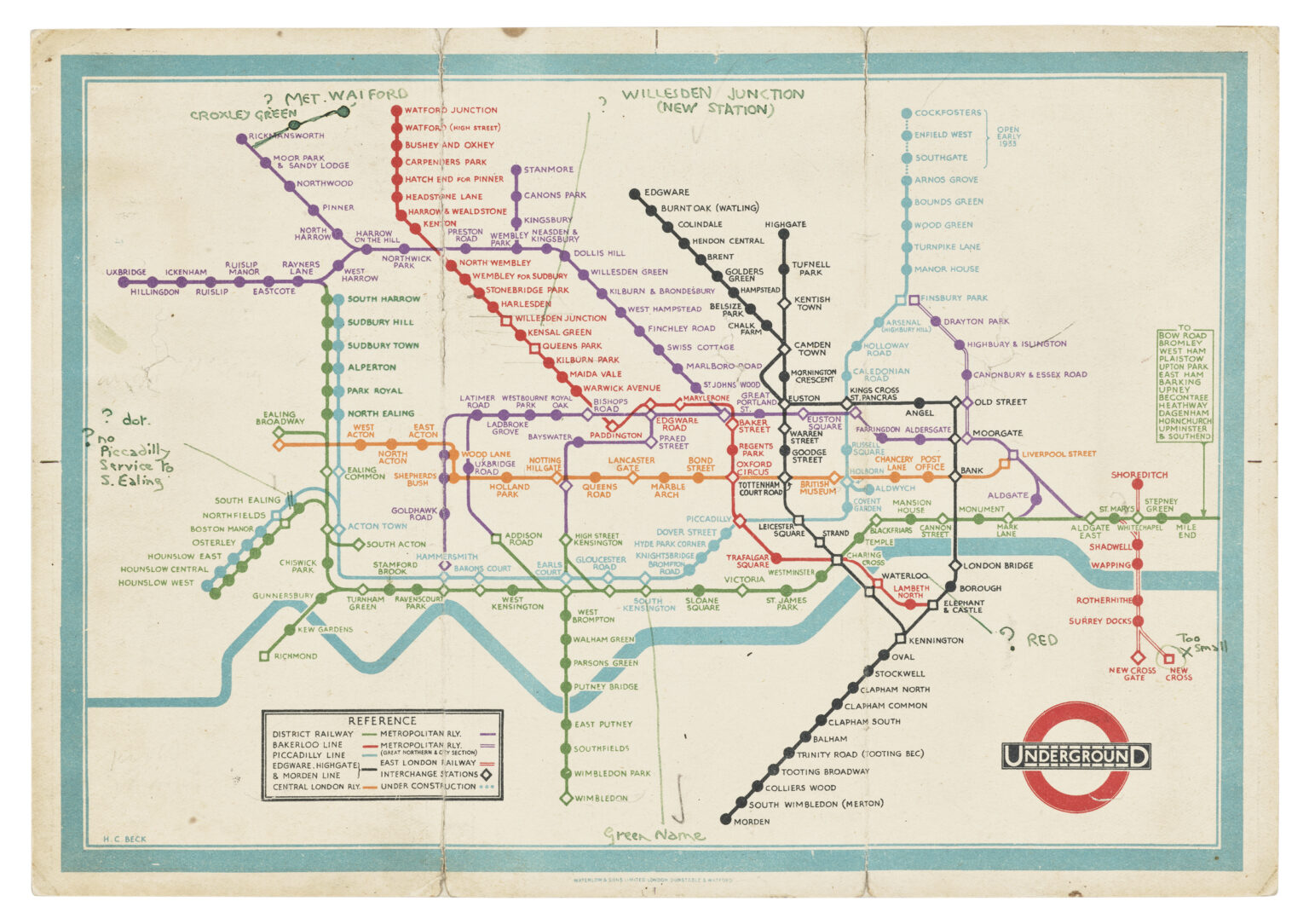


The first ever London Underground map has sold for £88,900.
Harry Beck came up with the design in 1932.
He made the draft and it was produced a year later.
READ MORE: Butcher set for ‘biggest Christmas ever’ after finding TikTok fame – with turkeys flying off shelf
The electrical draughtsman’s masterpiece is still the basis for the Tube map today.
Beck came up with the diagrammatic representation of the whole network after working on electrical circuit designs.
By ignoring the literal geographical relationships between stations, he made something that effectively communicated the information passengers needed to plan their journeys.
This copy is one of the final proofs before the map was made public.
It shows several annotations by Beck and his colleague Fred Stingemore.
Among the corrections are the suggested return of a missing branch of the Metropolitan Line serving Watford.
The map is one of very few Back papers to remain available to private collectors.
Much of his work was given to his friend and biographer, Ken Garland, who donated most of it to the collections of the London Transport Museum.

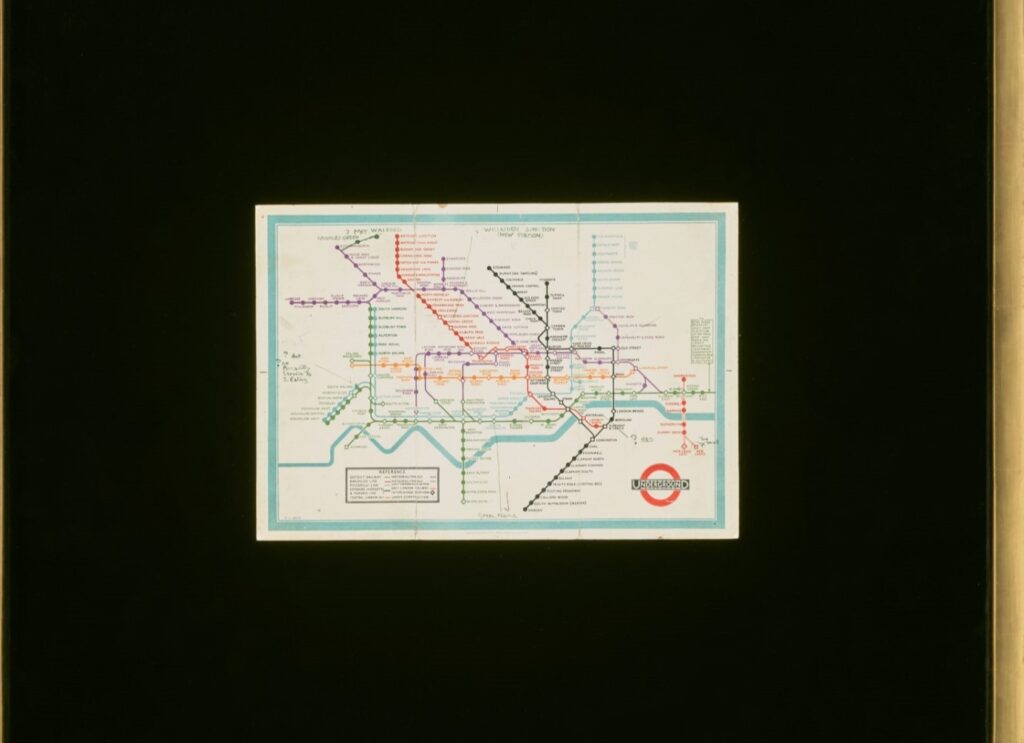
It was bought at an auction held by Christies, based in St James’, central London, last Thursday (11 Dec).
The map was tipped to sell for as little as £70,000.
The listing reads: “Chromolithographic map within light-blue frame, Underground roundel to bottom right.
“Key within frame to lower left, note regarding onward District Line destinations eastwards in green within green frame, stylized River Thames.
“Printed in light-blue to match the outer frame, 156 x 225mm, framed 443 x 494mm.
“Harry Beck’s unpublished annotated proof of his iconic London Underground map – the only copy known.”
A spokesperson said: “Beck was an electrical draughtsman and produced his wonderfully simple map based on a circuit diagram.
“By eliminating any geography, and the adoption of strict verticals, horizontals and diagonals, Beck’s great innovation was to dramatically distort the central London area.
“To allow for easy interpretation, while condensing the outer suburban areas to give the sense of easy commutability.
“Beck’s first draft was initially rejected by the Underground Group, but by 1932 this proof had been printed.”