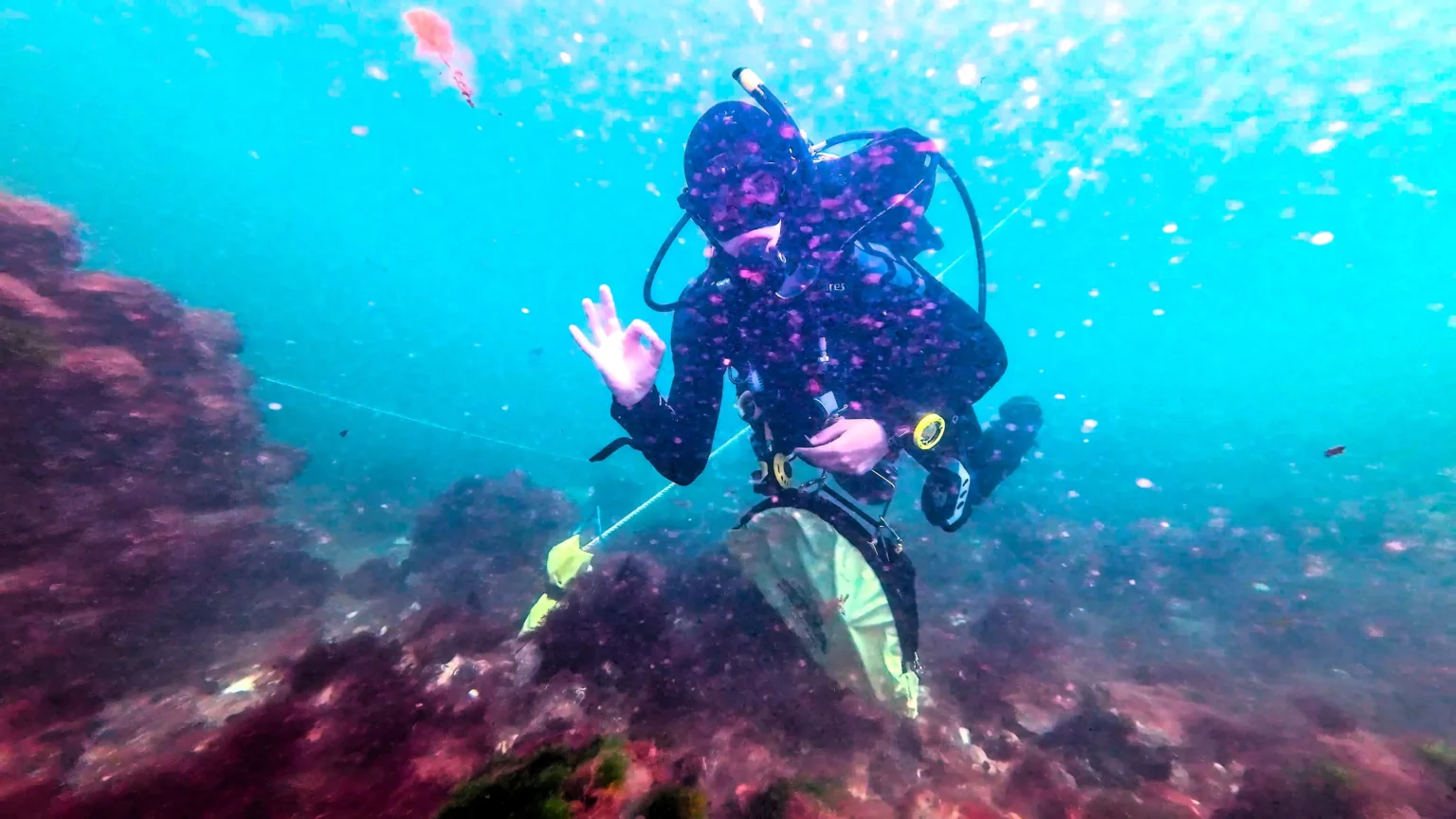


Divers have photographed and plotted 25 mysterious man-made features at the site of a British town swallowed by the sea around 700 years ago.
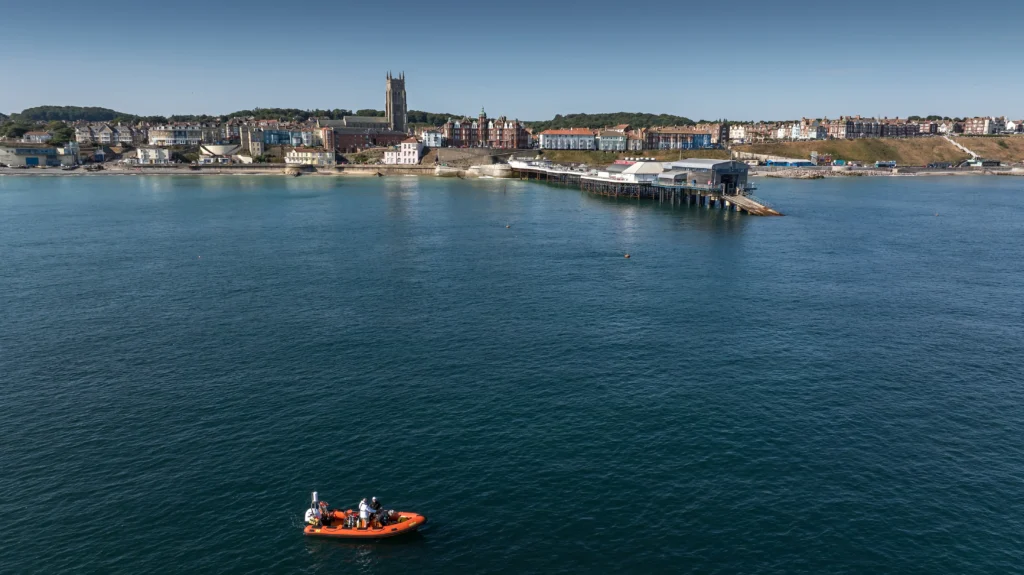
The flint-built remains were found several hundred metres from the beaches of Cromer, Norfolk.
They are thought to form part of Shipden, a medieval settlement gradually consumed by the advancing North Sea during the 14th century.
READ MORE: Popular hotel chain announces 10 new UK hotels – see full list
Following early-morning starts at Sea Palling, volunteer divers travelled along the coast to explore the seabed off Cromer.
The team, from the Anglian branch of the British Sub-Aqua Club, took advantage of clear skies and unusually still water during the summer, as reported by What’s The Jam.
The conditions exposed the chalk and sand of the seabed, allowing the divers to record features which may otherwise have remained hidden.

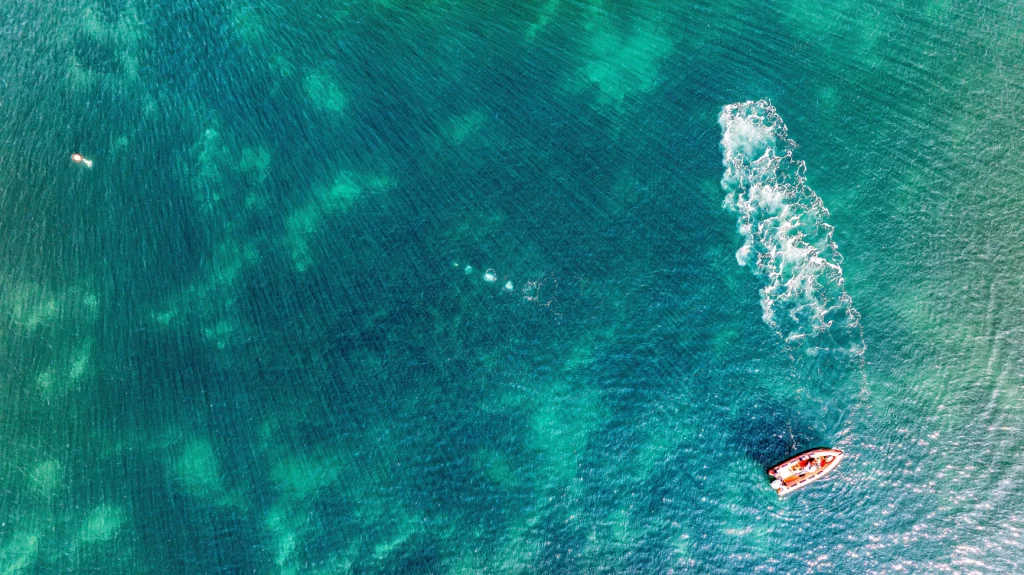
With the help of local historian James Mindham, around 25 human-built features were located and photographed.
They include a line of flint structures, lower sections of stone caissons and other pieces of cut stone.
Some remain standing between eight and ten courses high despite having spent centuries underwater.
Specialist photography has also allowed preliminary 3D models of the finds to be created.
The images are believed to be the first ever taken of the features.
Researchers are investigating whether the caissons formed part of a 14th-century attempt to hold back the sea.
They could alternatively be connected to a pier authorised in 1390, although the Alfred Savin project stressed that these remain theories rather than firm conclusions.
Shipden was once a thriving settlement on the north Norfolk coast.
The Domesday Book recorded it in 1086 as having 117 residents, three acres of meadow, woodland capable of supporting 36 pigs, a harbour and two churches.
Its name gradually fell out of use during the 13th and 14th centuries and was replaced in records by Cromer.
Centuries of erosion consumed the original settlement, with the devastating North Sea storm of January 1362 among those to batter the coastline.
Shipden’s disappearance later inspired generations of folklore.

The most famous tale claimed that the tower of St Peter’s Church survived beneath the waves on a formation known as Church Rock.
Some accounts said the ruins could be glimpsed at particularly low tides, while legend claimed its bell could still be heard tolling during storms or warning fishermen not to go to sea.
Documents confirm a church was lost, but the latest divers found nothing that could be positively identified as the building.
Researchers now believe Church Rock may not have been the church at all, with St Peter’s thought to have stood further north and west.
Peter Stibbons, chairman of the Friends of Cromer Museum and director of the project, said: “Those of us brought up in Cromer have always known the story of Church Rock, so it’s a big step to saying the legend may be incorrect.

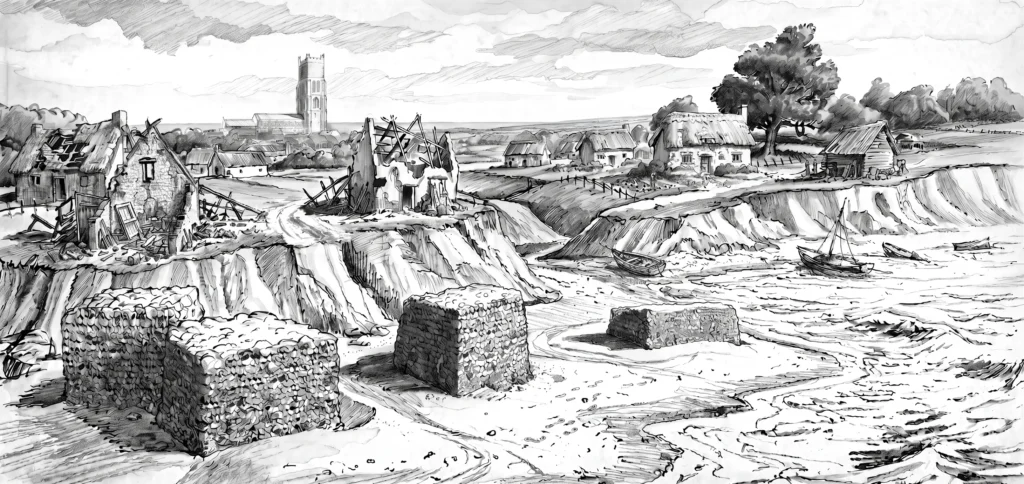
the sea breaks through the attempts at defences indicated by the caissons found this summer. Tudor documents indicate that houses were lost to the gradual advance of the sea. (Jam Press/James Mindham/Alfred Savin Project)
“We’re busy going through the medieval documentation and matching it to the physical finds to date, to suggest a better understanding of Shipden.
“For the present we’re putting forward ideas rather than conclusions.”
The mystery became more tangled in August 1888 when a Great Yarmouth pleasure vessel called Victoria struck a rock just beneath the surface.
Those on board were rescued, but attempts to free the vessel failed.
The wreck and part of the obstruction were later blown up because they posed a danger to shipping.
The explosion may have destroyed archaeological evidence, with divers finding scattered flint which could have come from the demolished structure.

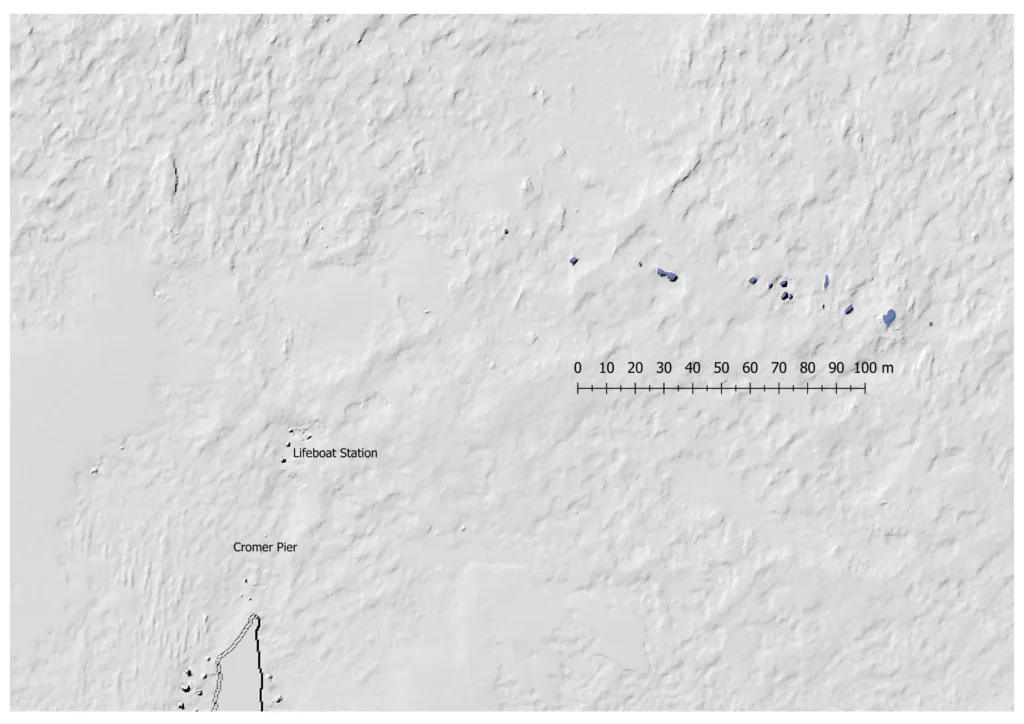
Lead diver Nick Schiller said: “Our initial interest was in the possibility of there being more remains from the vessel Victoria, which was wrecked on Church Rock in 1888.
“However, it’s been a bonus to help the Cromer team to take some steps forward in understanding the town of Shipden and the port of Cromer.
“It looks as if the supposed ‘church rock’ turns out to be a flint-built structure from medieval sea defences, so the hunt for a church site can go on – together with investigation of other significant features.”
The team said the summer’s work had “greatly enlarged the scope” of the investigation but raised more questions than it solved.
The diving season has ended, although the team hopes to explore the site again next year.
Findings and 3D reconstructions will be published online at www.cromer-shipden.co.uk and displayed at Cromer Museum.
The research forms part of the Alfred Savin project, supported by The National Lottery Heritage Fund.
READ MORE: Experts excited at potential glimpse of nocturnal Nessie

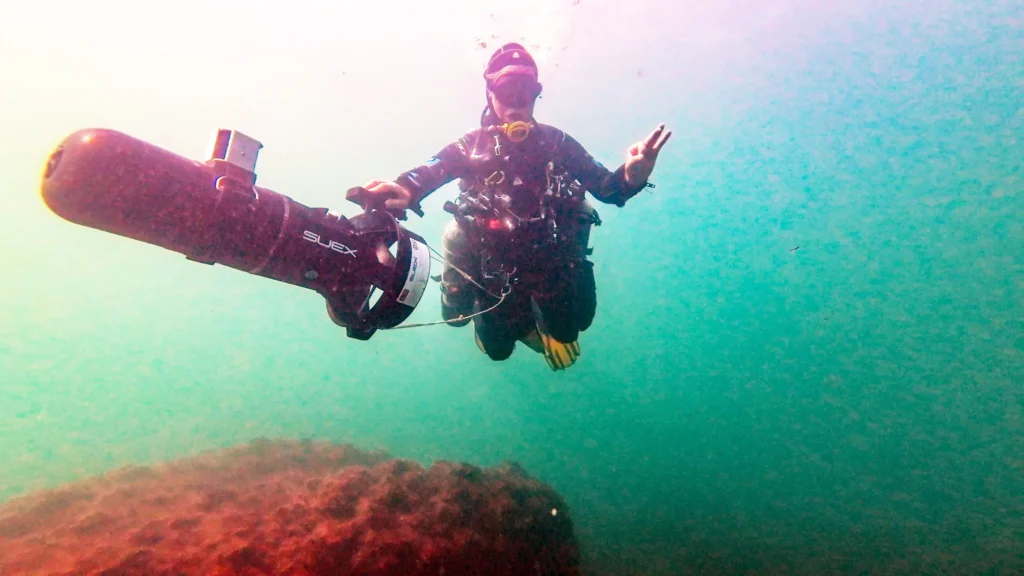

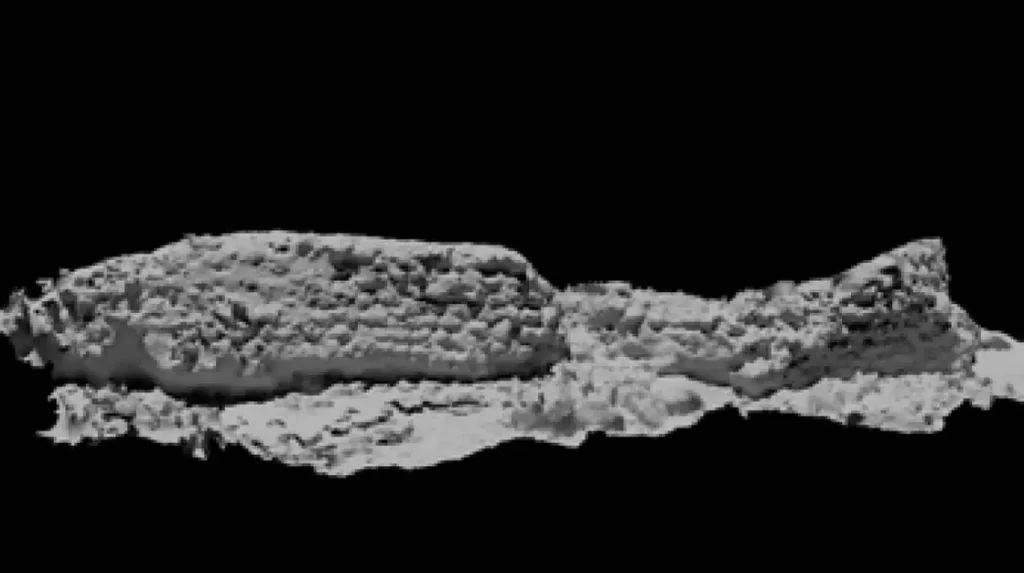
image. A comprehensive 3D survey of the site is one of the options for future exploration of the site. (Jam Press/Alfred Savin Project)