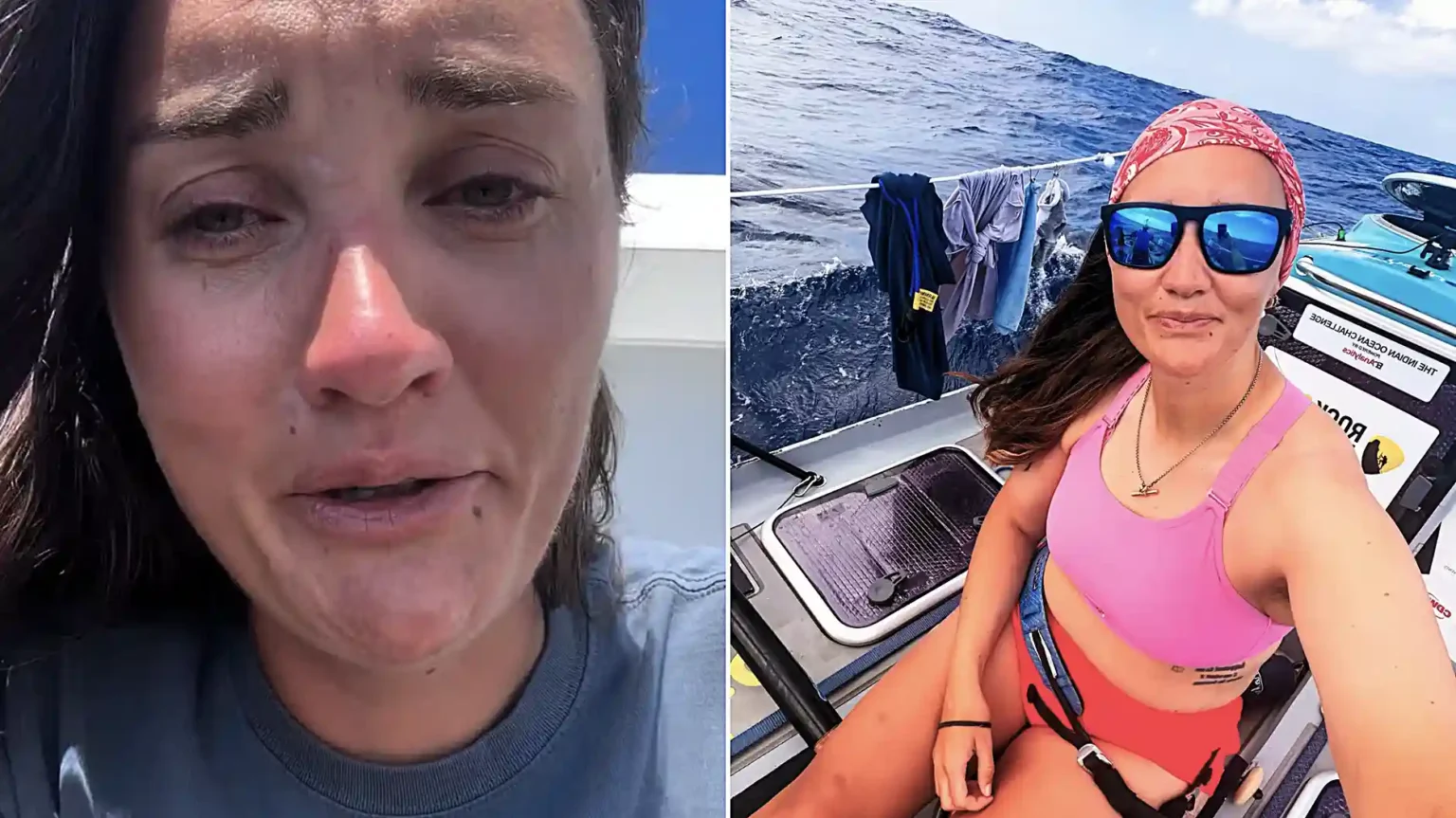


Four British rowers have been forced to abandon their gruelling world record attempt after their boat broke down in the middle of the Indian Ocean – sparking a dramatic rescue by a huge oil tanker.
Lara Vafiadis, 36, and her three crewmates were left stranded at sea after the rudder on their tiny 28ft rowing boat failed.
The devastating breakdown came after more than two months battling 40ft waves, storms, agonising salt sores and even a full capsize.
READ MORE: British rower battles 40ft waves and salt sores on a world record ROW
But with their boat already missing its daggerboard and becoming increasingly unstable, the four Brits were eventually forced to admit defeat and call to be rescued.
Their failed attempt to make history ended with the crew abandoning their boat and making a terrifying climb up the side of the 220-metre-long Hafnia Express oil tanker using a rope ladder.
Lara said the team were now “heartbroken, devastated and numb”.

She said: “Saturday night 12th September into Sunday 13th – 3am our rudder broke – a pin had snapped.
“We managed to take the rudder off and deployed our parachute anchor.
“Sunday morning – with a spare rudder pin onboard we were hopeful we could make the repairs and carry on.
“In ever increasing seas while trying to reattach the rudder the spare pin bent – making it unusable.”
The four-person Brain Waves crew – Lara, Billy Taylor, 54, Glyn Roberts, 46, and Susannah Cass, 37 – had set off from Carnarvon, Western Australia, on 11 July.
They were attempting a continent-to-continent crossing to Africa, with the expedition chasing two world records.
The team hoped to become the first mixed crew to complete the crossing, while Lara and Susannah were bidding to become the first women to do so, as reported by Whats The Jam.

They had managed around 3,520 nautical miles before disaster struck, leaving roughly 1,050 nautical miles still to go.
The rudder failure proved the final blow following weeks of punishment at sea.
Lara said: “After hours of trying to come up with more options, it was clear we would not be able to fix our rudder.
“After losing the daggerboard in the capsize and now no rudder meant the boat was very unstable and at risk of capsizing with potential danger to life.
“With the wind and waves due to only increase further and stay strong for 7-10 days we had to make the heartbreaking decision to call for a rescue.”
The crew contacted Madagascar Search and Rescue, which issued an emergency message to ships in the area.
A tanker and a cargo ship responded.
But with worsening conditions looming, the stranded rowers initially had little idea whether either would reach them in time.

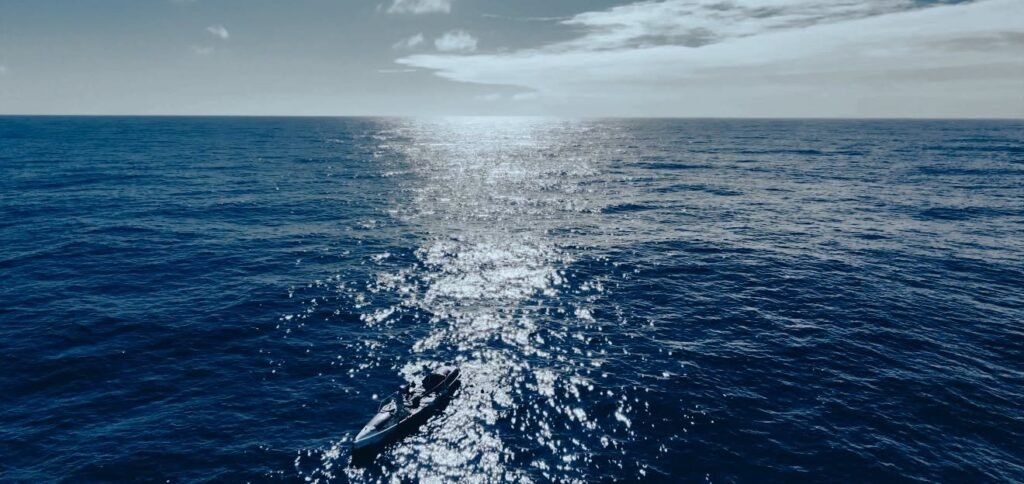
Lara said: “We had very little communication from this point so had no clear idea if we would be rescued in time before the weather would have made it impossible.
“After waiting on deck as a team for hours – we spotted the Hafnia Express on the horizon and made contact.
“They confirmed they were enroute to us for a rescue.”
But reaching the tanker did not immediately mean they were safe.
The enormous vessel had to carefully manoeuvre alongside their nine-metre rowing boat without its bow or wake smashing into them.
Lara said: “Seeing this 220meter tanker approach us was incredibly daunting while being sat on our nine meter ocean rowing boat.
“The tanker had to make a couple of approaches to ensure we wouldn’t be dragged into their bow or wake and potentially suffer catastrophic damage – but they did an incredible job.”
Lines were eventually thrown across before the four rowers had to leave their boat behind and climb a wooden rope ladder hanging down the steel side of the tanker.
Lara said: “In an incredibly tense and terrifying few minutes one by one we made the climb up the steel wall of the boat on a wooden rope ladder until we reached the top.

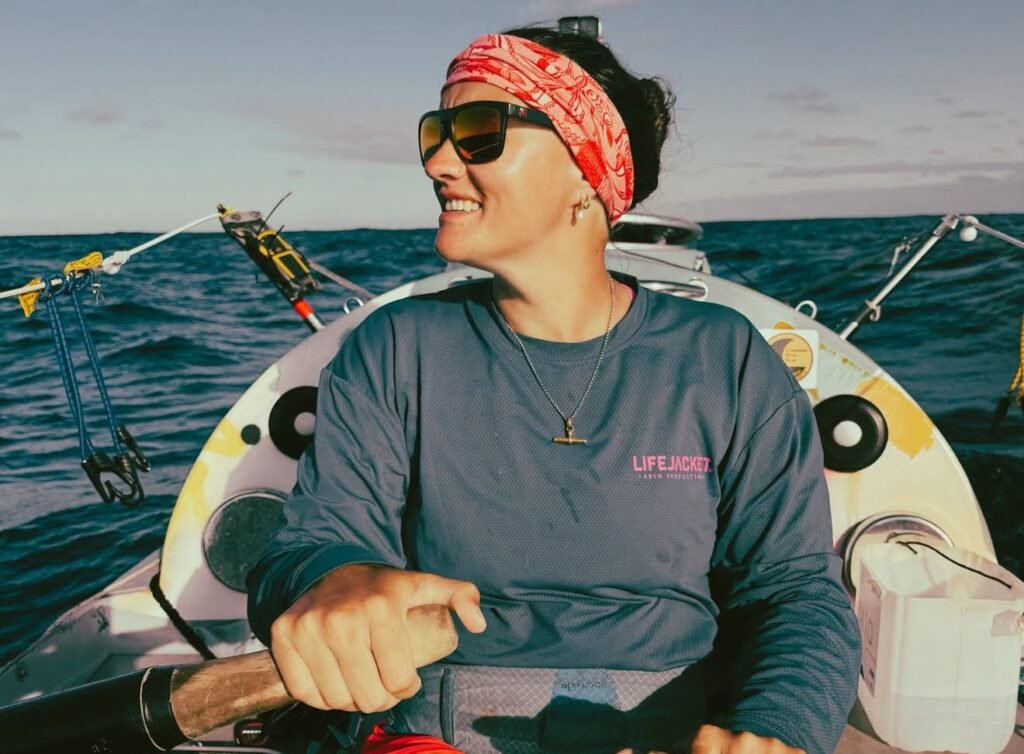
“With a bag each we had some personal possessions with us but lots left on the boat.
“We are heartbroken – devastated and numb.”
The rescue brought an abrupt end to an expedition which had already seen the crew endure a capsize, severe storms, tropical heat and painful sores caused by constant exposure to salt water.
For more than two months they had rowed around the clock in a punishing two-hours-on, two-hours-off routine while living on freeze-dried food.
Lara previously described the crossing as a “brutal daily grind”.
The crew had also been using the boat, Monkey Fist, as a floating laboratory to gather marine environmental data.
Despite losing their shot at the records, the rowers are continuing to raise money for Race Against Dementia and Rock2Recovery UK.
Lara said: “This journey was to raise money and make records – the records have gone but we are still focusing on our charities Race Against Dementia and Rock2RecoveryUK.
“Thank you from the bottom of my heart to every sponsor and supporter who believed in us.”
The four are now aboard the Hafnia Express and are due to reach Cape Town on 22 September before making their way back to the UK.
READ MORE: Treasure hunter finds country’s largest ever Viking hoard of silver coins