
Eerie photographs reveal an abandoned theme park where a giant roller coaster stands surrounded by water and vegetation – and the world’s loneliest killer whale once lived.
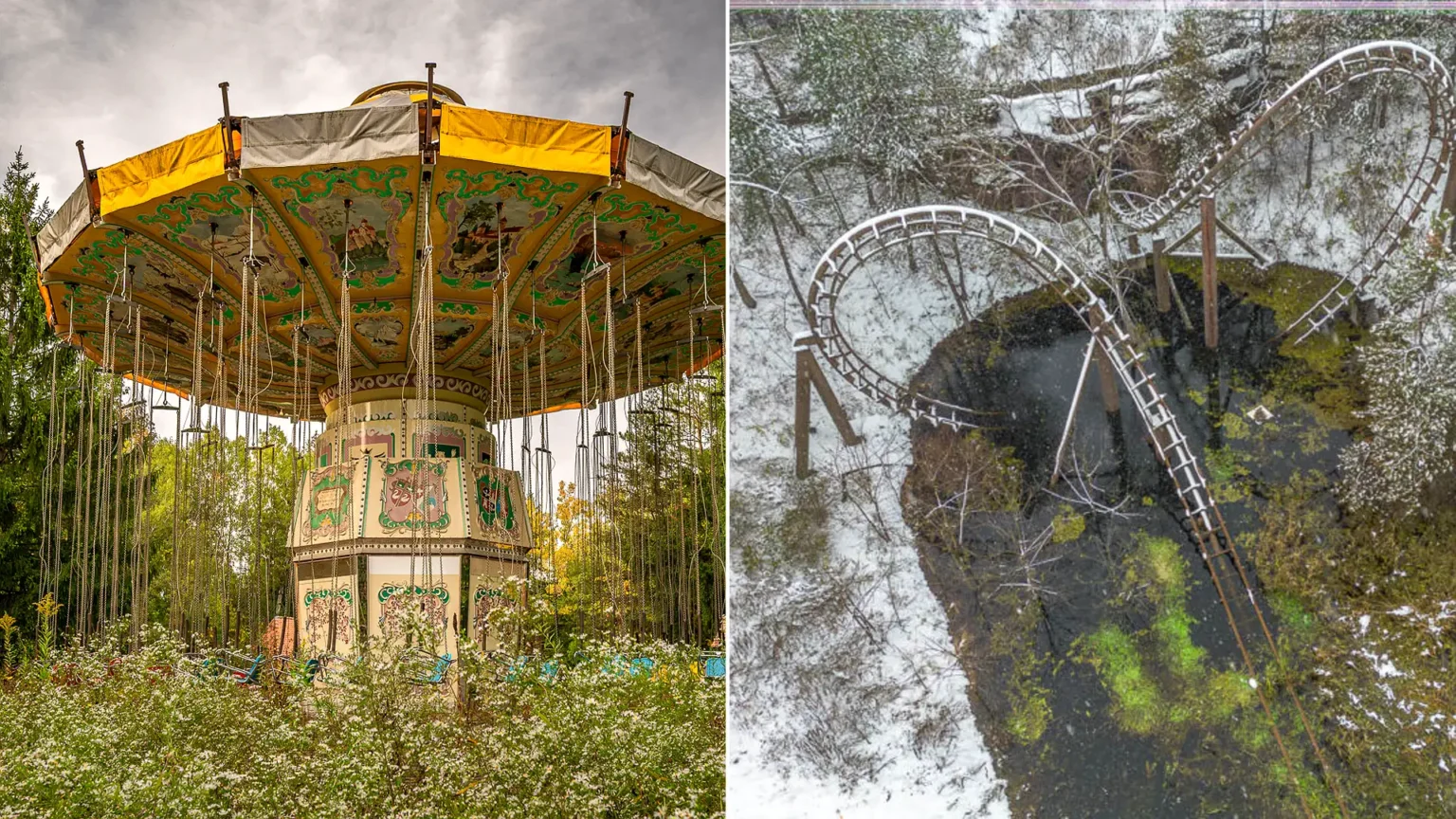
The forgotten attraction, in Niagara Falls, Canada, has been left eerily silent, with deserted rides, empty swings and fairytale cottages slowly being reclaimed by nature.
Marineland first opened in 1961, becoming one of Canada’s best-known tourist attractions and drawing generations of families to its sprawling grounds.
READ MORE: Inside creepy crocodile ZOO left to rot for 13 YEARS in Brit holiday hotspot
The park was founded by businessman John Holer and expanded over the decades to include roller coasters, marine-life exhibits and other amusement rides, as reported by What’s The Jam.
Now, striking photographs taken by Canadian urban explorer Dave Conlon, known online as Freaktography, show the famous theme park as it stands today.
Among its biggest attractions was Dragon Mountain, an enormous steel roller coaster which opened in 1983.
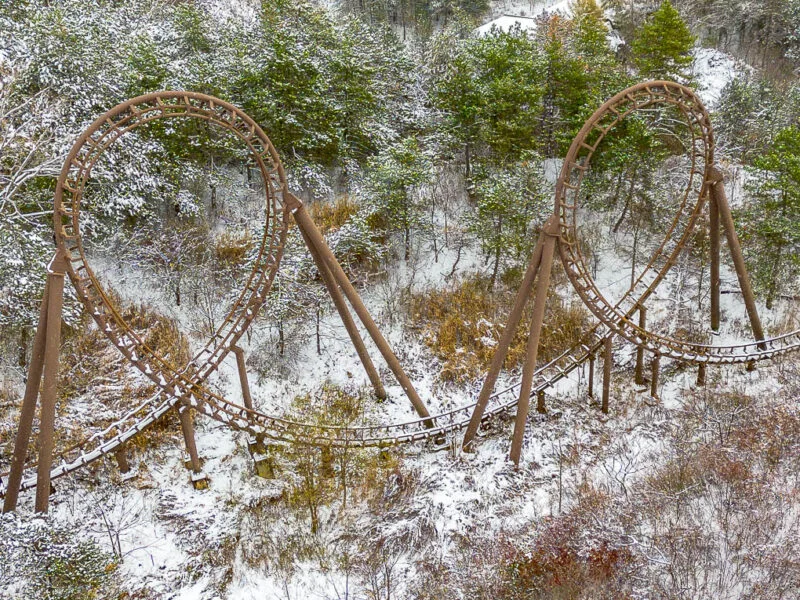
Designed by Arrow-Huss, the ride was once billed as the world’s largest steel roller coaster by area, with its twisting tracks stretching across roughly 30 acres.
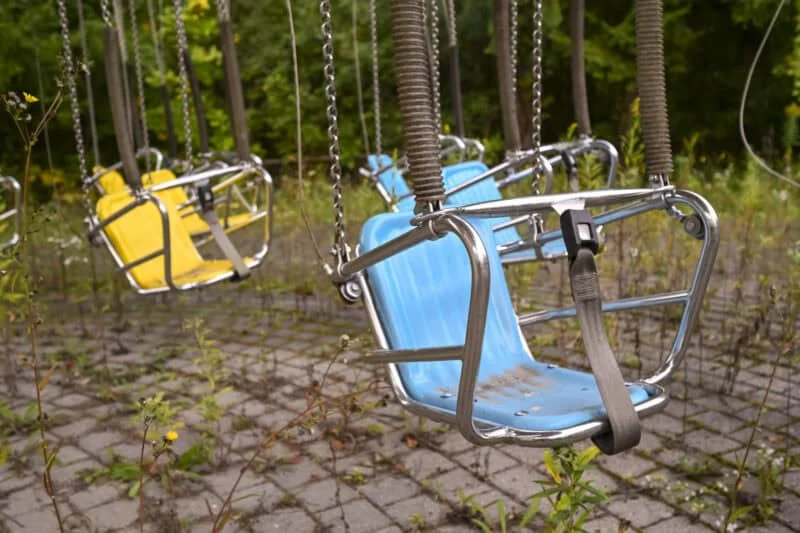
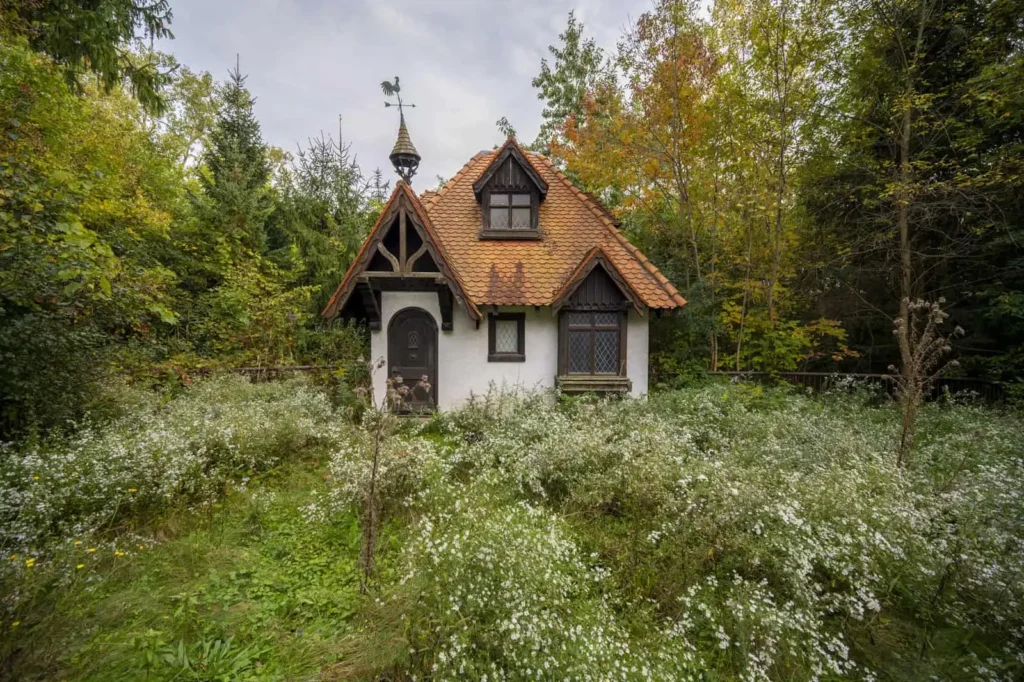
Other images reveal brightly coloured swing rides hanging motionless above weed-covered paving stones, while decorative buildings disappear beneath wildflowers.
But Marineland also has a remarkable history involving one of the world’s most famous killer whales.
Kiska, who was captured off Iceland in 1979, spent more than four decades at the attraction.
She gave birth to five calves, but none survived into adulthood.
Another former Marineland resident was Keiko, who later became internationally famous after appearing in the film Free Willy.
The park welcomed its final public visitors in September 2024 and has remained closed since.
Its remaining captive whales and dolphins were subsequently relocated in 2026.
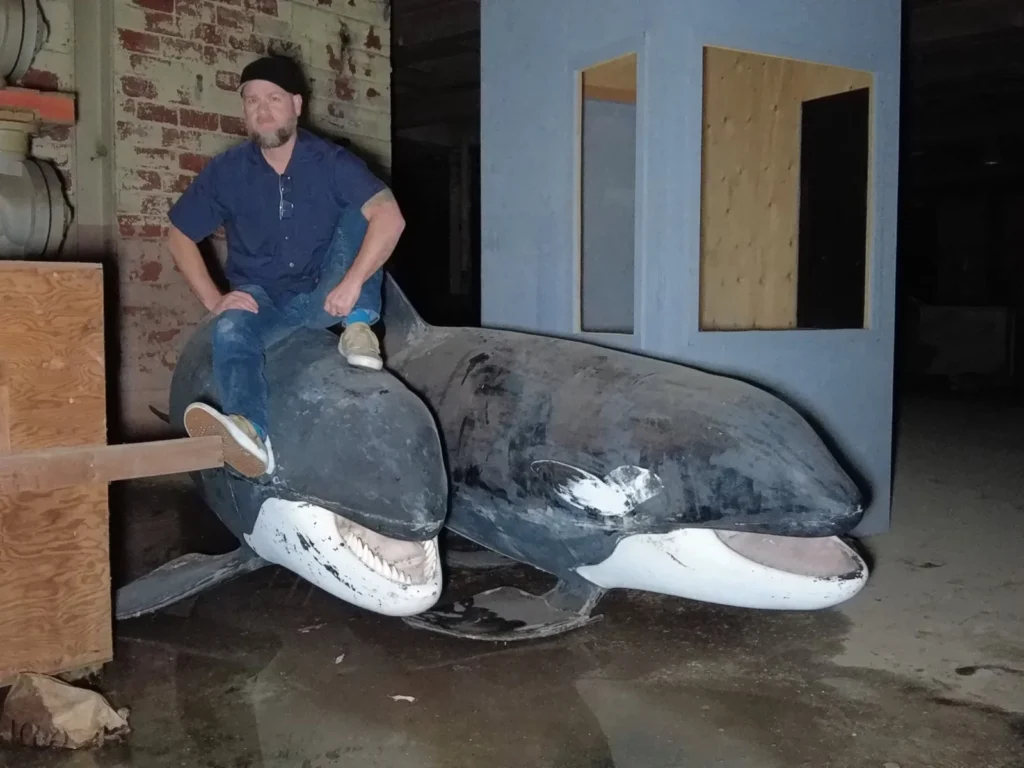
Dave also made an unusual discovery while exploring an abandoned warehouse previously used by Marineland.
He found two enormous artificial killer whales which had once stood atop the attraction’s famous roadside sign.
Recalling the discovery, he wrote: “A few years back, I found the two missing Orcas from the sign in an old abandoned warehouse that Marineland used for storage.”
With Marineland’s future uncertain, the images offer a haunting glimpse into a once-popular attraction that entertained visitors for more than six decades.
SLIDE 1: A THEME PARK LOST TO TIME
Eerie photographs show Marineland in Niagara Falls, Ontario, where rides that once entertained thousands of visitors now stand silent among overgrown vegetation.
The park was also once home to Kiska, a killer whale nicknamed the world’s loneliest orca, whose extraordinary story attracted international attention.
SLIDE 2: THE RIDE THAT THRILLED THOUSANDS
Dragon Mountain opened in 1983 and was designed by American roller-coaster manufacturer Arrow-Huss.
The sprawling steel ride became known for its dramatic twists, high-speed drops and unusual layout.
SLIDE 3: SWALLOWED BY WATER
Another remarkable photograph shows the roller coaster descending towards a flooded area, with dark water and bright green vegetation gathering beneath its towering structure.
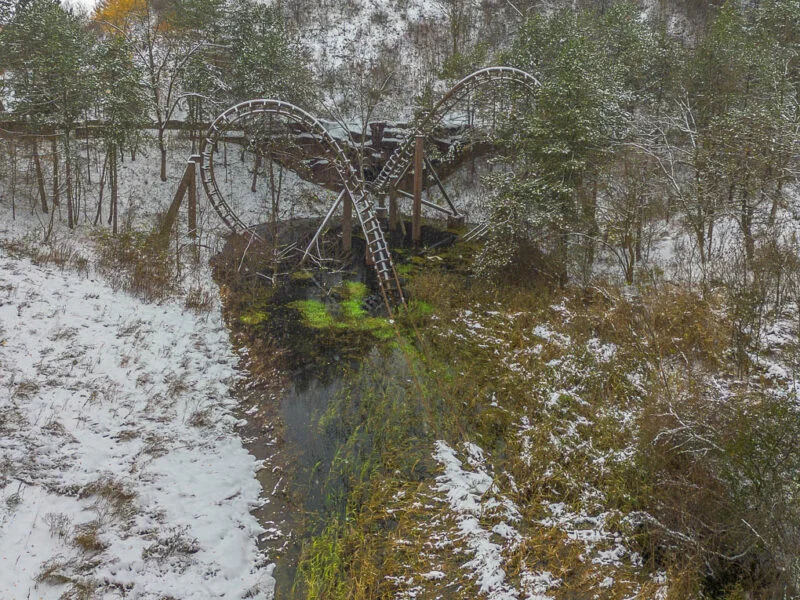
Photographer Dave, from Freaktography, documented the unusual sight, describing Dragon Mountain as one of the world’s most unusual abandoned roller coasters.
SLIDE 4: SIX DECADES OF FAMILY FUN
Marineland first opened in 1961 under businessman John Holer, beginning as a relatively small marine-life attraction before expanding into a major amusement park.
Over the following decades, it became a familiar destination for tourists visiting nearby Niagara Falls.
However, the park welcomed its final public visitors in 2024, ending more than 60 years of family entertainment.
SLIDE 5: THE SWINGS STAND STILL
Elsewhere, a colourful chair-swing ride stands abandoned among waist-high weeds and wildflowers.
Its bright paintwork has survived, creating an unusual contrast with the overgrown grounds.
SLIDE 6: A RIDE FROZEN IN TIME
A closer look reveals blue and yellow swing seats still hanging above the paved ground, with weeds sprouting through the cracks beneath them.
The metal frames and safety restraints remain in place, almost as though visitors have only just stepped away.
SLIDE 7: A FORGOTTEN FAIRYTALE
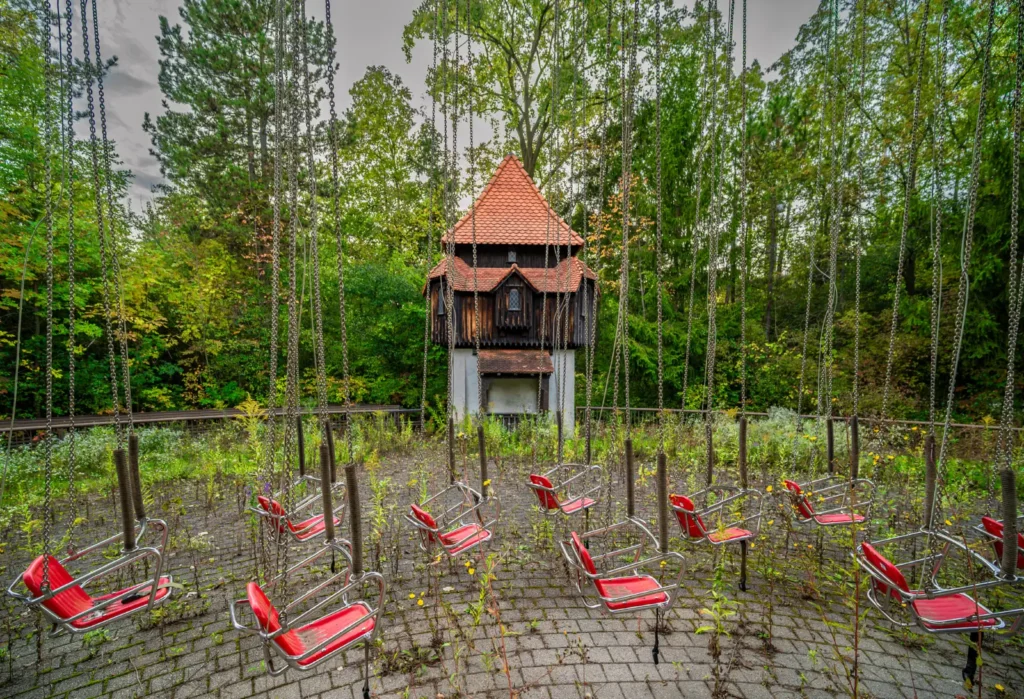
Behind rows of abandoned red swings, a fairytale-style building with a pointed roof and timber detailing stands surrounded by wildflowers.
The unusual structure is one of several whimsical features that once gave Marineland its family-friendly atmosphere.
SLIDE 8: THE COTTAGE IN THE WOODS
A charming little cottage with a steep tiled roof, decorative wooden beams and tiny windows appears almost untouched by time.
Alongside its enormous roller coasters and marine exhibits, Marineland once featured smaller attractions designed to appeal to younger visitors.
SLIDE 9: A FAMOUS CANADIAN LANDMARK
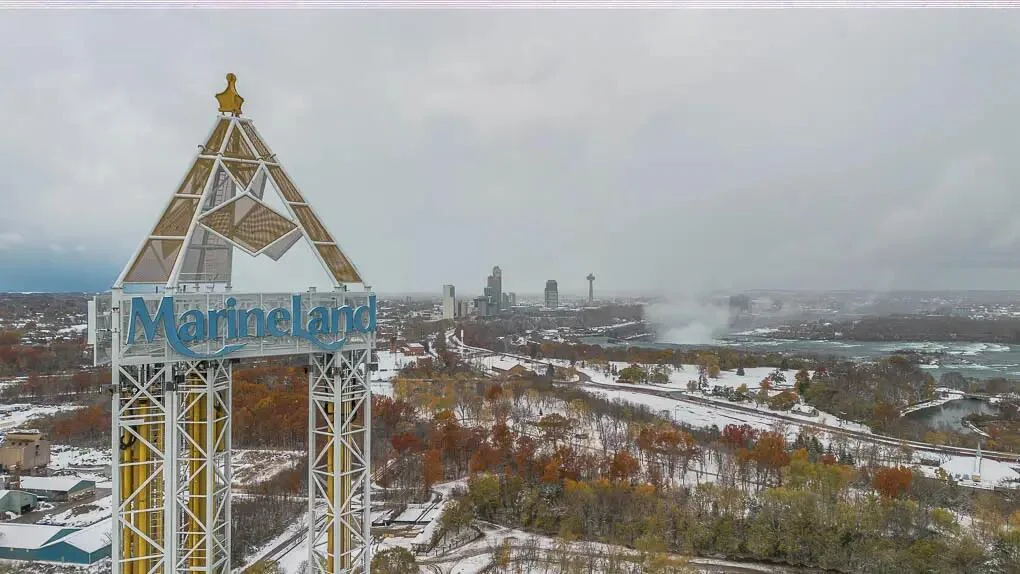
For generations of holidaymakers travelling to Niagara Falls, Marineland’s enormous roadside tower was a familiar sight.
The distinctive structure, bearing the park’s name, became one of the attraction’s most recognisable landmarks.
Its final public season ended in September 2024, although the site’s future remains a subject of considerable interest.
SLIDE 10: WHERE WHALES ONCE SWAM
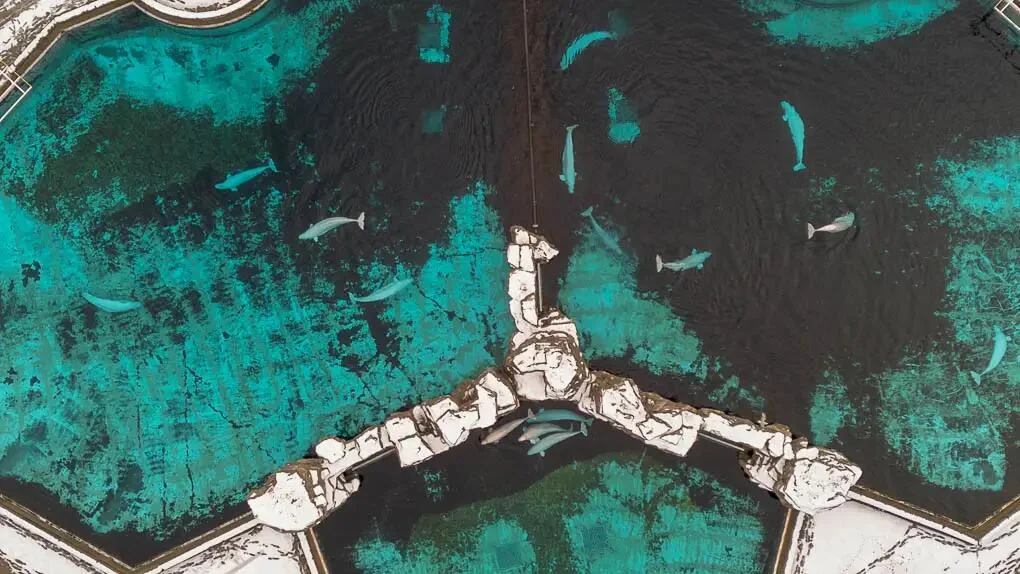
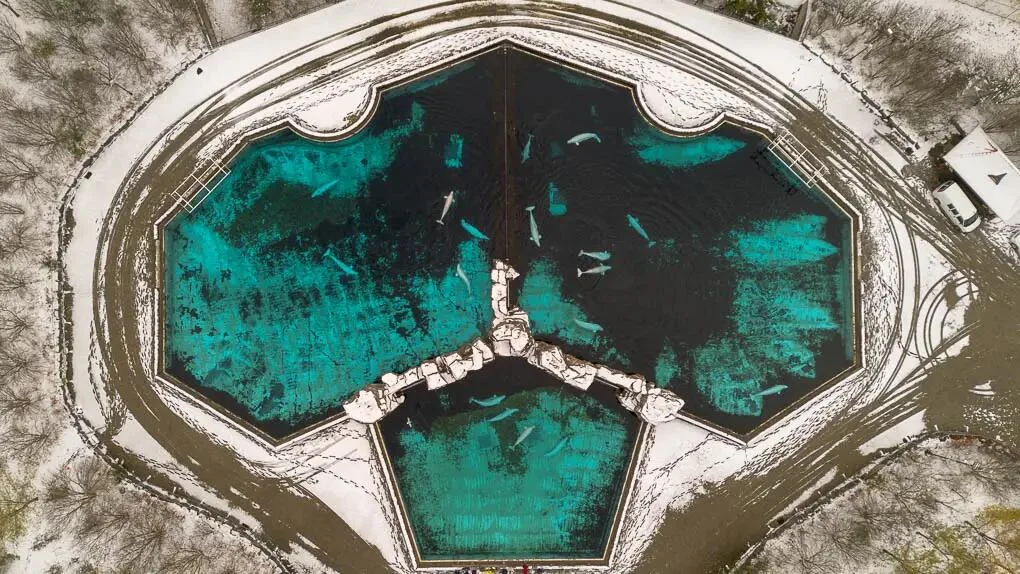
Marineland was once famous for its marine-life displays, with enormous pools housing whales and other animals.
This striking historic aerial photograph shows several whales swimming through the interconnected enclosures.
The park became particularly well-known for its beluga whales, dolphins and killer whales.
SLIDE 11: A TROUBLED HISTORY
Over the years, Marineland housed numerous orcas, including Keiko, who later became famous for starring in the 1993 film Free Willy.
Another was Kiska, captured off Iceland in 1979 and brought to Marineland as a young whale.
She would spend more than four decades at the park before becoming the focus of international attention.
SLIDE 12: THE WORLD’S LONELIEST ORCA
The famous roadside sign once featured three artificial killer whales, reflecting the animals that had become central to Marineland’s identity.
Among them was Kiska, who was nicknamed the world’s loneliest orca after being left without another killer whale for company in 2011.
She gave birth to five calves, but tragically none survived into adulthood.
Kiska died on 9 March 2023, aged approximately 47, becoming the last captive orca to die in Canada.
SLIDE 13: AN UNEXPECTED DISCOVERY
In a remarkable discovery, photographer Dave came across the two enormous artificial killer whales lying inside an abandoned storage warehouse.
Dave recalled: “A few years back, I found the two missing Orcas from the sign in an old abandoned warehouse that Marineland used for storage.”
SLIDE 14: THE FORGOTTEN WHALES
Another extraordinary photograph shows Dave sitting on top of one of the abandoned figures, demonstrating just how enormous the former roadside decorations were.
The photographs of the warehouse discovery were taken during an earlier exploration, rather than the park’s final public season.
SLIDE 15: THE END OF AN ERA
After more than six decades, Marineland closed to the public following its 2024 season, with its remaining whales and dolphins relocated during 2026.
While the future of the sprawling property remains uncertain, the abandoned rides, forgotten decorations and overgrown woodland offer a remarkable glimpse into its past.
READ MORE: ‘Phishing scam left me with £3.4 MILLION in fake bookings and 30 calls a minute’