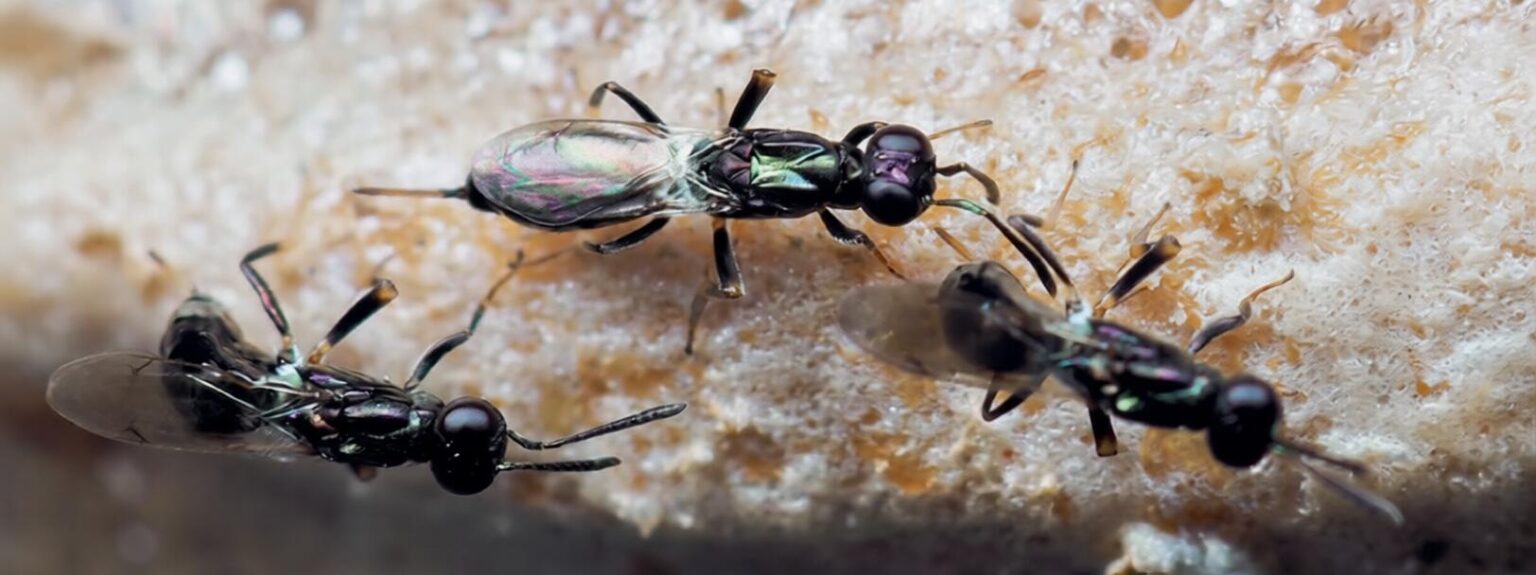

A creepy parasitic wasp that turns unborn praying mantises into food for its own offspring has had its male scientifically described for the first time.
The tiny insect was identified after scientists spotted photographs posted on social media, leading to a remarkable discovery that has shed new light on the mysterious species.
Researchers say the wasp, Eupelmus curvator, lays its eggs inside the egg cases of praying mantises, with the developing larvae feeding on the mantis eggs before emerging as adults.
READ MORE: Tiny insect thought EXTINCT for 73 years makes incredible comeback as more than 20 found
- Advertisement -
The study, published on 30 June, also marks the first recorded sighting of the species in Japan, as reported by What’s The Jam.
Lead researcher Taisuke Kawano, a specialist in eupelmid wasps at the Kyushu University Museum, said: “The discovery was made possible through social media.

“It all started with a post by a general user who shared a photo capturing a wasp emerging from a mantis egg case.
“A colleague of mine noticed the post and forwarded it to me via direct message.”
The species had previously only been known from China, while only female specimens had ever been scientifically documented.
- Advertisement -
The newly published research formally describes the male for the first time.
Researchers confirmed the wasp targets the egg cases of the narrow-winged mantis (Tenodera angustipennis).
In one case, a single mantis egg case collected in Fukuoka produced 77 wasps, while only a handful of baby mantises survived.
- Advertisement -
Kawano said: “Eupelmus curvator is particularly interesting because it parasitises the egg cases of praying mantises.
“While some other genera in Eupelmidae are specialised egg parasitoids, most species of Eupelmus attack larvae or pupae of other insects, and only very few are known to develop inside mantis oothecae.
“This makes Eupelmus curvator a rather unusual and biologically intriguing species.”
Scientists say the discovery also highlights the growing role social media is playing in scientific research.
Nature enthusiasts first posted photographs and videos of the wasps in 2018 and again in 2021, before researchers contacted them directly and obtained specimens for study.
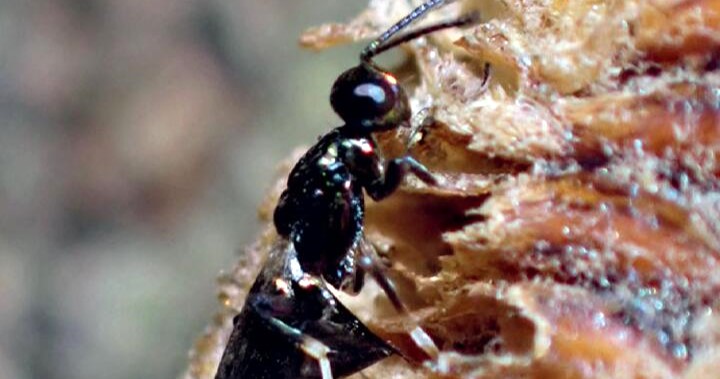
Kawano said: “Social media is becoming an increasingly important tool in citizen science.
“One of its greatest strengths is that it effectively increases the number of ‘eyes in the field’.
“These observations often come from places and times that researchers would not normally be able to cover.
“When particularly interesting records appear, we can contact observers directly via social media, and in some cases obtain specimens for further study.”
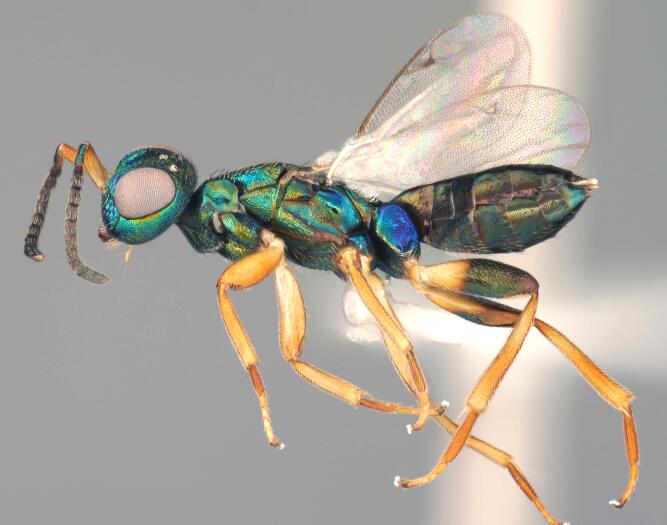
To study the insect in detail, researchers used advanced macro photography and focus-stacking techniques to capture highly detailed images of its anatomy.
Female Eupelmus curvator measure just 2.2mm to 3.2mm long, excluding the egg-laying ovipositor.
Kawano added: “One of the most exciting aspects is how social media is changing the way we conduct research.
“The social media platforms allow researchers to encounter observations that would otherwise remain unnoticed, effectively transforming everyday posts into valuable scientific data.”
He joked: “Personally, I sometimes joke that even when I am browsing social media, I am actually working.
“And it is sometimes true… though not always.”
The findings were published in the journal Travaux du Muséum National d’Histoire Naturelle “Grigore Antipa”.
READ MORE: ‘Tiny but ferocious’ beast weighs less than a teaspoon of water – and hunts lizards at night