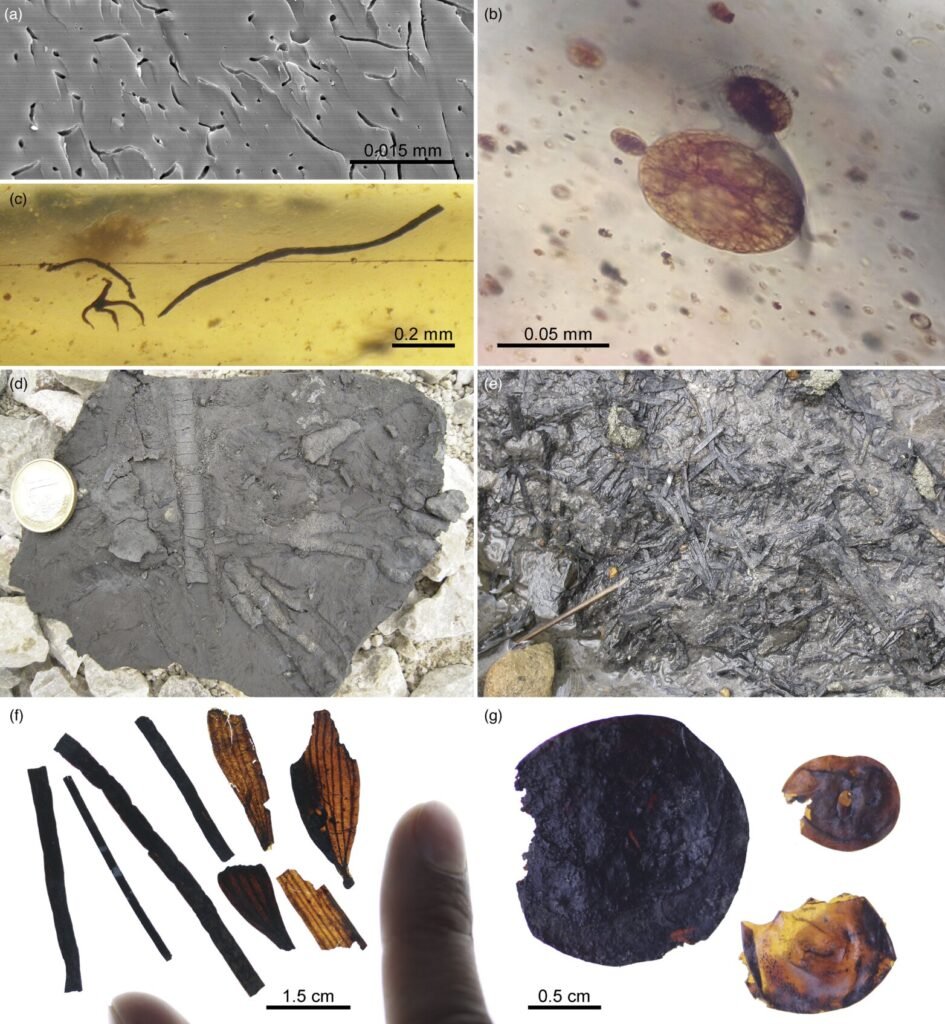


Construction workers have accidentally uncovered a 105-million-year-old hoard of rare blue-violet amber packed with over 1,500 preserved prehistoric creatures.
The chance find during routine roadworks in 2005 has now been set out as one of Europe’s richest windows into the age of the dinosaurs.
Scientists spent nearly two decades excavating the deposit after two geologists spotted its extraordinary value in 2007.
READ MORE: Brits in Ali G’s hometown petition council to build LANDMARK in his honour
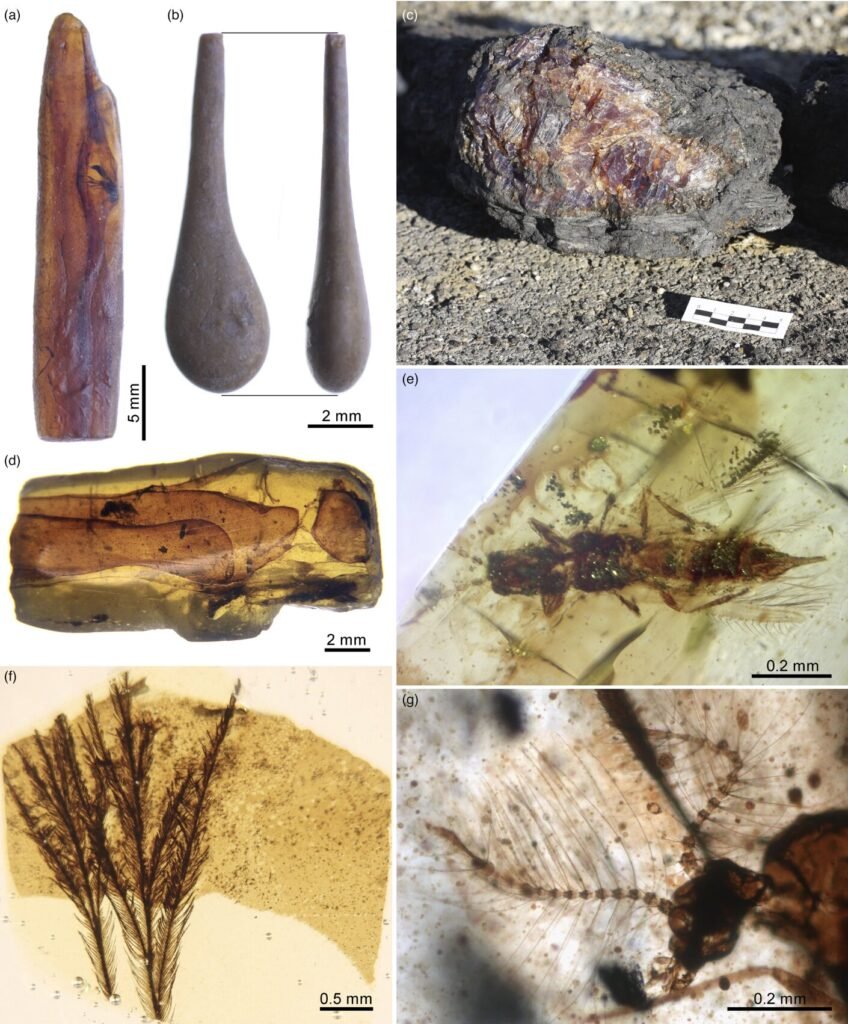
The fossilised tree resin glows with a striking blue-violet hue caused by the chemical compound guaiazulene, a colour almost unknown in amber of this age.
The site, located in the hills of Cantabria in northern Spain, was exposed when crews improved the road to El Soplao Cave.
Idoia Rosales Franco and María Najarro de la Parra, of Spain’s Geological and Mining Institute, recognised the scientific prize two years later and took samples to specialist Enrique Peñalver.

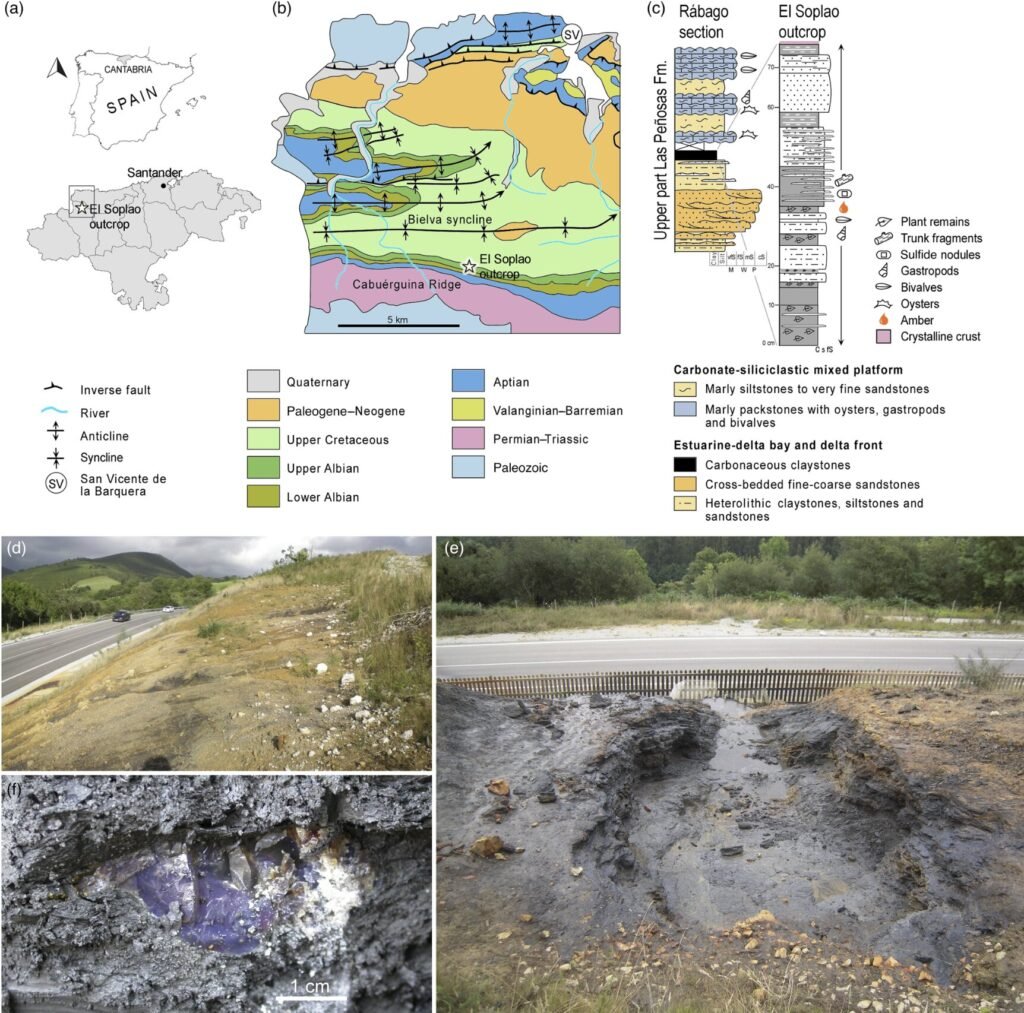
A new review published in the Journal of the Geological Society on 13 August has now underlined the site’s status as a world-class fossil archive.
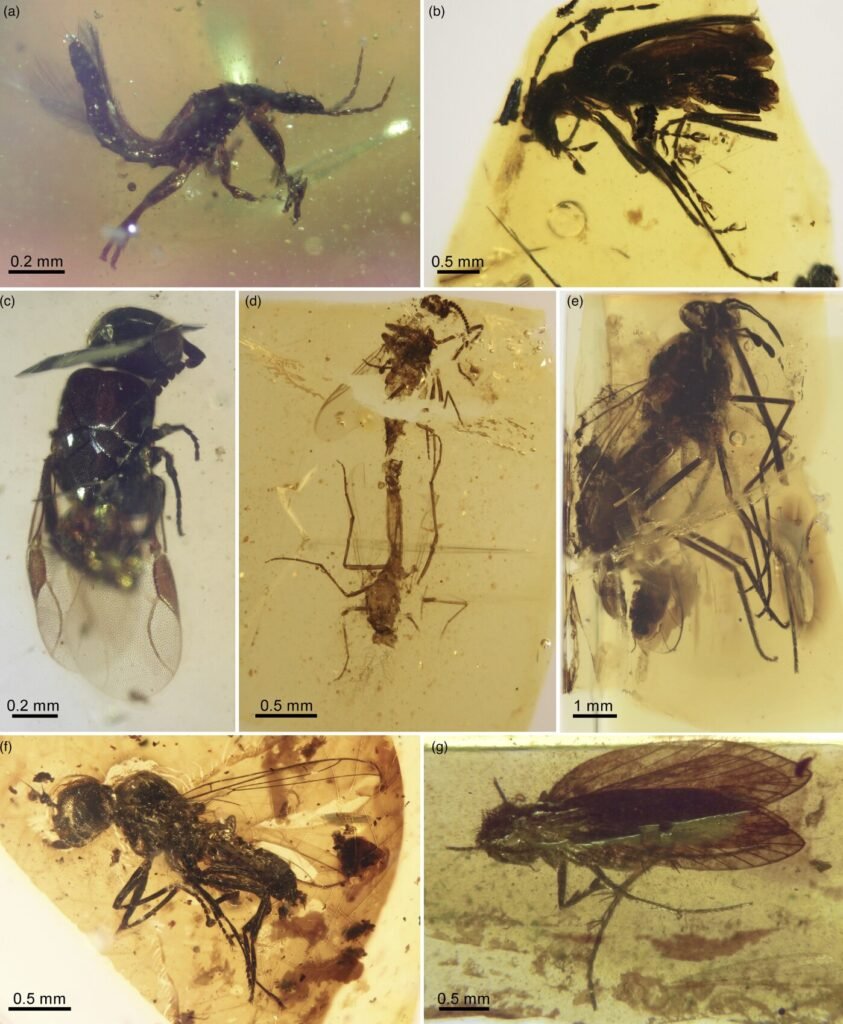
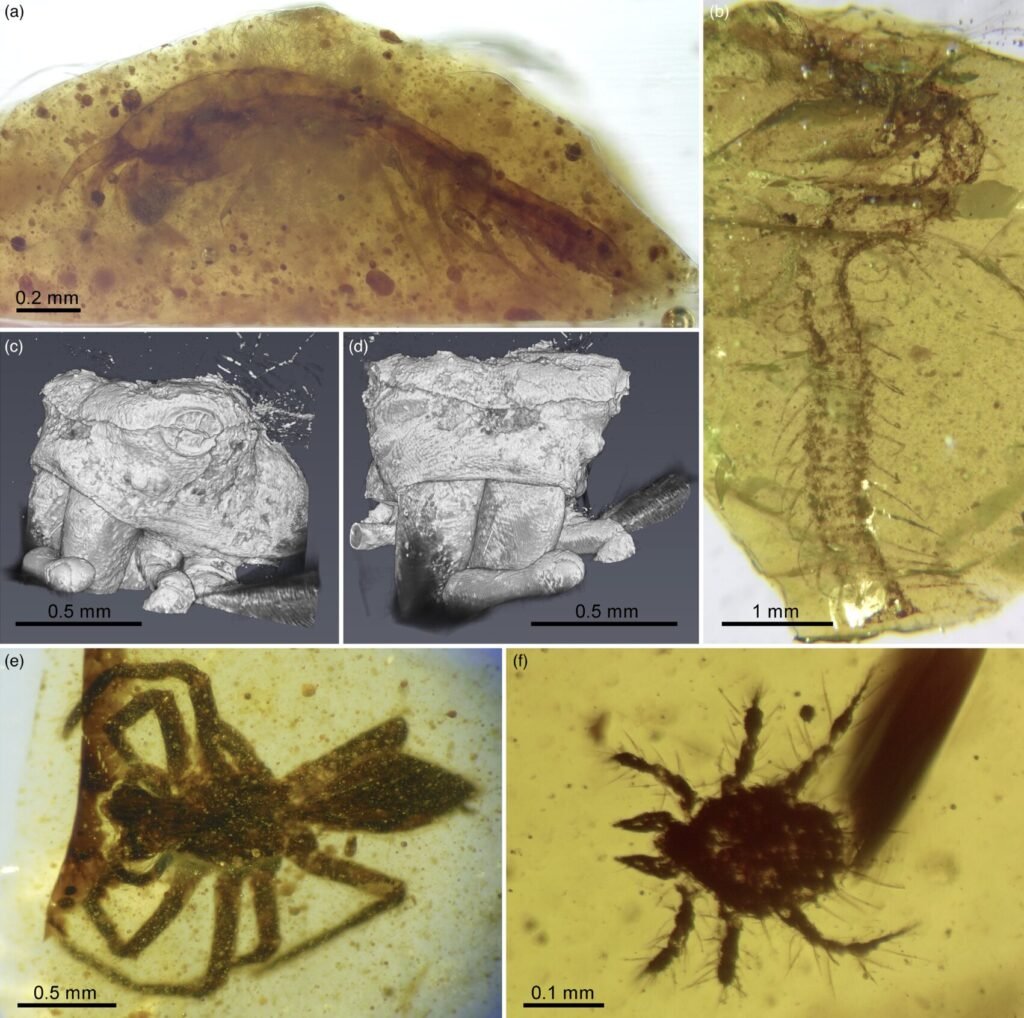
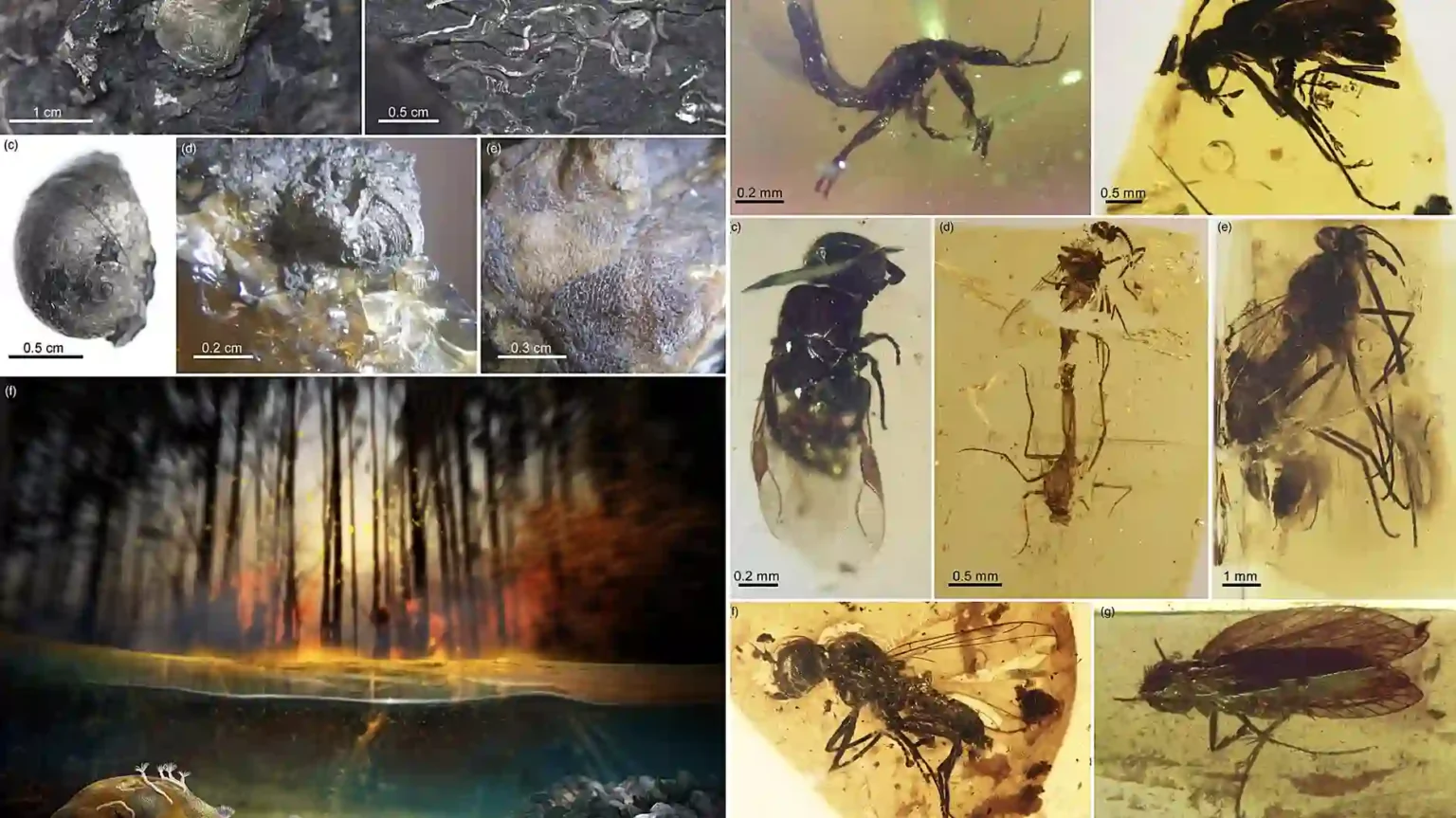
Over 1,500 arthropod specimens have been recovered from the sticky resin, dating to the Albian stage of the Early Cretaceous.
Researchers have named 40 species so far, 32 of them new to science, spanning insects, spiders, crustaceans and mites.
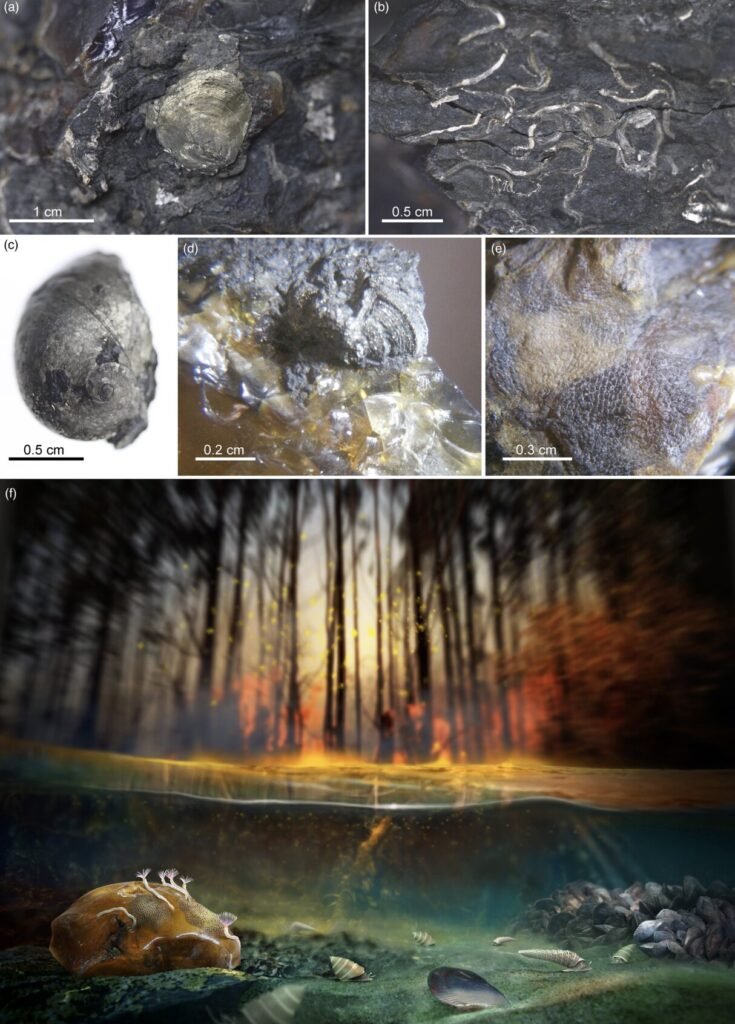
Dr Alba Sánchez-García of the University of Valencia, who led the study, said the Albian ambers “allow the reconstruction of terrestrial ecosystems during a period of major biotic change, marked by the rapid diversification of flowering plants”.
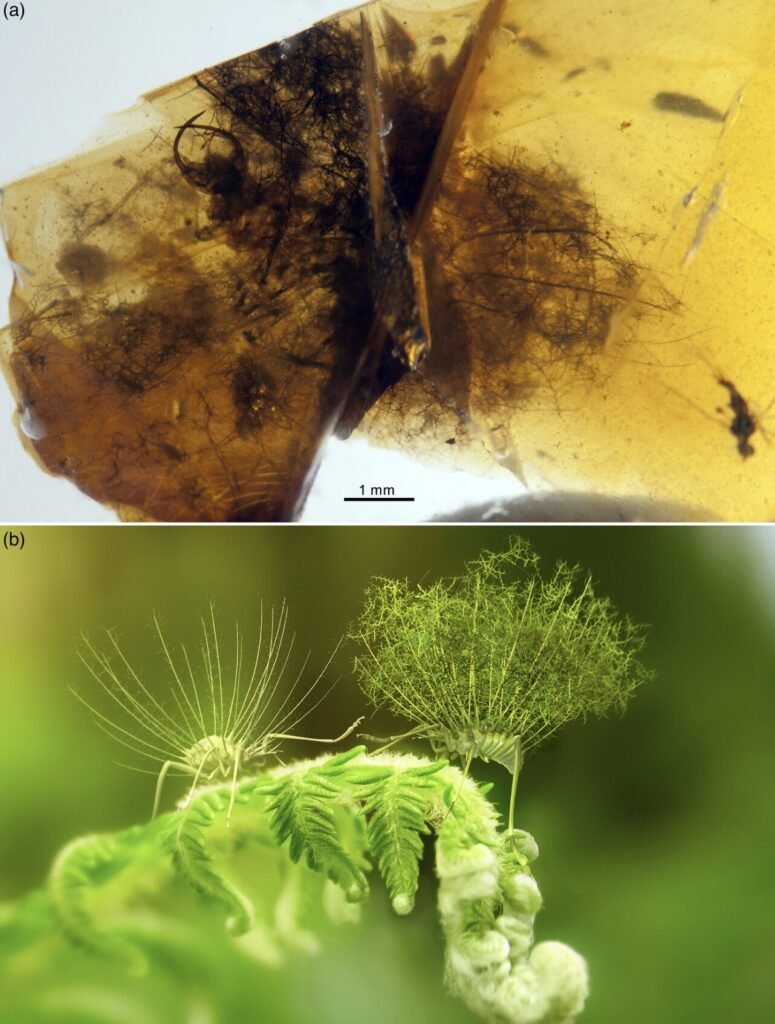
Standout treasures include the oldest tick known to science and a lacewing larva, Hallucinochrysa diogenesi, that camouflaged itself by carrying debris on its back.
That same trick is still used by its living descendants over 100 million years later.
A fly was frozen mid-meal with pollen from an extinct gymnosperm stuck to its body, offering direct evidence that insect pollination was already underway before flowering plants took over.
Theropod dinosaur feathers were also recovered, some apparently snagged from living animals that brushed against flowing resin.
The team said studies suggest “one of the El Soplao resin producers may have belonged to the conifer family Cheirolepidiaceae”.
Most inclusions survive as three-dimensional hollow casts that retain microscopic anatomical detail.
“Bioinclusions are generally three-dimensionally preserved, showing high anatomical fidelity,” the researchers noted.
Ants are completely missing, even though they appear in amber of similar age elsewhere in the world.
The deposit is now classed as a Konservat-Lagerstätte – a site of exceptional preservation that reconstructs entire ecosystems rather than isolated scraps.
The Government of Cantabria has backed the review as confirmation of the site’s international standing, as reported by Whats The Jam.
Ongoing fieldwork is still applying new techniques to unlock more secrets from the blue-violet resin.
READ MORE: ASDA launches new feature across 150+ stores after landmark food law