
A family law barrister has launched a campaign to change the law so domestic abuse victims no longer have to choose between escaping their abuser and leaving their beloved pets behind.
Christina Warner has spearheaded Ruby’s Law, a proposed amendment to existing legislation which would, for the first time, explicitly recognise pets as victims of domestic abuse.
The 43-year-old has dealt with domestic abuse cases every day throughout her career and says she became increasingly aware that the law was failing to acknowledge the devastating role pets could play in abusive relationships.
READ MORE: Ex-Marilyn Monroe lookalike in busty outfit crowned Britain’s best town crier
“We know the perpetrator will do everything they can to keep the victim under their control,” Christina, who has worked as a barrister for 12 years after previously practising as a solicitor, from Croydon, London, told What’s The Jam.
“Some case examples on our research brief are where the animal is used as a tool of control.
“They can threaten to harm or actively harm the animal to keep the victim in control.
“They can have the animal euthanised as punishment, deprive access to finances to get veterinary care the animal needs.
“It can be harrowing, with starving, drowning, or running them over.
“It goes to the core of the abuse.
“Perpetrators isolate victims, so they have no one to turn to and they turn to the animal as a reason to get out of bed.
“Walking the dog for 15 minutes may be the only time they’re able to get out of the house.”
Ruby’s Law aims to ensure animals are included in protective court orders, preventing abusers from using them as weapons of control by threatening to hurt, kill, or take them away.
Under the proposals, victims would be able to secure protection for their pets through Non-Molestation Orders, while Occupation Orders could grant them custody of their animals.
Any breach involving threats or harm to a pet would also become a criminal offence, punishable by up to five years in prison.
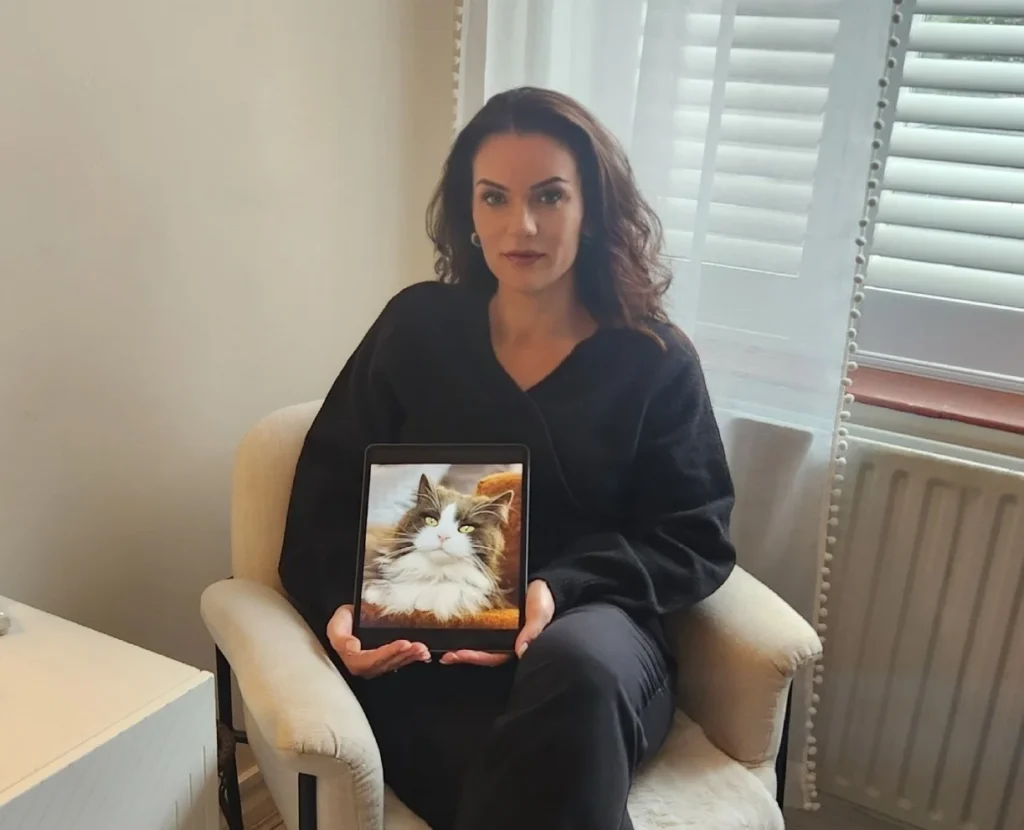
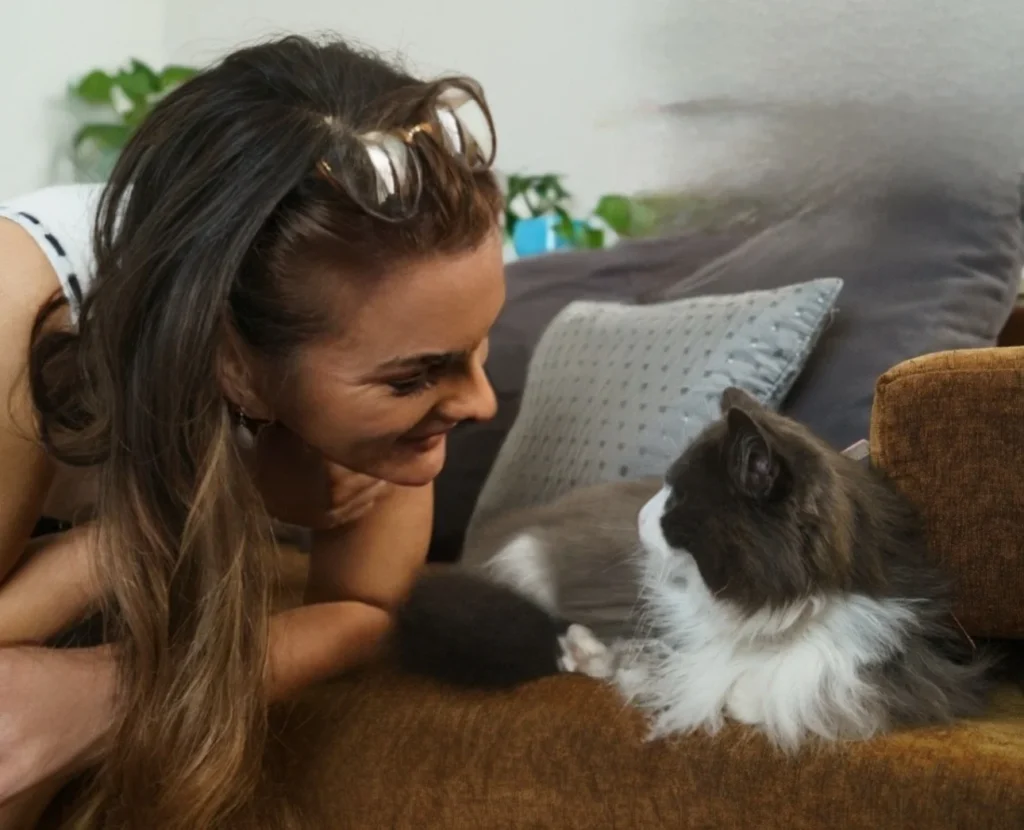
Christina has named the campaign in memory of her Persian cat Ruby, who passed away in 2023, aged 13.
She says Ruby helped her through some of the darkest days of her career in 2018 when she dealt with a series of cases involving clients seeking protective orders who were desperate to protect their pets.
But there was little legal protection available to them.
Christina said: “The law didn’t seem to acknowledge that pets can be affected or the roles that pets can play in survivors’ lives.

“My clients want to protect their companion animal as well.
“I understand the bond, how important pets are; they are central to the household and the role they play in our lives isn’t lost on me.
“Clients didn’t want to leave the perpetrator without their pets, or they’d go back to the perpetrator because they didn’t want to leave the animal behind.
“Ruby was as smart and naughty as she was pretty.
“She was lovely, a real comfort when I was finding those cases really difficult.
“She represents the animals that we’re protecting.

“I felt really grateful to have her; she’d jump straight on my lap and force me to take ten minutes to breathe.
“It’s a way of keeping Ruby’s memory alive.
“She’s the face of the campaign and the spirit, how sassy she was.
“Ruby gave me routine at a time when it was a lot to deal with those types of cases.
“She’s the symbol behind the campaign.”
Under current legislation, the Domestic Abuse Act 2021 recognises coercive, emotional and psychological abuse, but does not explicitly identify the abuse of pets as a method of control.
Meanwhile, the Family Law Act 1996 can prevent an abuser from returning to the family home, but does not specifically protect animals from being reclaimed, harmed or threatened.
Christina says this leaves a significant gap in protection for both survivors and their pets.
Abusers can use animals as a means of maintaining control, threatening to hurt them or actively harming them to frighten and intimidate their victims.
A Dogs Trust report found that 97% of victims in abusive households also saw their pets harmed or threatened, with nearly half of those animals killed.
Studies have also found that survivors whose abusers targeted animals endure an average of 50 violent incidents before seeking help, compared with seven among those who did not experience pet abuse.
Christina believes the figures demonstrate why protecting animals must be an integral part of tackling domestic abuse.
She also warned that victims can feel embarrassed about raising concerns over their pets when they are already experiencing abuse themselves.
She said: “It’s more common than you’d anticipate to see pets being used.
“Survivors will be embarrassed to bring it up.
“They’ll say ‘it’s just a small thing’, but it’s not.
“Pets can give victims a reason for living.
“There are suicides as a result of domestic abuse and animals give survivors a reason to live.”
The proposals would update the Domestic Abuse Act 2021 to classify pet abuse as a form of coercive control, while also amending the Family Law Act 1996 to strengthen protections for animals.
Christina said: “At the moment, the legislation in place very lightly mentions pets.
“We need to ensure that victims are empowered to ask for protection to avoid delaying leaving an abusive situation.
“Ruby’s Law seeks to change the current legislation in family court to ensure animals are protected, to ensure victims never have to choose between their own safety and leaving their animal behind.”
The campaign has since progressed towards becoming the Domestic Abuse Pets Bill, which officially took its name on 10 March.
Its second reading in Parliament is scheduled for 4 December.
Christina added: “It fills me with pride that people are coming forward to share their story.
“People whose animals were harmed have moved away with their pets and their animals are living a happy and healthy life with them.
“Ruby’s Law could save lives.”
READ MORE: Holiday ‘bandit’ entirely covers CARS in Christmas wrapping paper