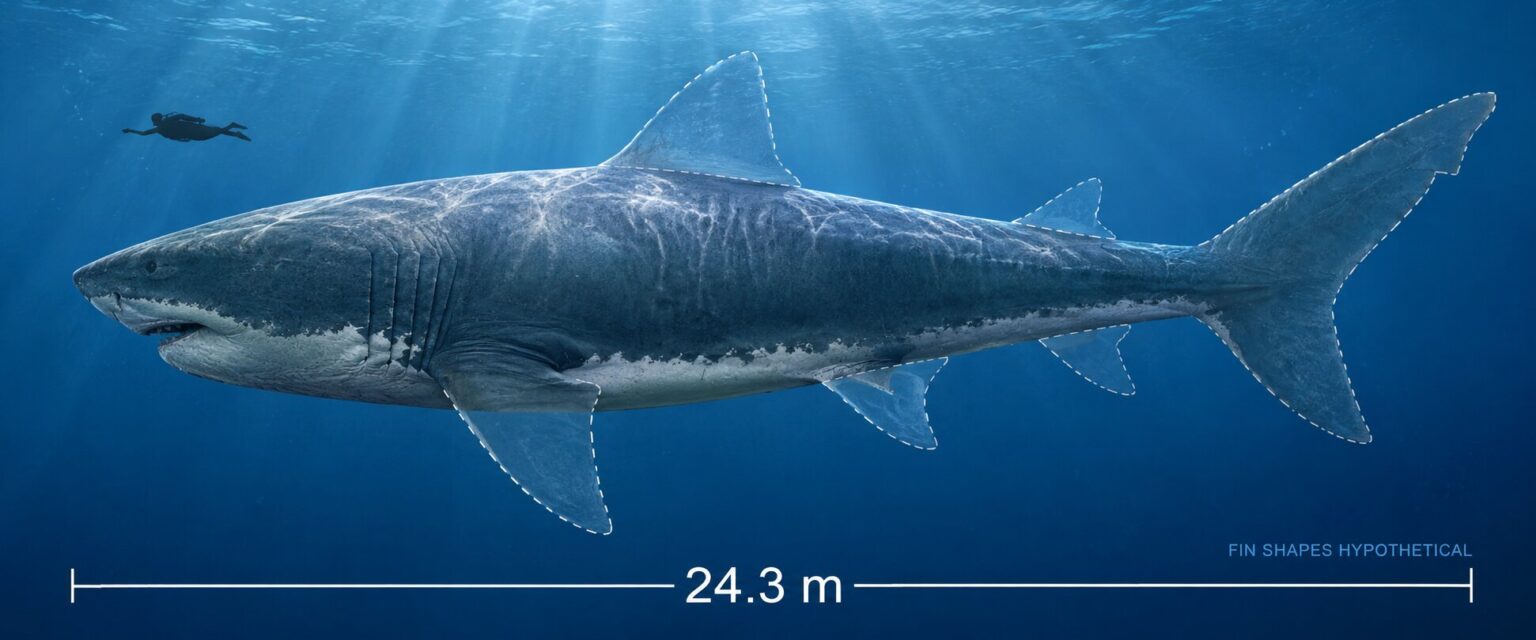

Scientists have rediscovered a long-lost fossil from a gigantic Megalodon believed to have been one of the largest sharks ever to swim the oceans.
The enormous vertebrae belonged to a prehistoric predator estimated to have measured up to 24.3 metres (80ft) long – about the length of two buses parked end to end –q and weighed around 94 tonnes.
The fossil disappeared for decades after being misplaced following a museum move in the late 1980s.
READ MORE: Scientists discover new species that WALKS instead of swims
- Advertisement -
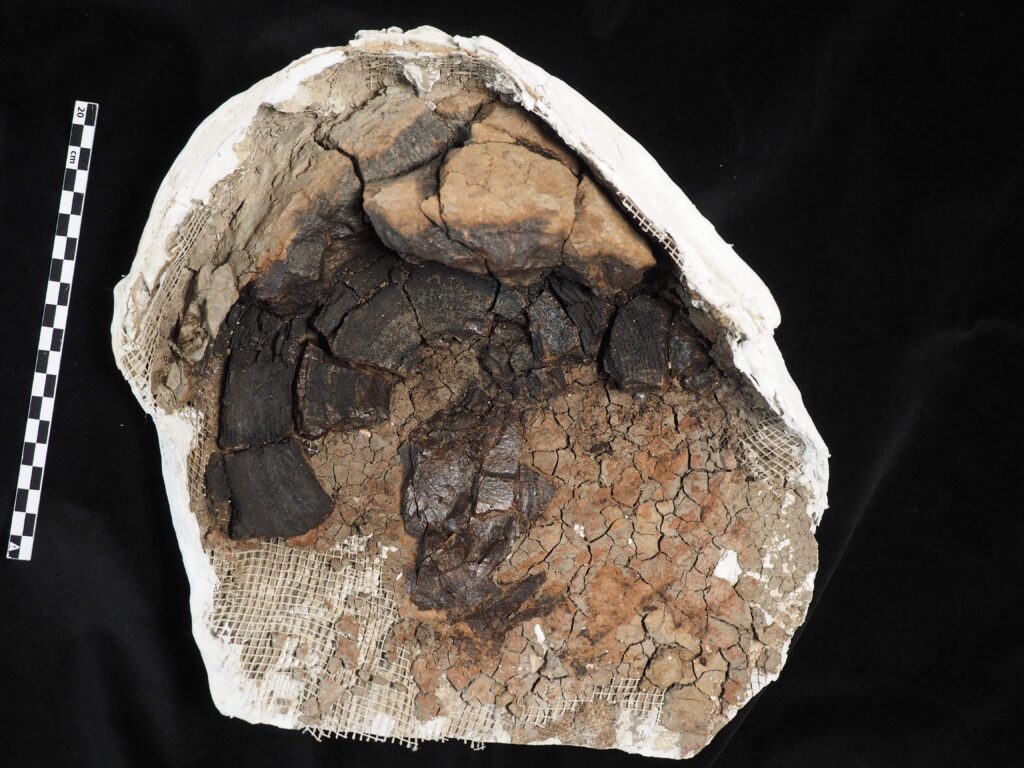
It has now been rediscovered hidden inside unidentified fossil-filled boxes, allowing scientists to examine it once again, as reported by What’s The Jam.
The international team say the fossil is around 10.8 million years old and belonged to Otodus megalodon, the extinct shark that roamed oceans across the globe between about 15 million and 3.6 million years ago.
Their findings were published on 29 June in the journal Palaeontologia Electronica.
The vertebrae were originally unearthed in a Danish clay pit during the late 1970s and became the basis for estimates of the maximum size the fearsome predator could reach.
But after the specimen was transferred from its original research laboratory, it vanished.
- Advertisement -
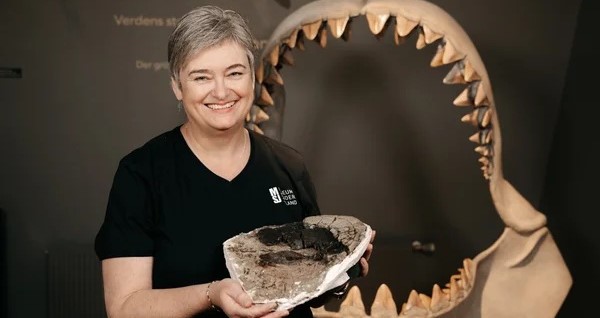
It remained missing until the late 2010s, when a museum worker recognised several mysterious fossil-filled boxes tucked away in storage as the long-lost Megalodon remains.
Lead author Professor Kenshu Shimada, of DePaul University in Chicago, said: “The rediscovery of the vertebrae was a true delight because they empirically confirm the maximum vertebral diameter of 23cm reported in the literature.
“The specimen not only represents the largest shark vertebrae known to date but also the largest fish vertebrae ever recorded to our knowledge.”
- Advertisement -
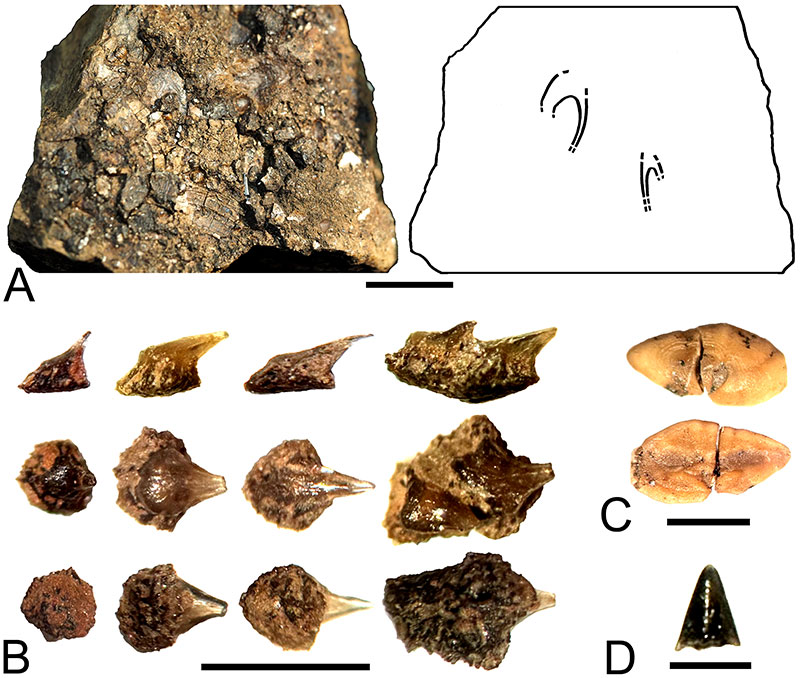
B. Fossil skin scales from the same basking shark.
C. Fossil ear bone (otolith) of a cod-like fish.
D. Fossil tooth of an unidentified bony fish. (Jam Press/Palaeontologia Electronica)
Although complete Megalodon skeletons have never been found, scientists used the rediscovered vertebrae alongside previously discovered fossils to estimate the shark could have reached 24.3 metres in length.
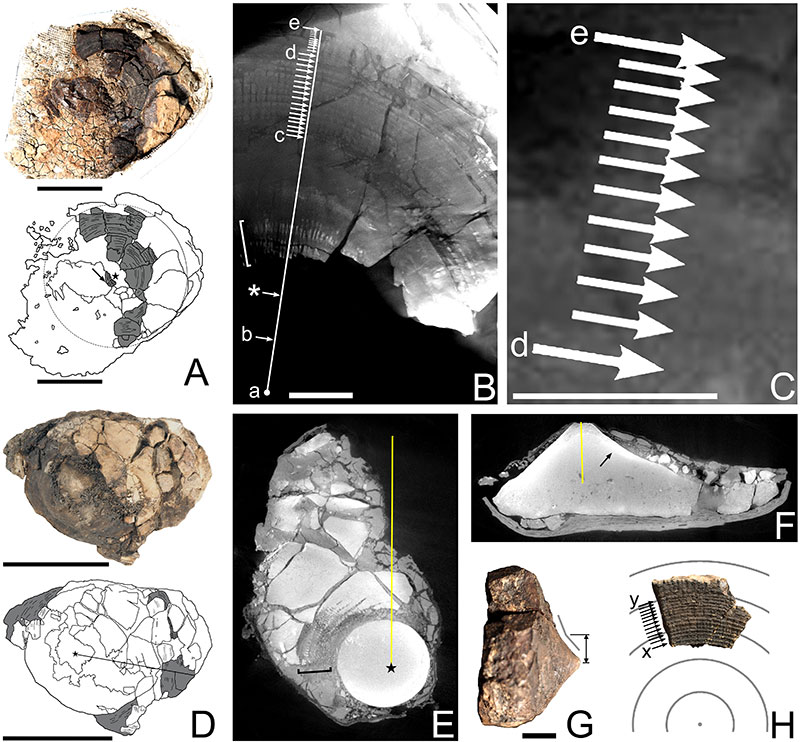
Researchers also carried out high-resolution micro-CT scans of the fossil.
By analysing annual growth bands inside the vertebrae – similar to tree rings – they estimated the shark was at least 64 years old when it died and may have lived for as long as 96 years.
Henrik Lauridsen, of Aarhus University, who carried out the scans, said: “Scanning the large, low-contrast vertebrae fossils surrounded by clay at ultra-high resolution was a real technical challenge, which resulted in generating more than 100GB worth of images.”
The team also made an unexpected discovery.
Tiny fossilised gill structures and scales from a basking shark were found preserved alongside the Megalodon vertebrae.
Rather than belonging to the giant shark itself, researchers believe they represent its final meal – the first evidence of stomach contents ever identified in the Megalodon fossil record.
Palaeontologist Mikael Siversson, from the Western Australian Museum, said: “This led us to interpret the basking shark elements to represent the stomach contents of the Megalodon, which is the first documentation for the Megalodon fossil record.”
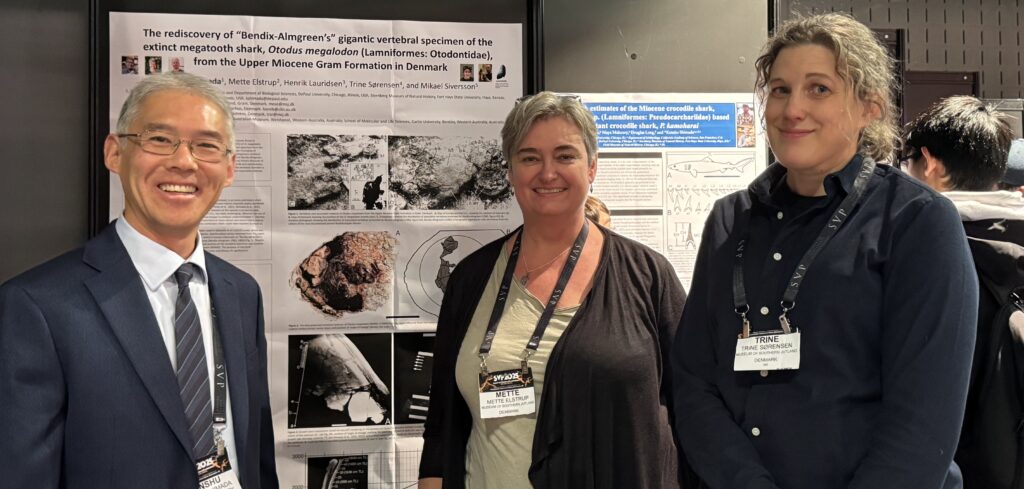
Museum of Southern Jutland researcher Dr Mette Elstrup added: “The giant Megalodon vertebrae are of great importance because size matters when it comes to understanding the biology, ecological impact, and geographic distribution pattern of this extinct giant predator.”
While the team’s growth model suggests some individuals could theoretically have grown even larger, they say 24.3 metres is currently the largest scientifically justifiable estimate for the species.
READ MORE: Lost Mozart manuscript lay hidden in a library for more than 200 years
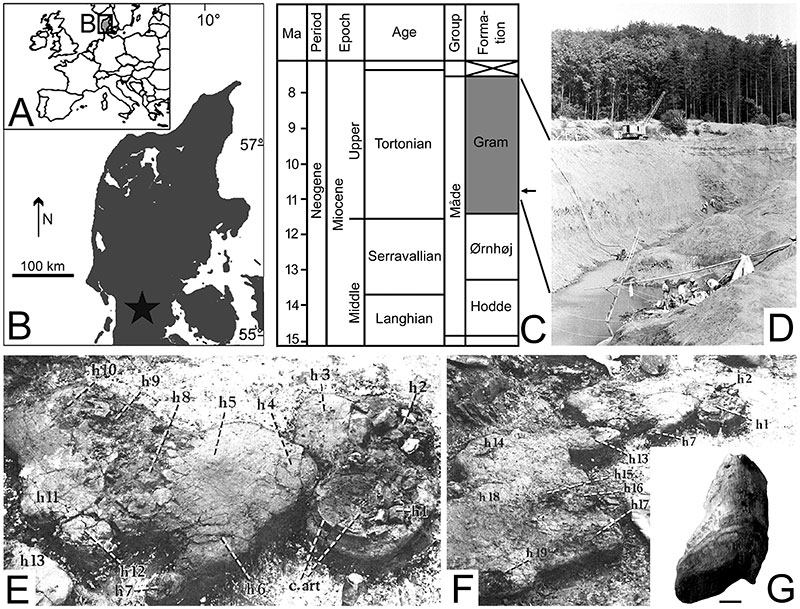
B. Map of Denmark showing the fossil site at Gram (star).
C. Diagram showing the rock layers at Gram and where the fossil was found. (Jam Press/Palaeontologia Electronica)
B. Map of Denmark showing the fossil site at Gram (star).
C. Diagram showing the rock layers at Gram and where the fossil was found.
D. The fossil excavation site at Gram in 1978. (Jam Press/Palaeontologia Electronica)
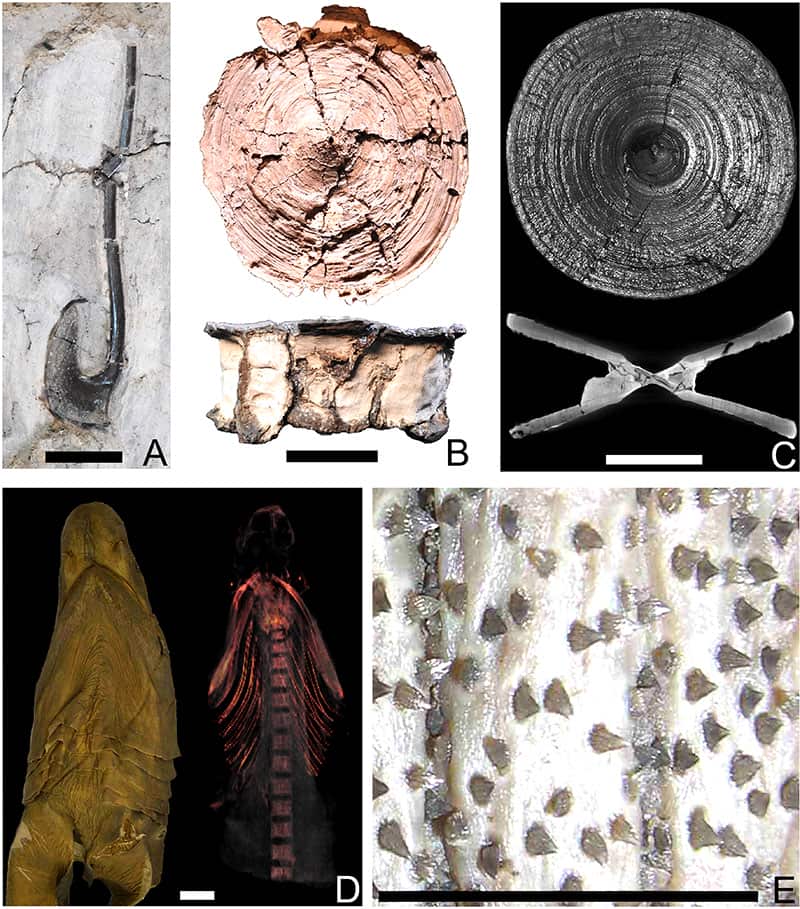
B. Fossil basking shark vertebra from the same site.
C. Fossil vertebra of a megalodon shark from Belgium.
D. Head of a modern basking shark, shown externally and as a CT scan.
E. Close-up of the body of a modern basking shark near the left pectoral fin. (Jam Press/Palaeontologia Electronica)