

Scientists have discovered 31 new marine species in just two weeks after exploring one of the most mysterious parts of the ocean.
The incredible finds were made during an expedition to international waters off the coast of Brazil, where researchers investigated the vast “midwater” zone – a little-understood region between the sunlit surface and the deep seafloor.
Despite being the largest habitable ecosystem on Earth, the midwater remains one of the least explored places on the planet.
READ MORE: Religious statues covered up after botched restoration slammed by locals
An international team working aboard the research vessel Falkor (too) uncovered dozens of previously unknown creatures using cutting-edge imaging technology and onboard DNA analysis, as reported by creatorzine.com.
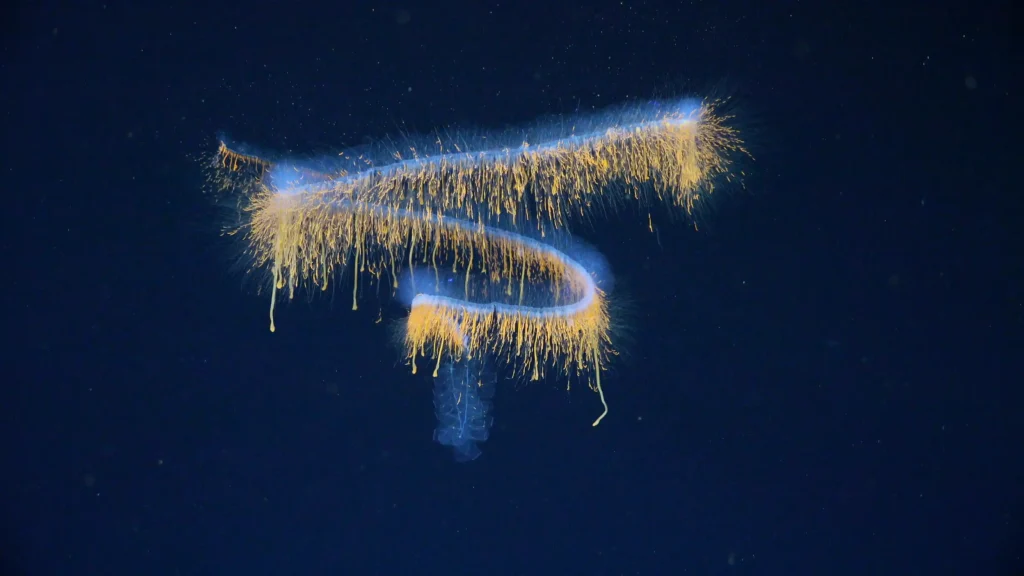
The newly discovered species include a crustacean related to crabs and lobsters, a fast-moving gossamer worm, nine jellyfish, seven siphonophores, seven comb jellies, four larvaceans and two giant single-celled organisms known as rhizarians.

Among the strangest finds was a pelagic octopus spotted feasting on a bright red jellyfish around 800 metres below the surface.
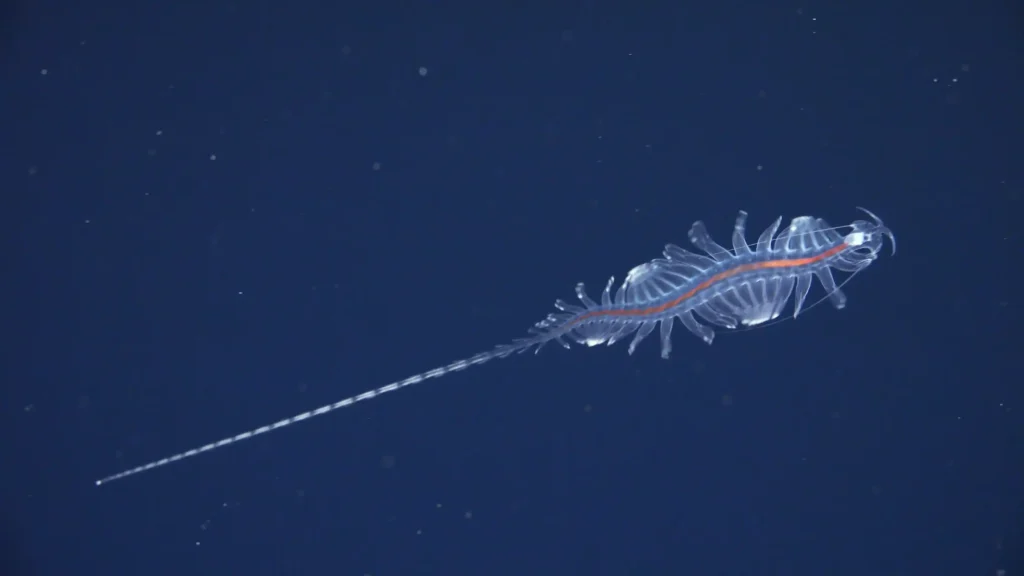
Researchers also identified a previously unknown species of gossamer worm – a transparent creature that appeared capable of moving much faster than scientists expected.
The expedition revealed far more marine life than experts had anticipated.
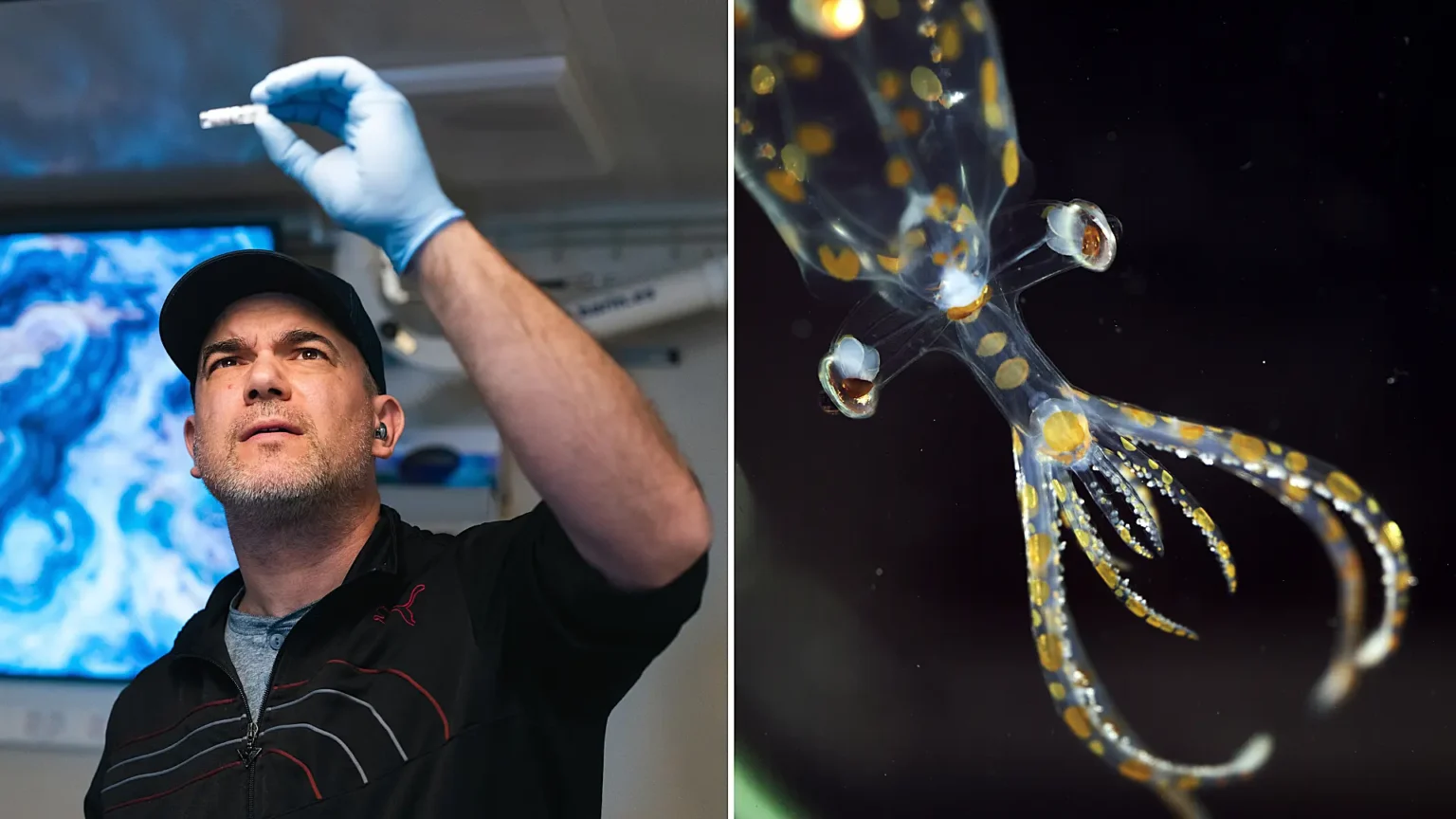
Scientists also encountered glass squid and a host of other rarely seen deep-sea creatures.
Using advanced underwater cameras and onboard DNA sequencing technology, researchers were able to identify and confirm 31 species during the voyage itself – a process that would once have taken months or even years.
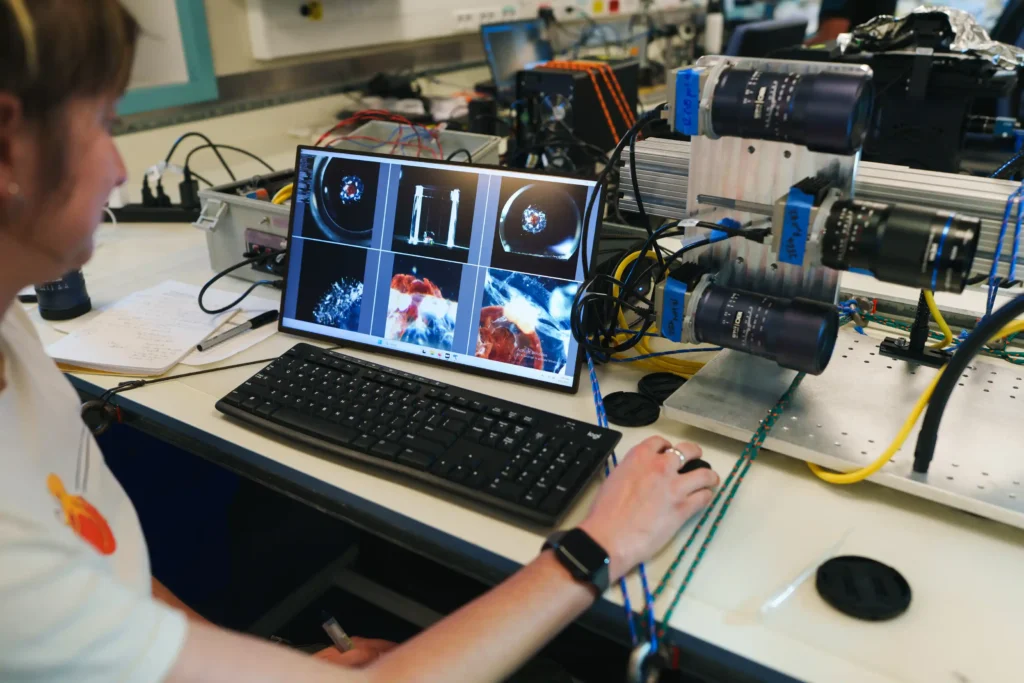
Experts say formally identifying a new species can often take decades.
But the combination of cutting-edge technology and specialist knowledge allowed many of the discoveries to be verified within days.
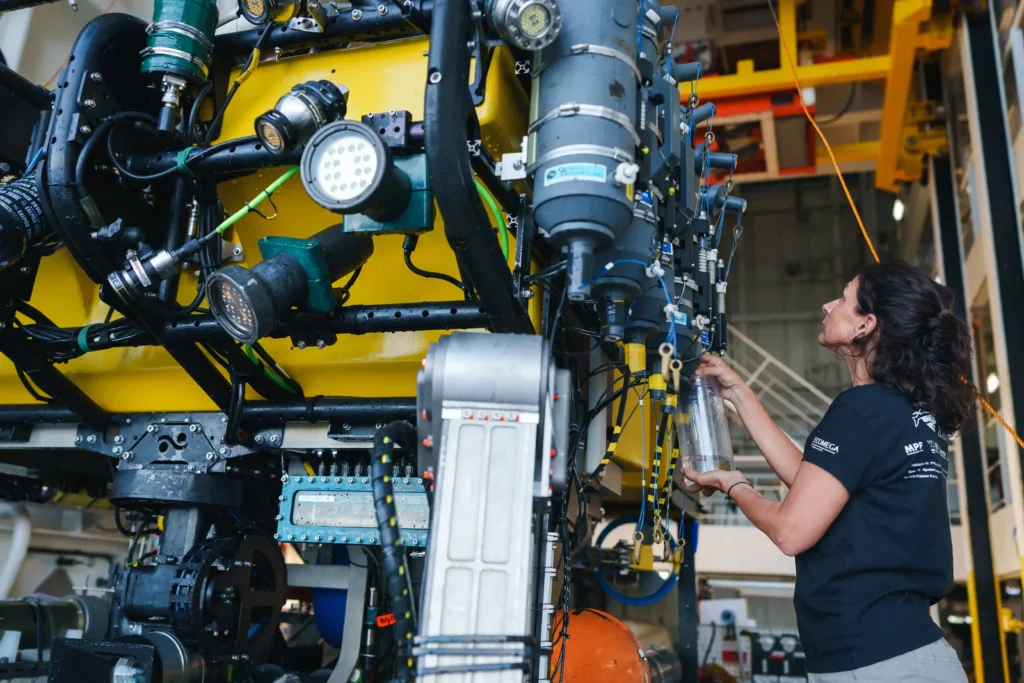
The team used a range of sophisticated equipment, including laser-based imaging systems capable of creating detailed 3D scans of delicate sea creatures without harming them.
Many midwater animals have soft, jelly-like bodies that are easily destroyed by traditional sampling methods, making them notoriously difficult to study.
Researchers also tested experimental technology, including a virtual reality observation chamber and a specialised microscope known as a “gravity machine”, which allows tiny organisms to be studied in conditions similar to their natural environment.
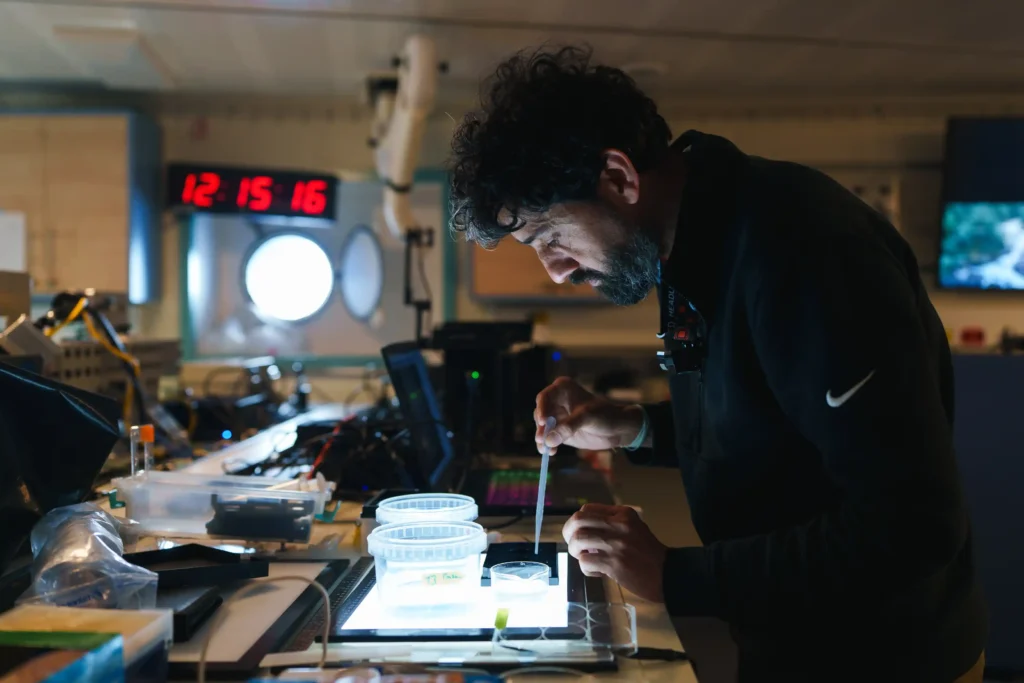
In another breakthrough, the team achieved what they believe is a world first by capturing three-dimensional images of living cellular structures inside a giant single-celled organism known as a protist.
Scientists believe the achievement could unlock new ways of understanding how deep-sea life survives under extreme pressure and permanent darkness.
Alongside the high-resolution images, genomes from collected specimens were sequenced onboard the vessel, helping researchers rapidly determine which creatures were completely new to science.
The expedition involved scientists from organisations including the Smithsonian National Museum of Natural History, Bigelow Laboratory for Ocean Sciences, Stanford University and Monterey Bay Aquarium Research Institute.

Researchers say the discoveries are a reminder of just how little is known about the oceans, despite them covering more than 70% of Earth’s surface.
They believe countless more species could still be waiting to be discovered in the tropical South Atlantic – one of the least-studied parts of the world’s oceans.
Scientists hope the findings will improve our understanding of marine biodiversity and the vital role deep-sea ecosystems play in regulating the Earth’s climate.