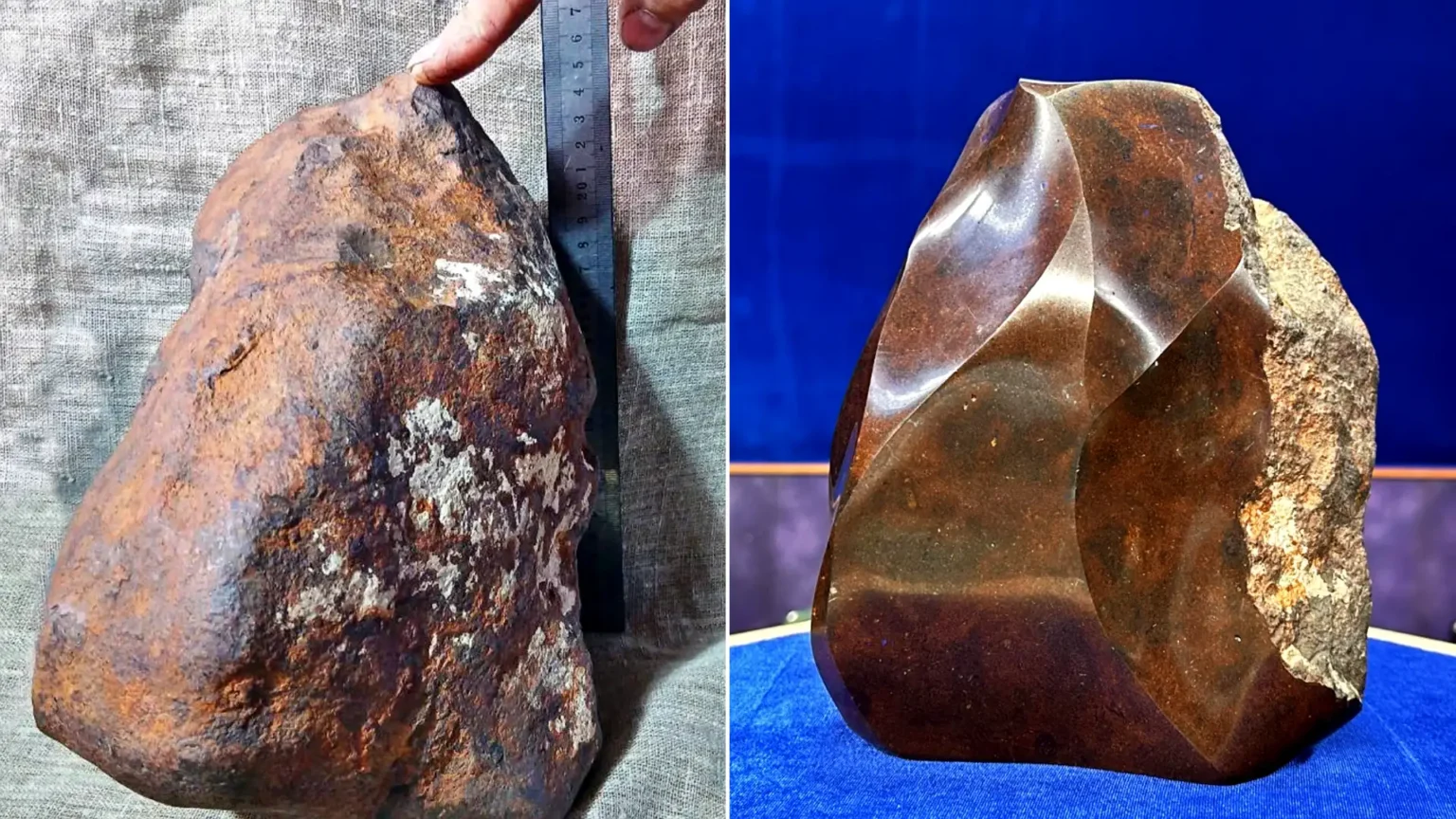


A strange rock picked up by a motorist to stop his car rolling has turned out to be a meteorite – after sitting in his home for almost 20 years.
The driver found the 16.5kg stone in 2005 while travelling along a mountain road near the Katu-Yaryk Pass in Russia’s Altai Mountains.
Worried his parked car could roll backwards on the steep incline, he grabbed the rock from the roadside and wedged it beneath one of the wheels.
READ MORE: Legend’s £4.4m F1 car NEVER meant for sale hits auction after 30 YEARS
But something about the unusual stone caught his attention, so he took it home rather than leaving it behind.
He considered having it examined or selling it, but after encountering scammers, he decided to keep it, as reported by What’s The Jam.
The rock remained in his home until 2025, when he gave it to Viktor Likhachev, who runs a stone-working workshop and museum called Samotsvety in the village of Verkh-Uymon.

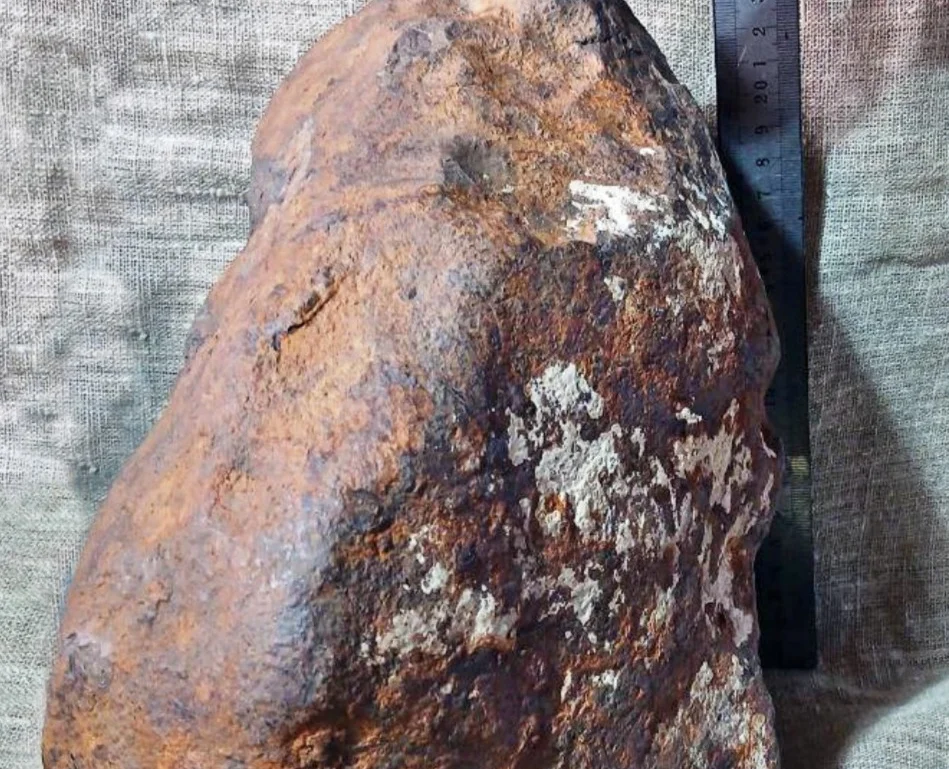
Viktor suspected it could be a meteorite and contacted scientists at the Institute of Geology and Mineralogy in Novosibirsk for further investigation.
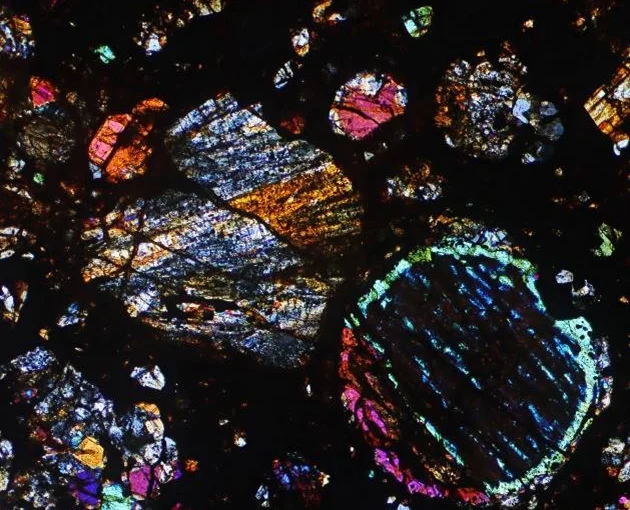
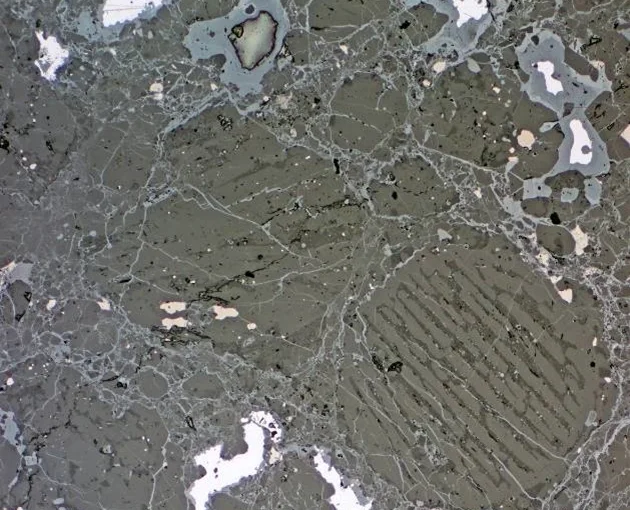
Researchers Andrey Vishnevsky and Viktor Sharygin examined fragments of the stone, studying its structure and chemical composition.
Their findings confirmed it was an ordinary chondrite meteorite belonging to the H5 group, which is characterised by a relatively high iron content.
The rock was officially recognised as a meteorite by the International Meteorite Committee on 22 September, 2026, and named Chulyshman after the nearby river where it was found.

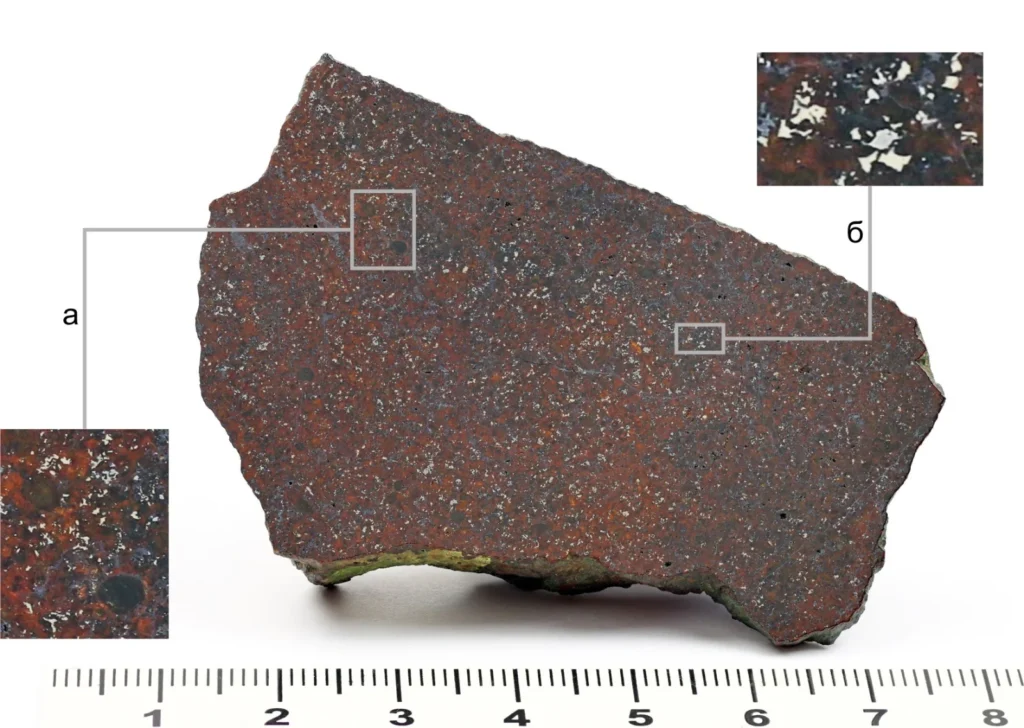
It is the first meteorite officially recorded in the Altai Republic and the 160th documented in Russia.
Scientists believe it fell to Earth at least several hundred years ago, and potentially much longer, based on the extent of oxidation and weathering.
The main mass is now on display at the Samotsvety museum, while a smaller fragment is due to be exhibited at the Central Siberian Geological Museum in Akademgorodok.
READ MORE: Pink rock found in Sahara turns out to be 4.1 BILLION-year-old chunk of Mars