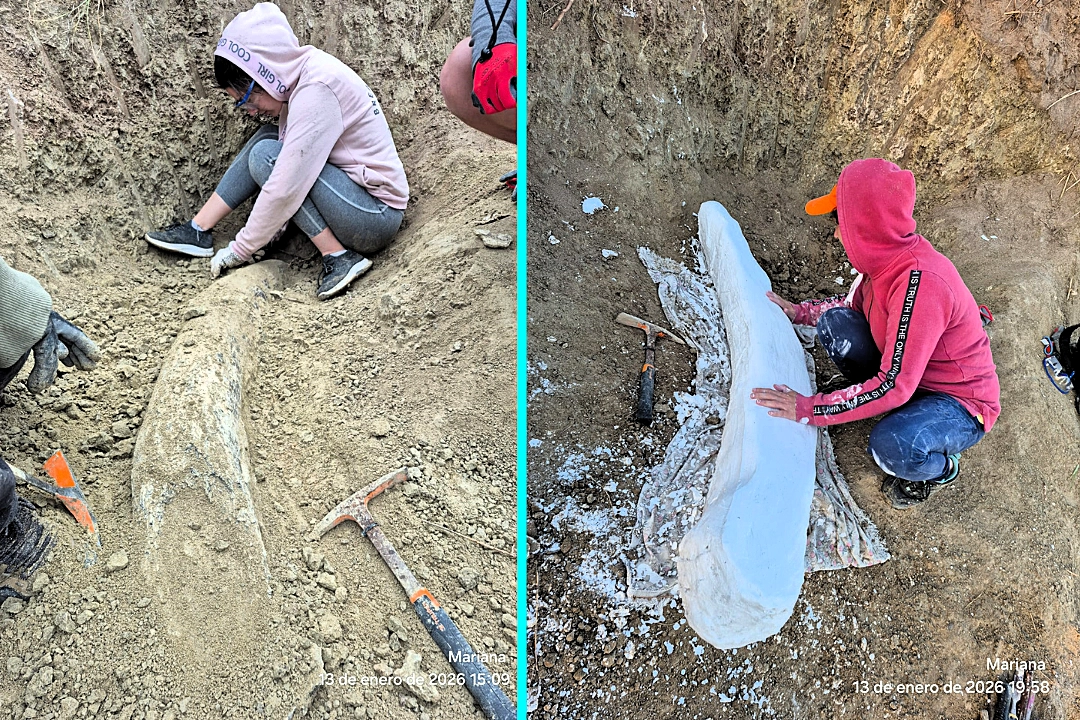

A massive mastodon tusk over 100,000 years old has been found buried in a nature reserve.
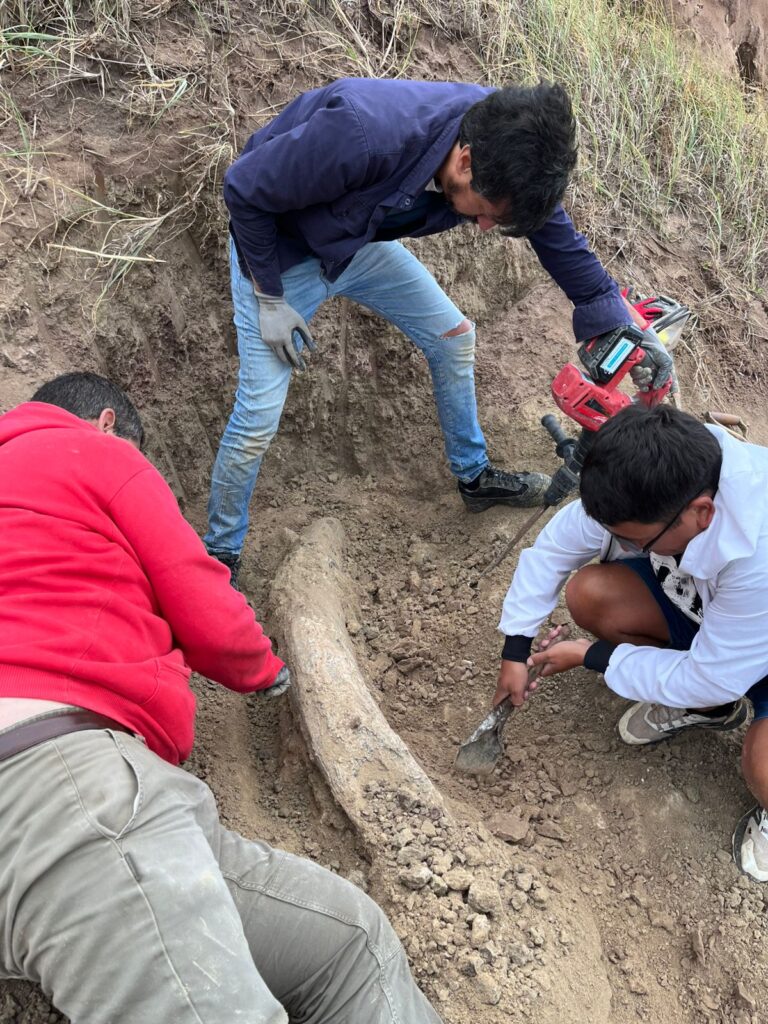
The remarkable fossil, measuring more than 1.5m long, was excavated by palaeontologists.
The slightly curved tusk belonged to notiomastodon platensis, an extinct species closely related to modern elephants.
READ MORE: Furniture fight breaks out at IKEA closing sale
- Advertisement -
With an estimated weight of 3-4 tons and a height of 2.5-3m, notiomastodon platensis went extinct around 10,000 years ago.
It is among the Ice Age megafauna that once roamed the local coastline.
Researchers at the Centinela del Mar Nature Reserve in Argentina’s Buenos Aires province say the tusk is exceptional both for its size and its excellent state of preservation.
It was found buried under several metres of sediment, which protected it well.
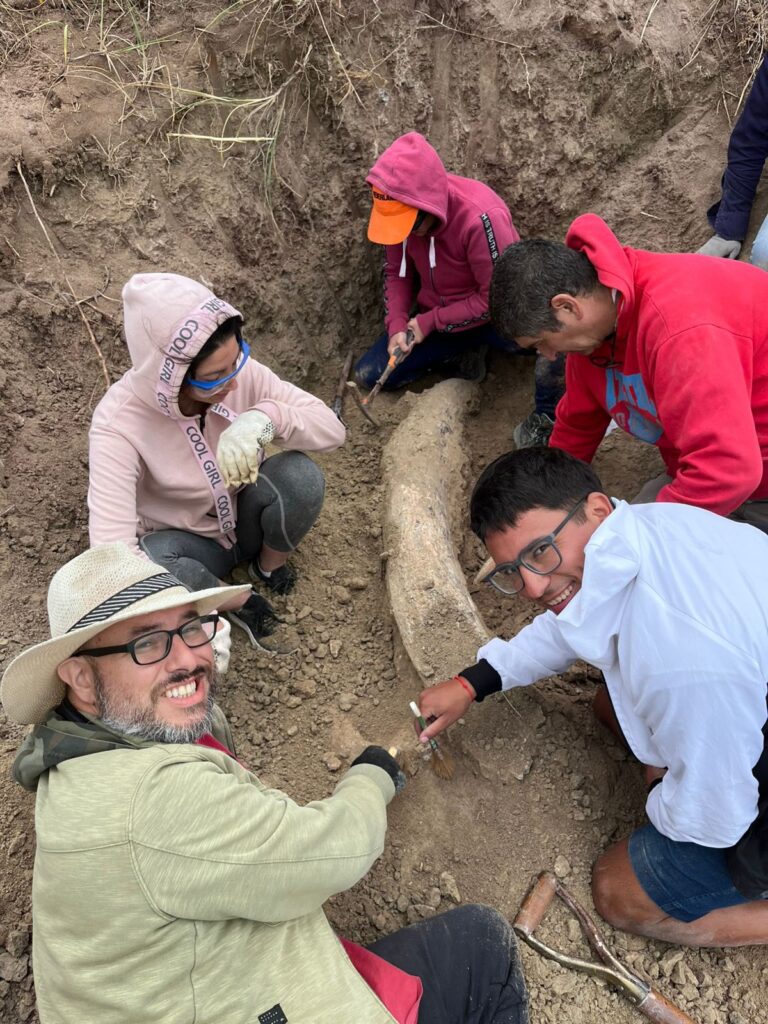
The region has been a palaeontological hotspot for decades, with remains of glyptodonts, giant sloths, toxodonts, and other large prehistoric mammals regularly discovered among the coastal cliffs.
- Advertisement -
Specialists will now analyse the tusk to determine the mastodon’s precise age, the conditions in which it lived, and its likely cause of death.
The fossil has been taken to the Museum of Natural Sciences in nearby Miramar, Argentina, as reported by What’s The Jam.
The museum explained: “Mastodons migrated from North America during the peak of the glaciations, following the joining of the two Americas via what is now Panama, around 2.5m years ago.
- Advertisement -
“This migration also brought other fauna, including Smilodon or sabre-toothed tigers, bears, pumas, deer, guanacos, horses, and various canids, which interacted with native species such as glyptodonts, giant sloths, marsupials, and others that later migrated north.
“The fossil is now in the museum’s laboratory, where it will be carefully prepared for display in one of the galleries.”
READ MORE: Vampire-hunting kit complete with stakes, crosses and ‘holy water’ discovered inside violin case