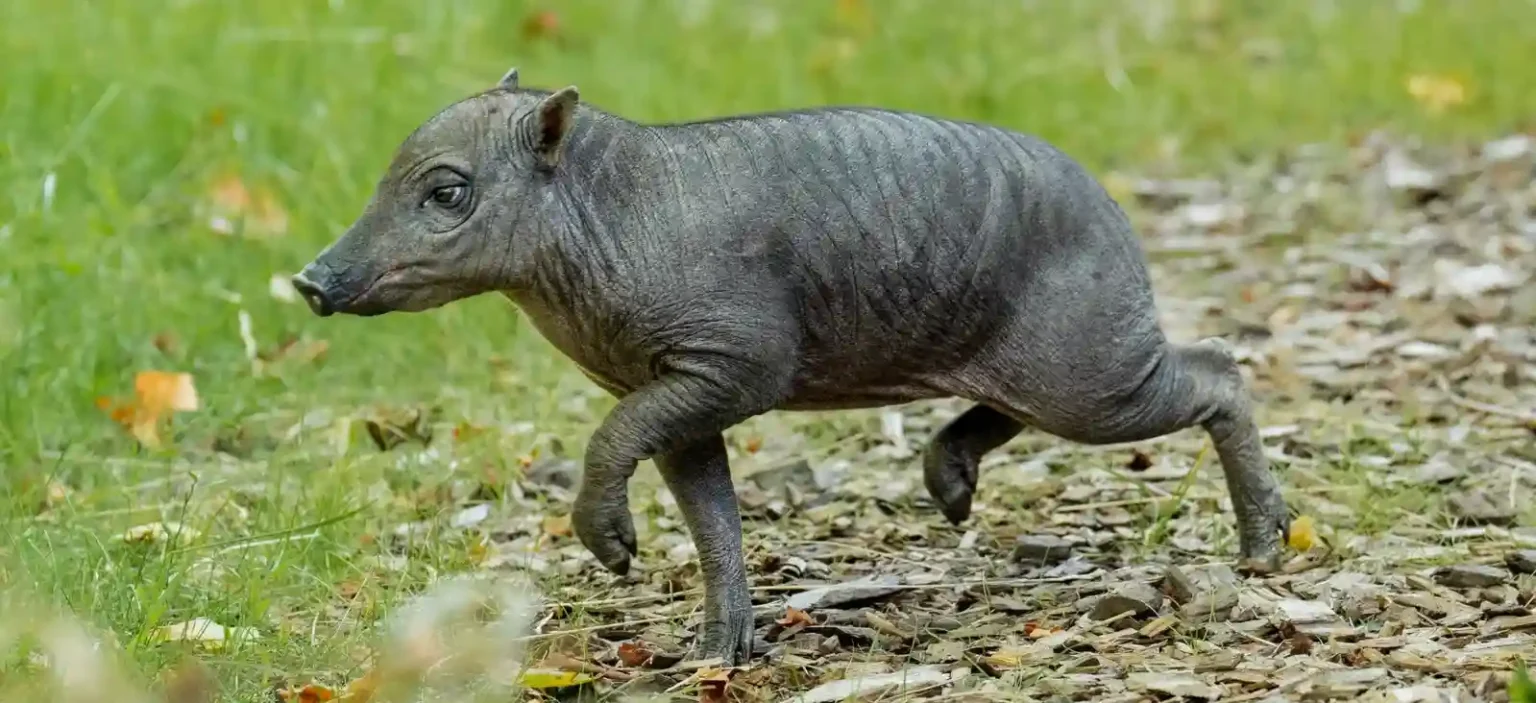

A rare piglet born the size of a “grapefruit with legs” could play a huge role in saving her species from extinction.
Little Rana, a babirusa, has just made her public debut.
The babirusa is an unusual species of wild pig sometimes called a “pig-deer” because of its distinctive appearance.
READ MORE: Rare solid gold Cadbury egg sells for WORLD RECORD £120,000
- Advertisement -
Rana, who was born at Chester Zoo weighing between 300-500g with a covering of ginger fuzz, arrives during a time when the species is in dramatic decline in the wild.
Babirusas are found on just four Indonesian islands and are among the oldest of its kind, as reported by Whats The Jam.
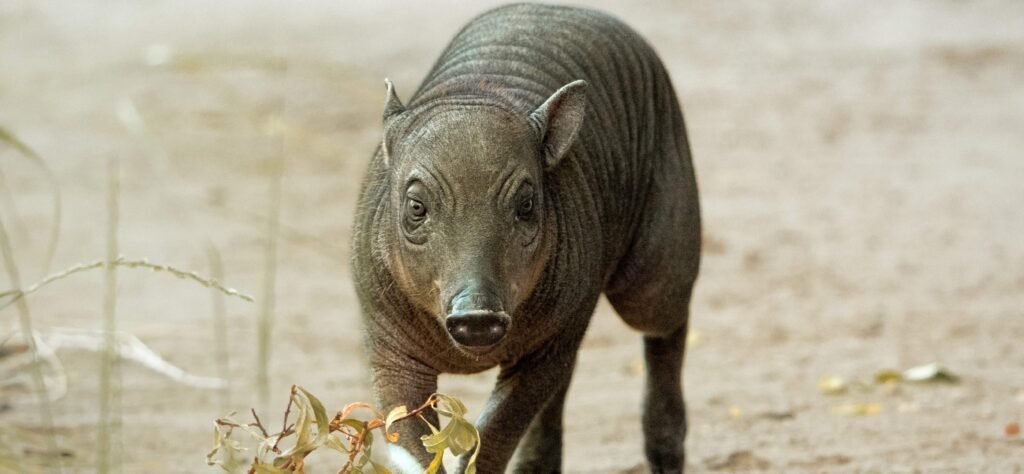
Conservationists warn their future is hanging in the balance as African swine fever sweeps through populations.
The disease reached the islands around five years ago and has since contributed to a rapid decline in babirusa numbers.
The animals are currently classed as Vulnerable by the International Union for Conservation of Nature.
- Advertisement -
Chester Zoo says it is expected to be uplisted to Critically Endangered.
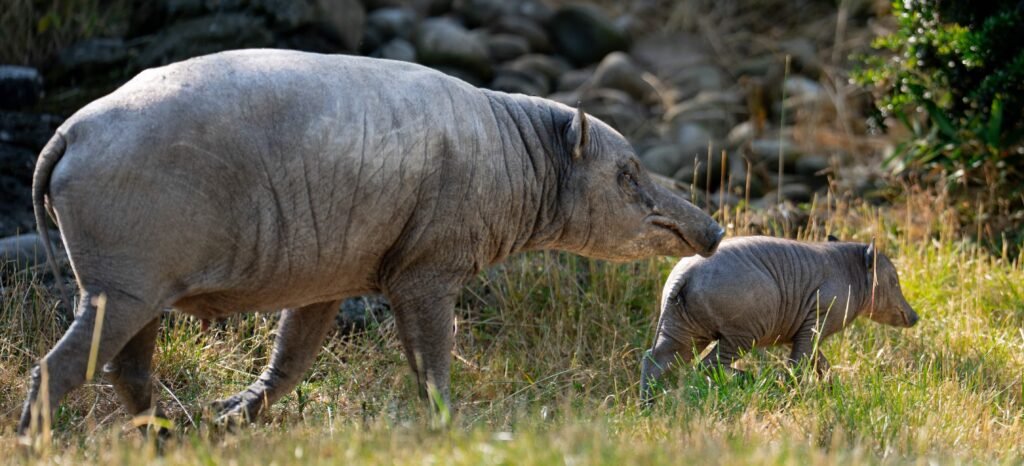
Rana is the fifth piglet born to her mother, Matano, who was herself born at Chester Zoo 11 years ago and now has descendants living at zoos across Europe.
Her father is a male babirusa named Bamm Bamm.
- Advertisement -
Hannah Owens, assistant team manager at Chester Zoo, said: “This is the first babirusa birth we’ve had here for a few years, and Rana is a very special little lady.
“When she was born, she was tiny – about the size of a grapefruit, with legs.
“She’s grown a lot and is doing really well.”
Babirusa pregnancies at Chester Zoo have proved unusually predictable, with almost every birth taking place following exactly 161 days of gestation.
Keepers began counting down after Matano was seen mating with Bamm Bamm earlier this year.
She was later given a quiet private area and additional bedding to prepare for the birth.
Unlike most pigs, babirusas typically produce only one or two piglets rather than a large litter.
This means their populations can take much longer to recover when large numbers are lost through disease, hunting or habitat destruction.
New mothers can also be highly sensitive to disturbance.
Keepers therefore monitored Rana and Matano remotely using a baby monitor until they were ready to enter their public habitat.
Hannah added: “While babirusas are doing well in our care, I’m worried because they are really struggling in the wild.
“The numbers are radically reducing, and it would be horrendous if they disappeared because they are amazing, charismatic animals.
“Piglets like Rana are a lifeline for the species.”
Babirusas have less hair than most pigs and lack the familiar disc-shaped snout used by other species to root through soil.
They are still skilled foragers and can stand on their back legs to reach fruit growing on trees.
Male babirusas are also the only pigs whose upper tusks grow through the bone of their snout before curving backwards towards their face.
Chester Zoo is working with organisations in Indonesia to track and protect the remaining wild populations.
A recent camera-trap study supported by the zoo recorded babirusas on just two occasions across the whole of 2023 and 2024 in the area surveyed on Sulawesi.
The zoo has also shared its breeding expertise with Indonesian conservationists, helping colleagues breed at least 17 babirusas towards national conservation targets.
Amy Humphreys, a conservationist at Chester Zoo, said: “We are in a race against time to understand what’s happening to the population.
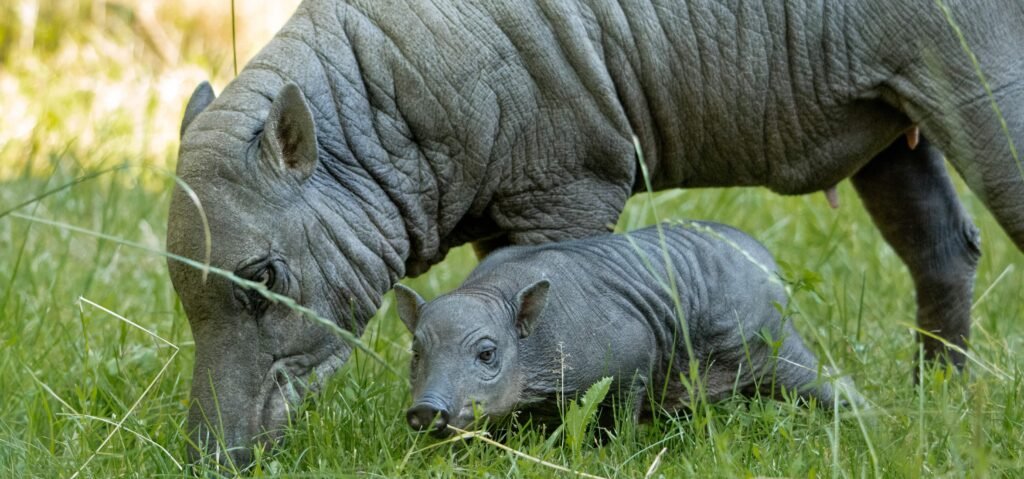
“We risk losing a truly unique species, one that’s an important part of Indonesia’s cultural and natural heritage and one of the oldest pig species still living.
“Because of all this, Rana’s arrival is worth celebrating.
“Her birth is a chance to shine a light on babirusas and show people why they deserve protection.”
Babirusas also play an important role in their island ecosystems by spreading and fertilising seeds as they forage, helping forests regenerate.
Alongside African swine fever, the animals face threats from deforestation, hunting and conflict with people.
READ MORE: Monster shark spotted patrolling off British Isles