

Scientists believe they may have discovered a new species of dinosaur dating back 75 million years.
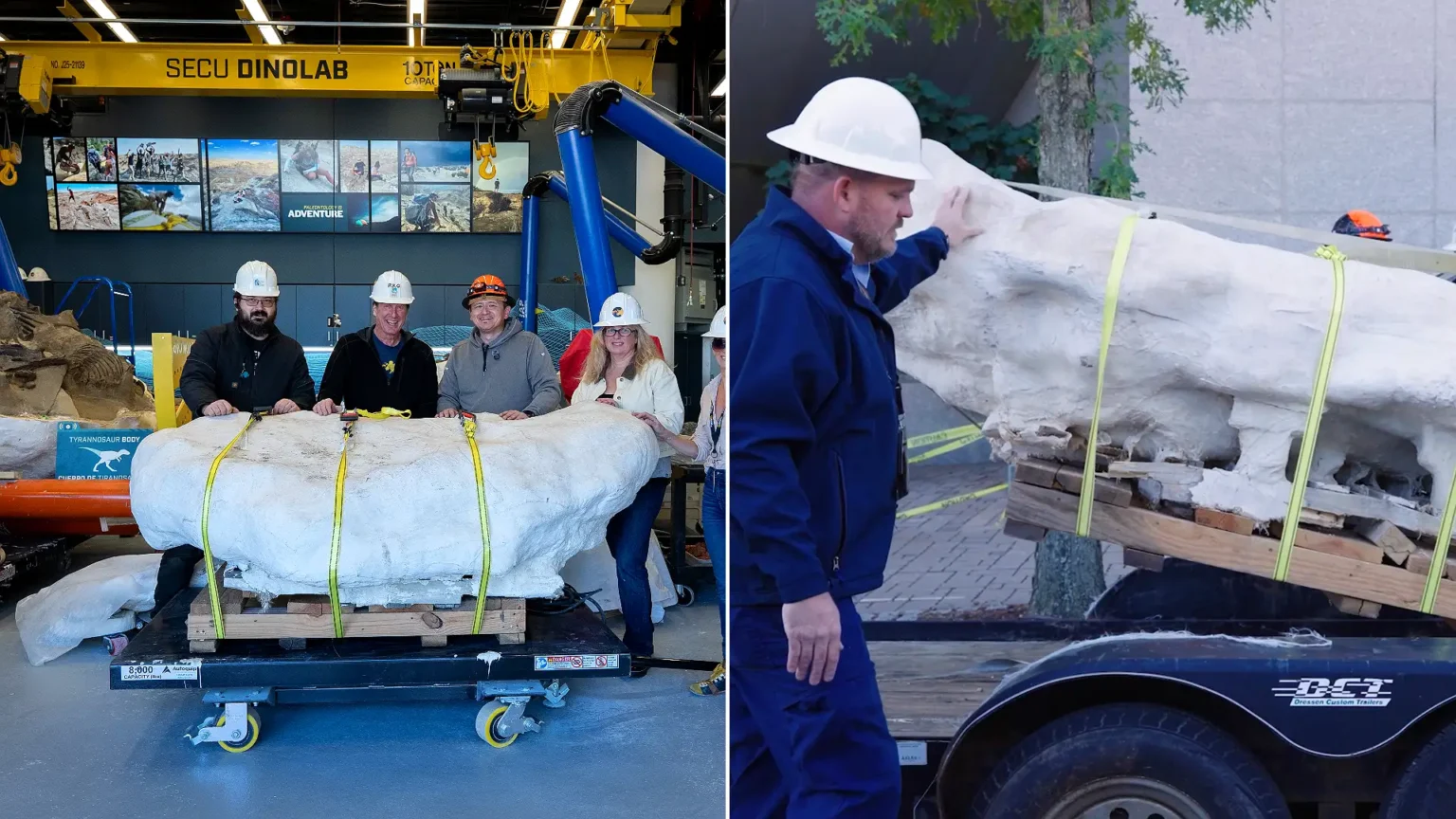
The remarkably complete skeleton was so difficult to move that part of a city street had to be closed for six hours.
It remains trapped inside a mammoth 5,000lb block of sandstone, wrapped in a protective white plaster “jacket”.
READ MORE: Rare bubblegum-coloured dolphins spotted by stunned tourists
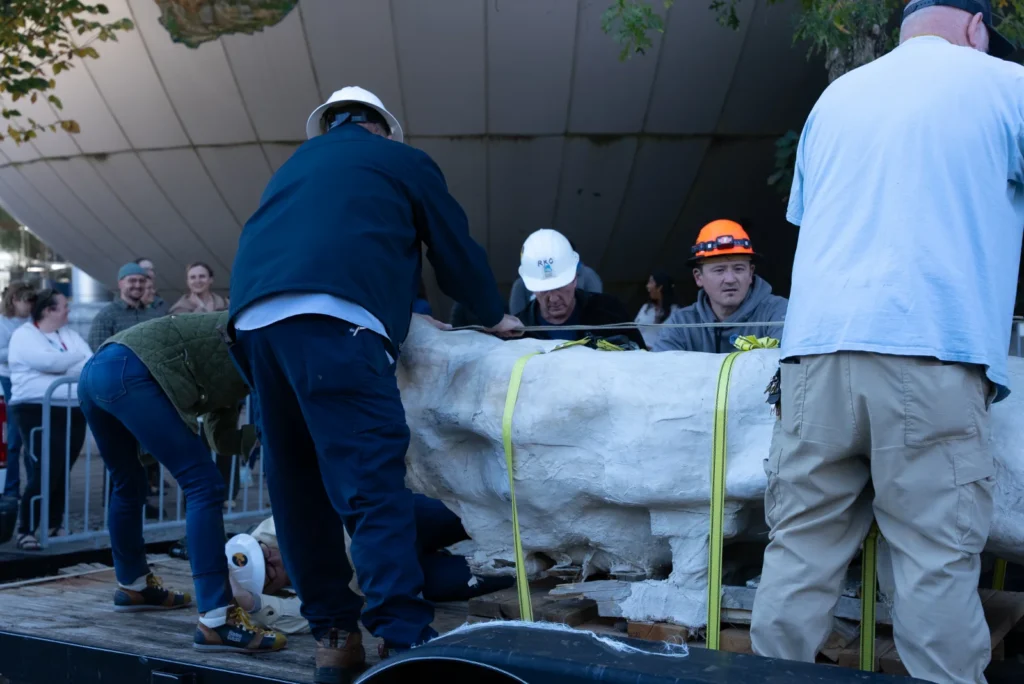
Pictures show the enormous package being lifted by heavy machinery as workers in hard hats guide it through a specially-opened section of the museum building.
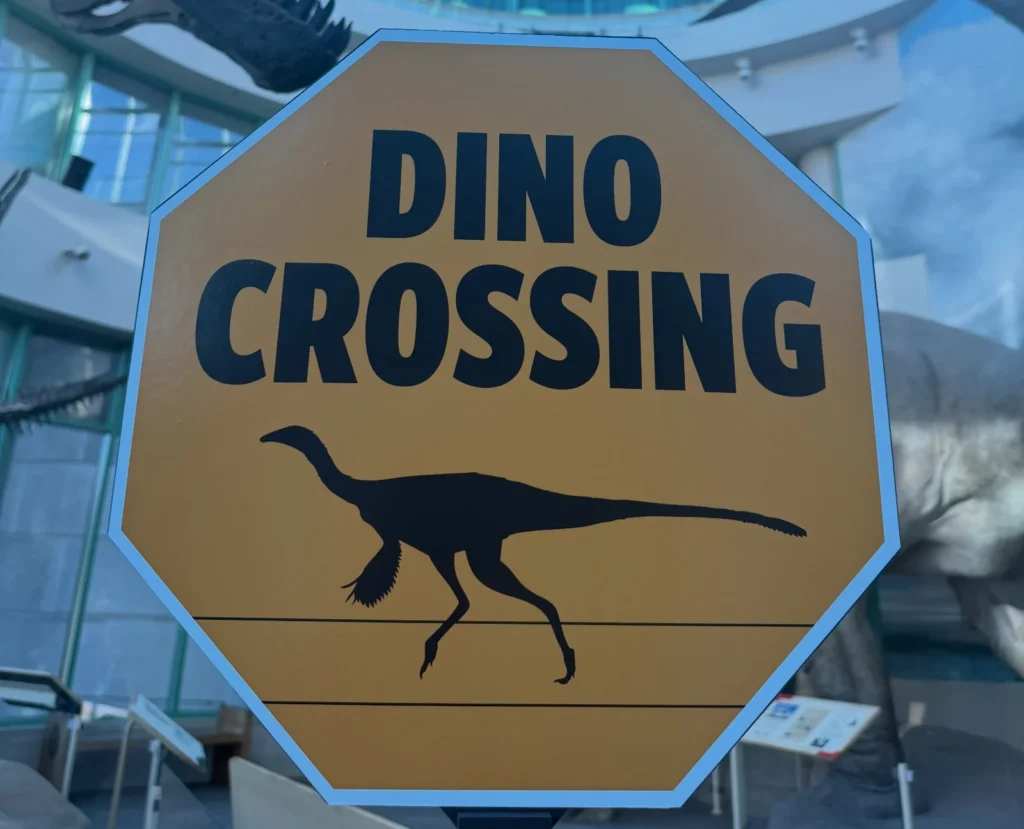
The fossil belongs to an ornithomimid – a group of fast-running theropod dinosaurs which resembled modern ostriches, as reported by What’s The Jam.

Experts believe the creature was around eight to 10ft long, with long legs, a toothless beak and feathers.
The specimen was excavated from the Kaiparowits Formation at Grand Staircase-Escalante National Monument in southern Utah, US.
It is the first substantially complete skeleton of its type discovered in the region.

Only isolated pieces, including foot bones, vertebrae and ribs, had previously been found there.
Initial assessments of the new discovery include a hind leg with the bones still arranged much as they would have been during the animal’s lifetime.
Scientists subsequently uncovered further sections including the tail, another part of the leg and pieces of the neck.
They now suspect a curled-up skeleton may be hidden inside the sandstone block.
Dr Lindsay Zanno, head of palaeontology at the North Carolina Museum of Natural Sciences, said: “This is exactly the kind of fossil palaeontologists dream about.

“A beautifully preserved skeleton with the potential to tell us something genuinely new about dinosaur evolution.”
If examinations confirm the animal belongs to an unknown species, the skeleton could become its holotype – the defining specimen used by scientists to formally describe and name it.
Moving the block into the museum in Raleigh, North Carolina, required a section of West Jones Street to be closed between Wilmington and Salisbury streets from 8am until 2pm on Wednesday (21 Oct).
Windows were also removed so the huge package could be manoeuvred inside.
The fossil will now be painstakingly freed from the surrounding rock and studied inside the museum’s SECU DinoLab.
Visitors will be able to watch palaeontologists carry out the work through viewing windows, with the preparation process expected to take several years.
Museum director Denise Young said: “The public shouldn’t have to wait until the science is finished to be part of discovery.
“Bringing new specimens like this one into the lab means North Carolinians can continue to watch world-class science unfold right here in Raleigh.”
The fossil-producing Kaiparowits Formation is regarded as one of the richest records of Late Cretaceous life in the region, with remains including dinosaurs, mammals, crocodilians and turtles.
Some fossils found there have retained exceptionally delicate features, including skin and the keratinous portions of beaks and claws.
READ MORE: Diver smashes WORLD RECORD with 1,109ft CAVE plunge lasting NINE HOURS