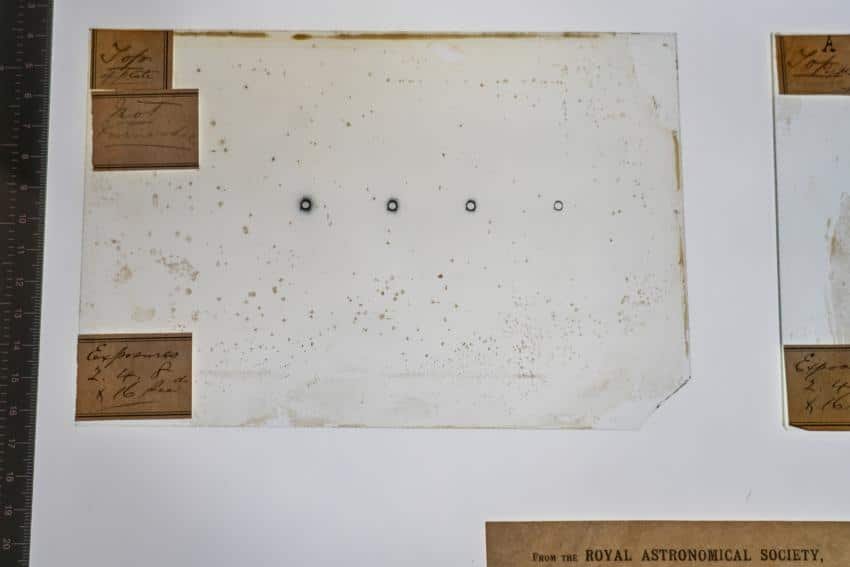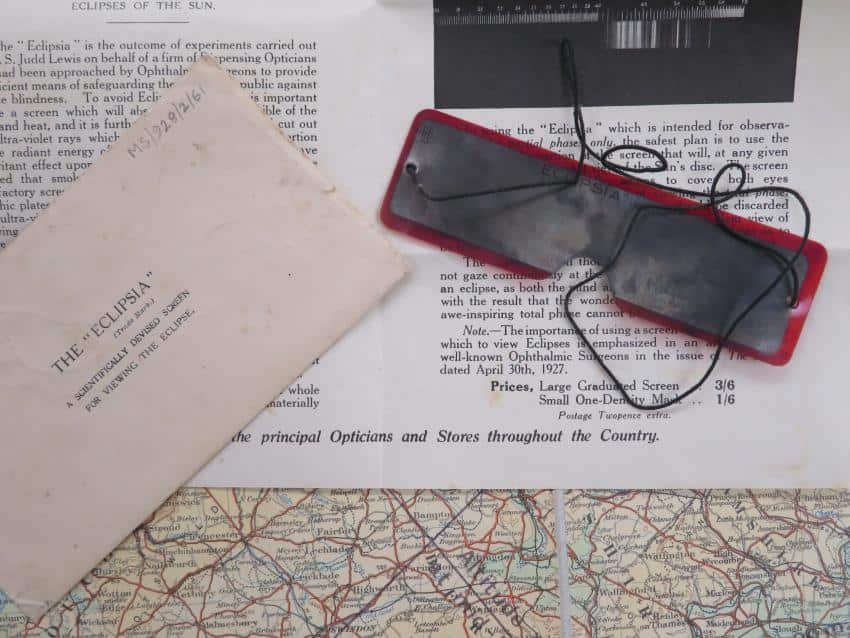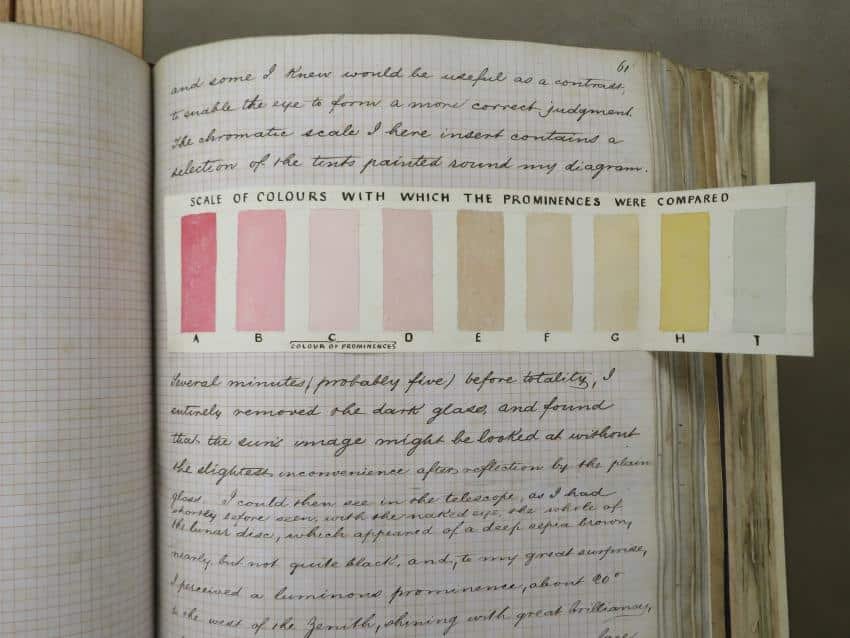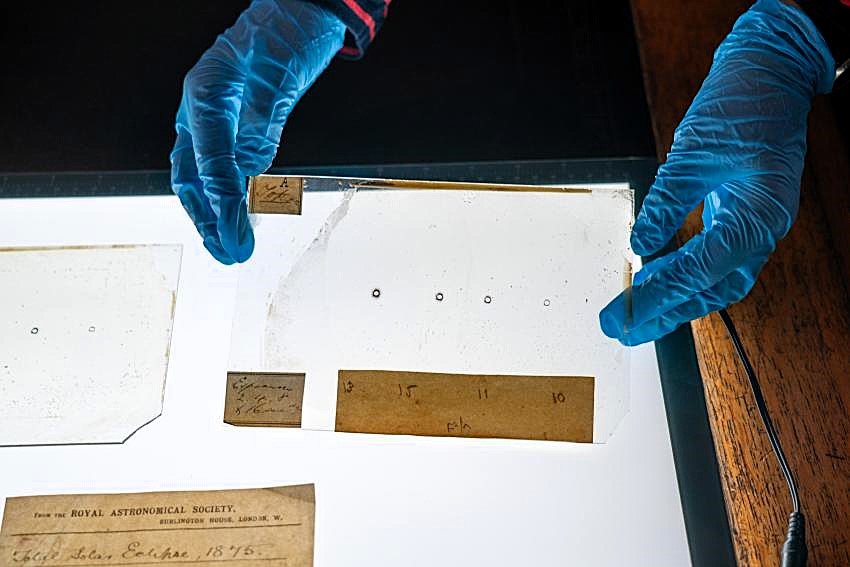


A set of incredible photographs capturing a total solar eclipse 151 years ago have been rediscovered hidden away in an archive for more than a century.
The fragile glass plates were taken during a Royal Society expedition to Siam – now Thailand – in 1875.
The plates were captured by Manchester-based physicist Arthur Schuster, who was just 23 at the time.
Schuster travelled with Frank Edward Lott and amateur photographer Frederick Beasley to observe the eclipse on 6 April 1875.
They were originally due to be led by astronomer Joseph Norman Lockyer, co-discoverer of helium.
But Lockyer was unable to go because of his duties as secretary of the Royal Commission on Scientific Instruction.

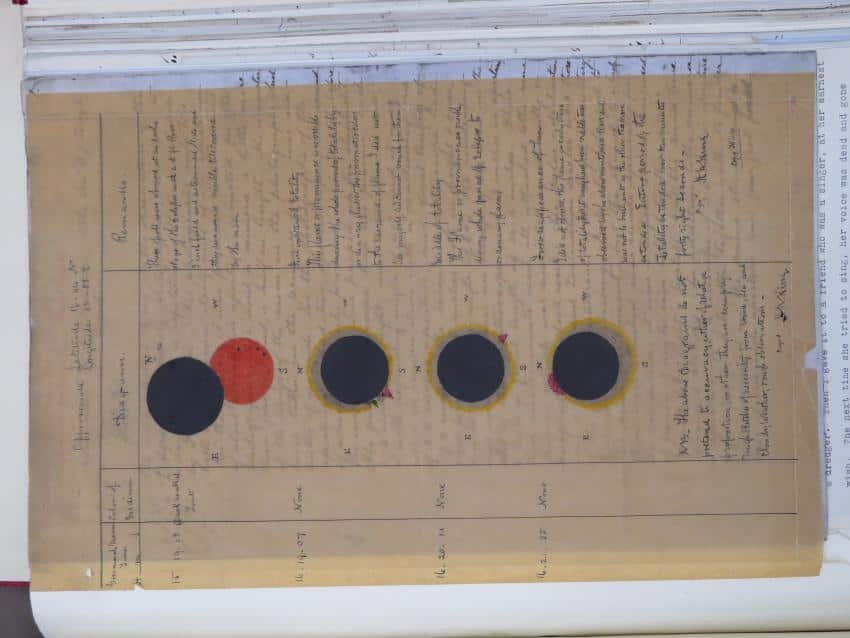
Now, the lost photos are finally being returned to the Royal Society after being loaned to the Royal Astronomical Society in 1897.
Keith Moore, Head of Library at the Royal Society, said: “Librarians always like loans to be returned – even over a century late.
“No fines are due.”
The expedition had been invited by King Chulalongkorn, the King of Siam.
His father, King Mongkut (Rama IV), had been fascinated by astronomy and had predicted and participated in observations of a solar eclipse in 1868.
He died a short time later after contracting malaria, and the expedition was facilitated by his son in his memory.
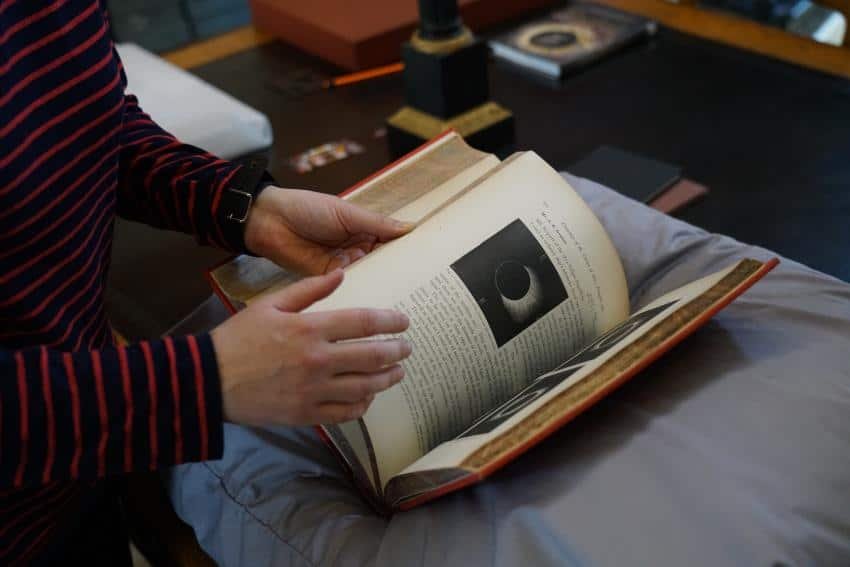
The results were later published in Philosophical Transactions of the Royal Society by Lockyer and Schuster.
Their report described how “the corona surrounded the moon like a regular and well-defined star”.
Moore said the photographs offer a glimpse into the early career of one of Britain’s future scientific greats.
He said: “The 1875 eclipse plates are a wonderful reminder that even the most eminent scientists, such as Sir Arthur Schuster, have to start somewhere.
“According to his own account, the young physicist was terrified of missing the eclipse, but an international group of people in Thailand rallied round to capture the event.
“I like to think that later in life, as Schuster encouraged International Unions in science after the First World War, this formative experience was somewhere in his mind.”
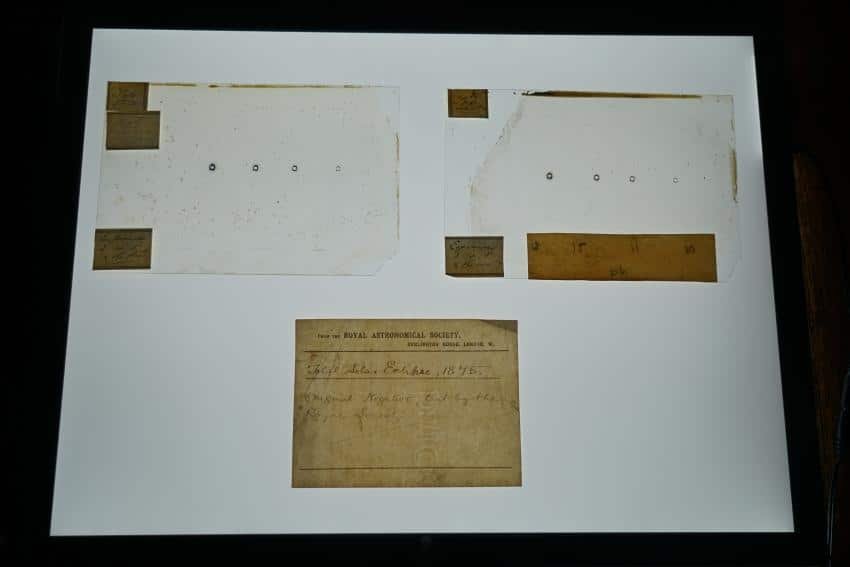
The plates were rediscovered during a cataloguing and repackaging project carried out by Royal Astronomical Society intern Keren Edwards under the supervision of assistant archivist Kate Bond.
Sian Prosser, Librarian and Archivist at the Royal Astronomical Society, said: “I’m grateful that the cataloguing and repackaging project carried out by our intern Keren Edwards under the supervision of Assistant Archivist Kate Bond has led to the rediscovery of these important photographs of the 1875 solar eclipse.
“This shows how retrospective cataloguing unlocks hidden collections.
“The Royal Society and Royal Astronomical Society have long worked together on matters of common interest such as solar research, and we are delighted that these fragile and valuable plates will safely return to their original home.”
READ MORE: ‘Excalibur’ sword discovered in lake after it dries up in heatwave