


Evidence points to the disaster 13,000 years ago.
Researchers believe a fragmented comet exploded over the Earth leading to the disappearance of mammoths, mastodons and most other megafauna.
It also wiped out the Clovis people in North America.
Professor James Kennett of the University of California, Santa Barbara, led the study.
READ MORE: World’s first ever self-charging solar powered motorcycle announced
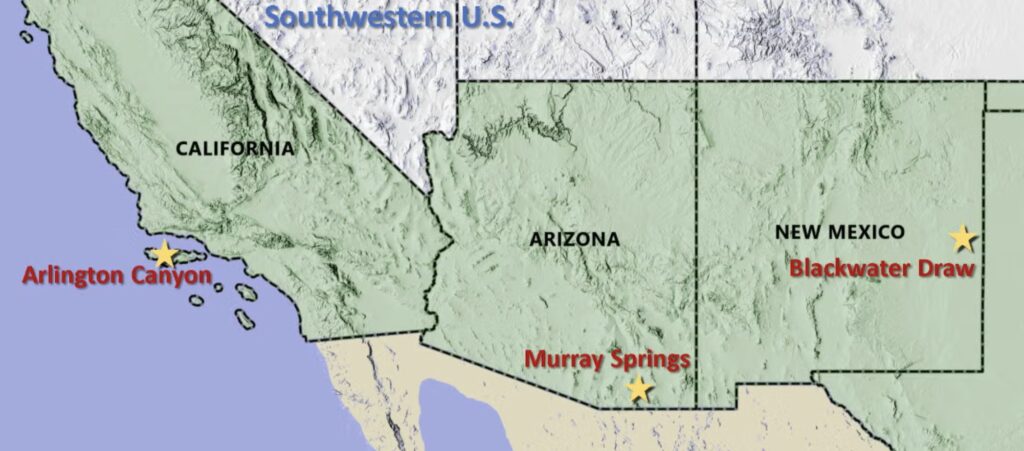
It found shocked quartz – grains of sand deformed by extreme pressures and temperatures – at three classic Clovis culture archaeological sites in the United States.
Kennett believes the telltale formations were created when a comet exploded above ground, sending shockwaves and extreme heat to earth, as reported by What’s The Jam.
“In other words, all hell broke loose,” Kennett said.
“These three sites were classic sites in the discovery and the documentation of the megafaunal extinctions in North America and the disappearance of the Clovis culture.

“There are different levels of shocked quartz.
“The variety of directions, pressures and temperatures that emerge around airbursts would lead to variations in the shock patterns in the quartz.
“There are going to be some very highly shocked grains and some that will be low-shocked.
“That’s what you would expect.”
The presence of shocked quartz is important in the absence of impact craters.
Whereas the asteroid that killed off the dinosaurs 65 million years ago left a crater beneath the Yucatan Peninsula, Mexico, airbursts – cosmic collisions that occur above the Earth’s surface, such as from this proposed fragmented comet – leave little, if any, evidence on the landscape.
According to Kennett’s impact hypothesis, the comet explosion caused widespread burning and the resulting smoke and soot, blocked the sun, leading to an “impact winter.”
The disappearance of the megafauna and the vanishing of the Clovis people coincided with the onset of the Younger Dryas cool episode – an abrupt return to near ice-age conditions that lasted for about a thousand years.
Rapid melting of the ice sheets could have helped to further cool the impact zones.
The shock of impact itself, followed by harsh conditions may have contributed to the demise of the megafauna in both North and South America and the disappearance of the Clovis culture.
Other evidence increasingly supports the explosion.
This includes a black mat layer in the sediment at many sites across North America and Europe – indicative of widespread burning.
There are also high concentrations of rare minerals that are common in comets, such as platinum and iridium.
And mineral formations indicative of extremely high temperatures and pressures, such as nanodiamonds and metals and minerals that have melted, cooled and hardened again, including metallic spherules and meltglass.
READ MORE: Brits on the booze in Magaluf force clubs to open earlier as holidaymakers ditch late night partying