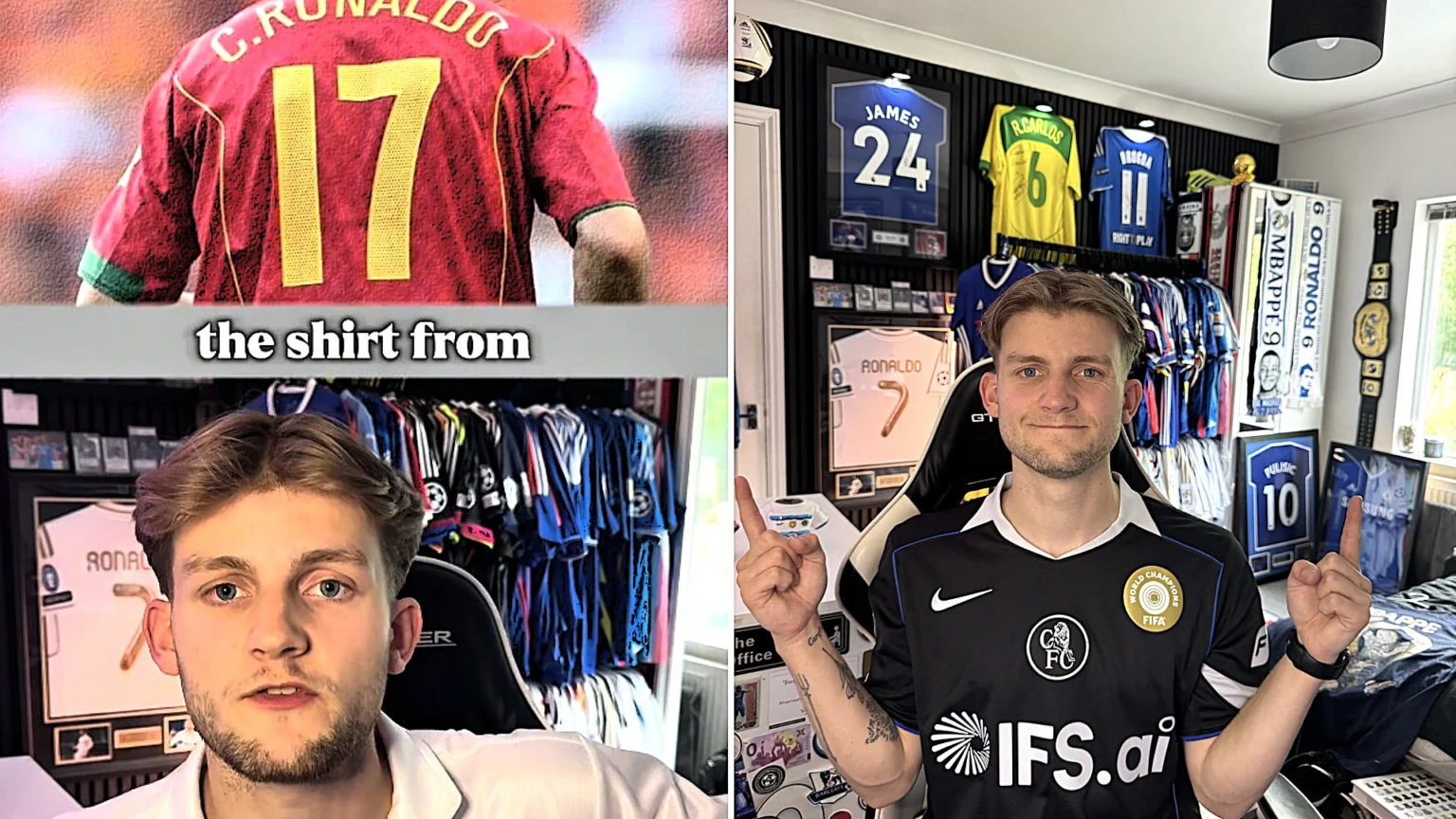


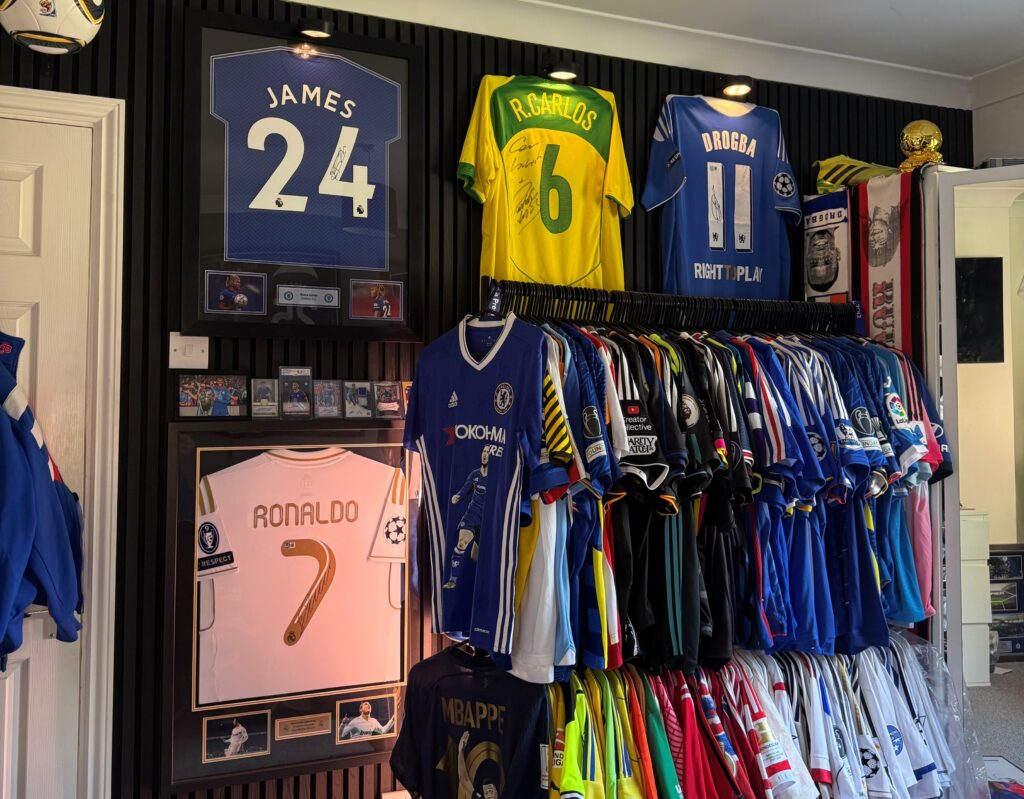
A football mad lad has shown off his huge £30,000 footy shirt collection, including a Gazza England kit worth over £1,000.
Kyle Ashman has urged Brits to trawl through their cupboards with forgotten footy shirts becoming absolute gold mines.
The influencer has a massive collection of over 300 strips that are worth a jaw-dropping amount.
READ MORE: Robot striker destroys ex-World Cup goalie in charity penalty shootout
From Paul Gascoigne’s iconic Italia ’90 England shirt to Lionel Messi’s World Cup-winning Argentina top – the collection covers all bases.
Gazza’s memorable number 19 from the 1990 World Cup is the nation’s most popular kit, as reported by What’s The Jam.

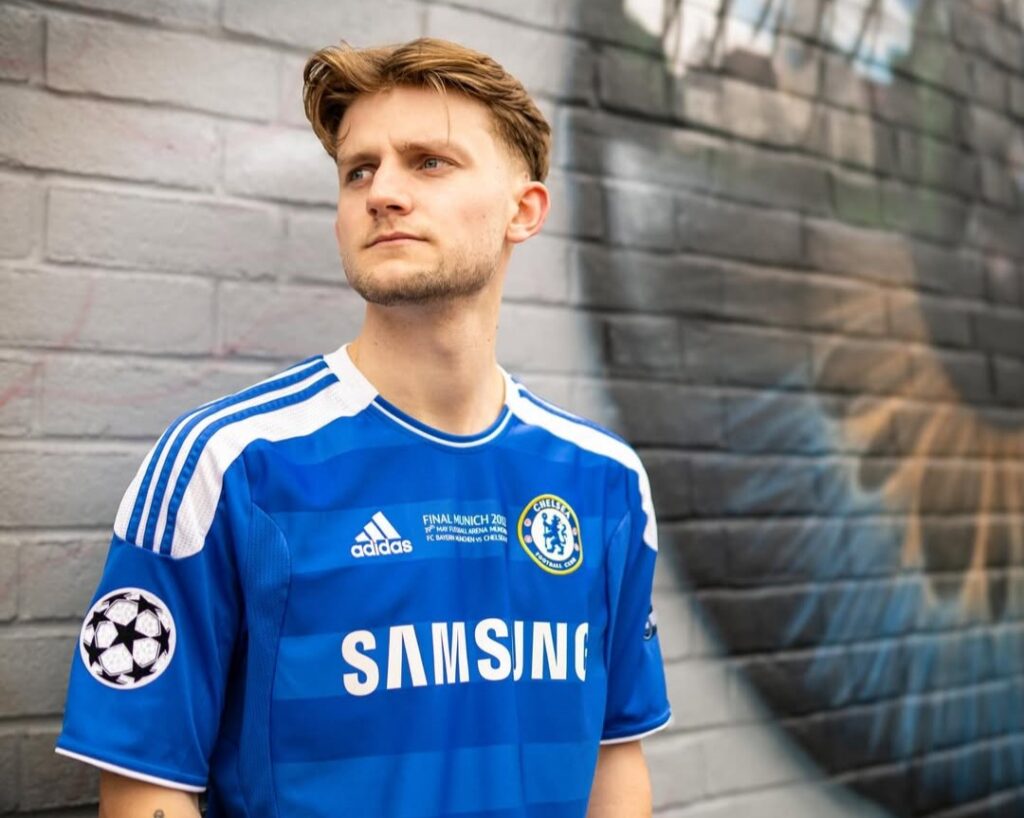
With the globe gripped by football fever Kyle has lifted the lid on the most expensive shirts on the planet – that could be sat in your garage.
He said: “Any football shirt from before the early 2000s in an adult size is worth checking.
“People are often surprised by how much some of these shirts can be worth, especially if they’re in good condition.
“Football shirts have become so much more than just matchday clothing.
“They’re collectibles tied to memories, culture and huge moments in football history.
“Some shirts that used to sit forgotten in wardrobes are now worth serious money.”
Gazza’s iconic kit goes for as much as £1,200 whilst France’s finest Zinedine Zidane’s 1998 World Cup winners kit can be flogged for a whopping £1,500.
The duos kits are only trumped by Messi’s Argentina shirt which can be found for as much as £3,000.

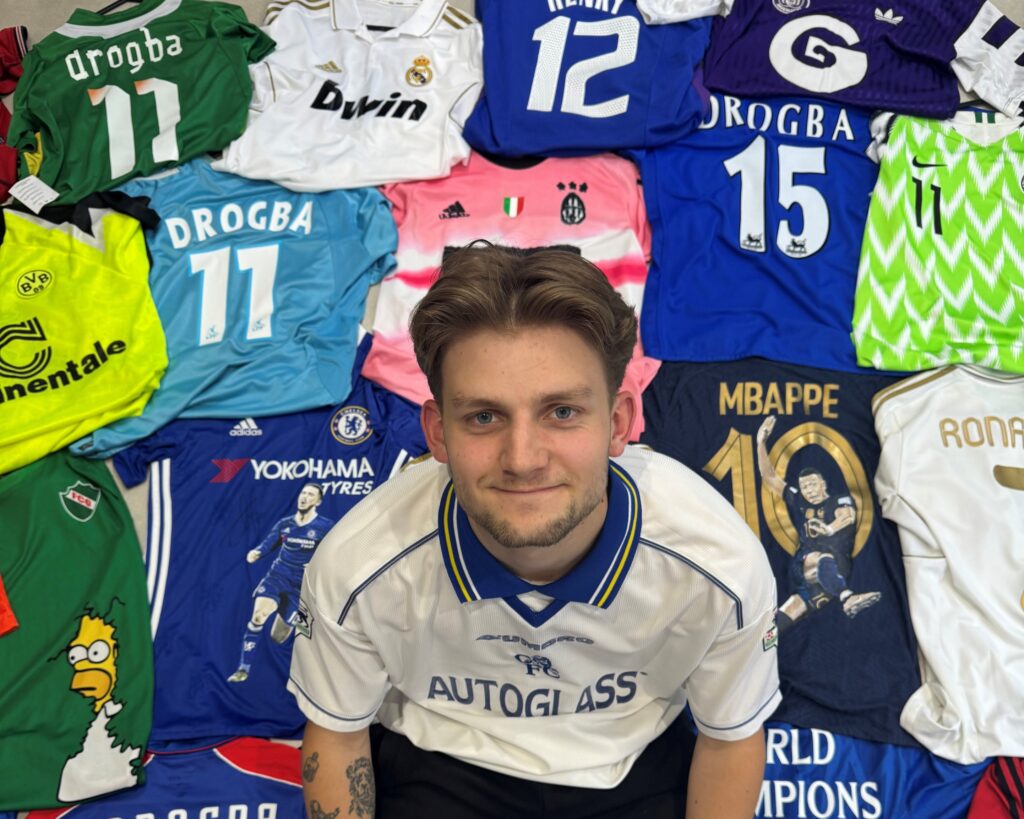
Kyle, who teamed up with Compare the Market, has now revealed the top 10 retro international shirts that could be worth thousands.
- Paul Gascoigne – England 1990 Home Shirt #19 – £250–£1,200
- David Beckham – England 1998 Home Shirt #7 – £100–£900
- David Seaman – England Euro 96 Goalkeeper Shirt #1 – £150–£500
- Gareth Southgate – England 1996 Away Shirt #6 – £150–£600
- Ronaldo Nazário – Brazil 2002 Home Shirt #9 – £300–£1,200
- Cristiano Ronaldo – Portugal 2006 Home Shirt #17 – £250–£900
- Lionel Messi – Argentina 2022 Home Shirt #10 – £500–£3k
- Zinedine Zidane – France 1998 Home Shirt #10 – £400–£1,500
- Jay-Jay Okocha – Nigeria 1998 Home Shirt #10 – £200–£1k
- Davor Šuker – Croatia 1998 Home Shirt #9 – £200–£1k
He added: “Retro shirts have become hugely popular again because they’re tied to football history.
“The designs were unique, the fits were different and many of those styles have come back into fashion.
“Around major tournaments, people also love wearing classic shirts to represent their country.”
Kyle’s most prized possession in his collection is a signed Ruud Gullit Sampdoria away shirt from 1993-95, which has an estimated worth of £600.

As the shirt values continue to sky rocket, Kyle had advised collectors to look into contents insurance.
As the replacement costs for football kit collections could be astronomical – with insurance starting at just £57 per year.
Kyle said: “Some of my shirts are extremely difficult to find today and many would cost at least double what I originally paid for them.
“Replacing a collection like that would be incredibly expensive.”
Amy Rootham, Home Insurance Expert from Compare the Market, said: “As collectibles increase in value, many people may not realise the potential value of their possessions and the importance of declaring them on their contents insurance.
“Retro football shirts can hold both significant financial and sentimental value, so it’s important people regularly review their home contents cover to ensure valuable belongings are properly protected.”
For football fans wanting to check their lofts, garages and wardrobes for potential money makers – here are the top five tips for checking kits.
Check the manufacturer tags carefully:

Brands and kit manufacturers, such as Vintage Umbro, Adidas and Nike tags, differ significantly by era – incorrect fonts or modern-style labels are a major red flag.
Inspect stitching and construction quality:
Original shirts typically feature cleaner, tighter stitching and era-specific construction methods not found in replicas.
Analyse badge and sponsor printing:
Fakes often have slightly off colours, incorrect spacing, or overly glossy prints compared to originals.
Verify sizing and era consistency:
Many counterfeit shirts use modern sizing labels or incorrect formatting not used in the 90s and early 2000s.
Review your insurance cover:
Make sure your home contents insurance reflects the true value of your possessions, not just what they cost originally.
READ MORE: Wheelchair users seen jumping in celebration at team’s World Cup win