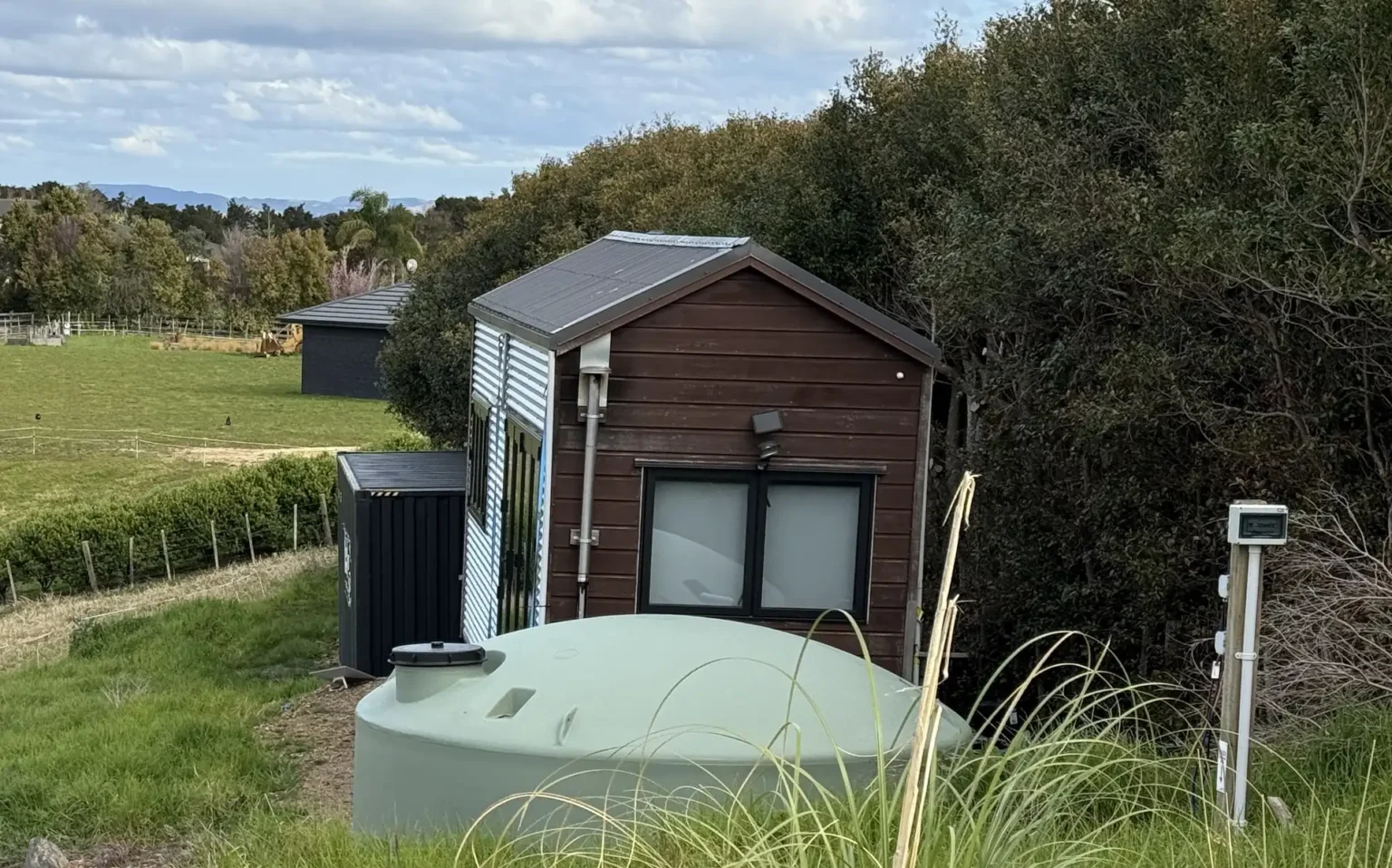


A woman living in a tiny home says it has saved her more than £70,000 on bills and as much as £90,000 overall.
Kasia Morrison has lived in her under 194 sq ft home with a “million-dollar view” for nine years.
The 35-year-old discovered micro homes after buying and selling her first home with her ex-partner, then renting for several years.
READ MORE: Brit couple who purchased former FLOATING HOTEL say it was ‘meant to be’ – now it’s listed for £1m
She says that instead of “pouring money down the drain” to rent, she researched to find a company that would finance a tiny house.
And, nearly a decade on, she couldn’t be happier – despite the rather cramped conditions.
“I sacrificed a flushable toilet, and the bed is more difficult to make in the loft, but other than that I don’t feel like there have been any sacrifices by living tiny,” Kasia, who is based in Whangarei, New Zealand, told What’s The Jam.


“I made the right choice.”
Along with her former partner, the content creator and handcrafted furniture business owner received the shell of the tiny house in December 2016 and worked to fit the interior themselves.
Kasia’s home features a stunning kitchen, which includes cleverly hidden spots for her small washing machine and dishwasher.
The towable house has a bathroom complete with a shower, a composting toilet and a huge range of hidden storage space.
A small set of stairs leads up to a tucked–away loft for Kasia’s sleeping space and looks down on her living space, which includes floor-to-ceiling glass bi-fold doors that offer an incredible view.


She has moved a couple of times throughout the nine years, setting up home on three different pieces of land in New Zealand, before moving to Whangarei in April 2025 for a “fresh start” after her relationship ended.
According to Kasia, one of the biggest differences between living in a tiny house compared to a more conventional home is the cost.
She said: “Once you’ve paid off the tiny house, it’s only the land lease, which is usually £45-£90 ($100-200 ND) per week versus the average of approximately £220-270 ($500-600 NZD) per week for a rental.
“General expenses are less as well, for example power can be free with solar or is usually much lower [than standard bills].
“I worked out that, over the nine year period, if I’d kept paying the same amount for rent over this period I would have paid £70,000 ($160,000 NZD) more than it has cost to live in my tiny home.


“I also saved around £5,700 ($13,000 NZD) on power.
“In reality, with the increase in rental costs over the years, it probably would have been nearly £90,000 ($200,000 NZD) saved.”
Kasia says living in her tiny home has given her the chance to do more of the things she loves, including traveling, eating out, going to events, and investments.
Right now, though, Kasia is focused on building her new business – something she has been able to do due to having extra money not being spent on pricey rent.
She added: “Taking bigger risks like starting a business appealed more because overall living expenses are lower.
“I’ve also been fortunate with the parking spots for my tiny house over the years.

“I have what I like to call a million-dollar view for the price of a tiny home and I’m not alone.
“There are many tiny houses in New Zealand blessed with spectacular views!”
However, the experience has not been without its challenges.
Kasia said: “Fitting out the tiny home while living in it was a little challenging.
“The initial fit out was really budget, the interior aesthetics weren’t great to start off with and the kitchen layout wasn’t optimal.
“As we got more money we ended up renovating and upgrading things.
“The only time I miss being in a normal home is during big storms and high winds.
“It can get a bit rocky.


“I do have ground screws and straps to put up in these storms but it doesn’t stop the tiny home from getting a wiggle going.
“Other than that, I don’t feel like I miss out on anything living in a tiny home.”
Since she first moved in, the tiny home scene has become increasingly popular.
Kasia said: “Back when I first went tiny, people would ask ‘Why would you want to do that?’ and most people didn’t know what they were.
“But it’s very socially accepted now.
“You’re only really limited by your imagination on what you can build into them.
“There are people in New Zealand happily living in them with kids, people into fashion have managed to build walk-in wardrobes, gamers have customised gaming areas, musicians have built-in music studios.

“The possibilities are endless!”
While Kasia’s future is uncertain, she says she would be happy to remain in a micro home for life.
She added: “My [current] tiny house isn’t designed to live through to retirement, however, there are plenty of retirees downsizing into a tiny house to free up money from their assets.
“They tend to go for single level tiny homes or very easily assessable lofts.
“I could easily live small forever if it meant not paying large sums to rent, but I don’t know what the future will bring and I’m not adverse to living in any sized home.”