


A woman with a ‘good’ job and £40,000 deposit saved up has shared the difficulties she faced as a solo buyer – and the solution she has since come up with to help other people amidst a housing crisis.
After being evicted from her rental property when her landlord sold the property, Philly Garrett was eager to get on the property ladder herself – and felt in a good position to do so.
But despite the 33-year-old’s preparations and £55,000 salary, she found it “almost impossible” to purchase even a one-bedroom flat in Zones 5 and 6 of London.
READ MORE: Family with three kids arrive to find new home abroad is a SCAM
“It felt deflating to have saved a sizeable deposit, and not be able to afford a home in an area that felt safe near my work,” Philly, who at the time worked as head of brand marketing for a collective of fashion brands, told What’s The Jam.
“I had saved over £40,000 and had a stable career.”


On the outskirts of London, she could only reasonably look at tiny properties worth up to £300,000 – but found that in Reading, she could afford a three-bedroom home with a garden for less.
Philly said: “It was a no-brainer to move out.
“A lot of people said I was ‘brave’ for moving to a new area where I didn’t know anyone, but logically I had to buy and live somewhere as nowhere let me rent with a big dog and I wanted to pay into my own assets.”
She was eventually able to purchase her home in Reading in 2020 for £267,000, renovating it and now enjoying an increased value, with the house now worth £415,000.
Philly designed the space with co-living in mind, knowing she would have two live-in lodgers.
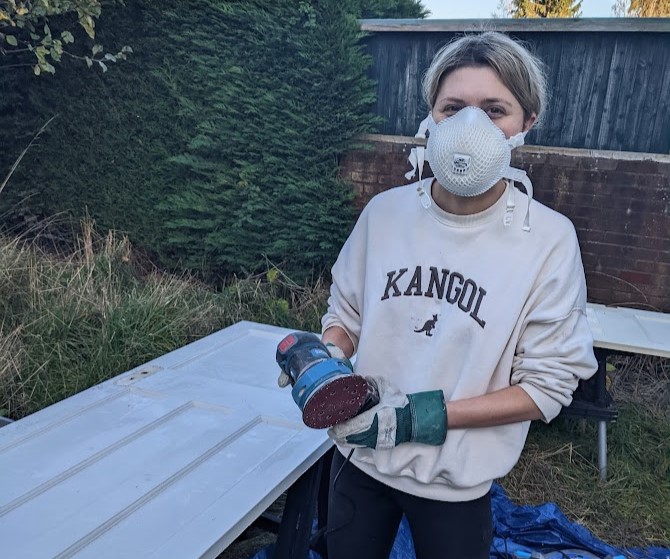
She said: “I ripped out the carpets and put hard flooring in the rented bedrooms, so it’s easy to keep clean.
“When I renovated the kitchen, I included plenty of cupboards so everyone has their own designated space.
“Designated storage in the bathroom is a simple yet effective way to keep the space clear.
“Revenue from renting rooms has far exceeded total costs of renovating my home.
“Having lived in house shares in London rentals for seven years and at uni beforehand, it was an easy adjustment as co-living is normalised in the rental world.

“In fact, this now means I have complete choice of lodger, and I keep my house homely because I own it.
“Co-living really suits my life stage of being a single female in my 30s.”
“When I have a family one day or young children, I wouldn’t use the rooms for lodgers, but if that time comes, I’ll be in a better financial position having bought, thanks to house appreciation and paying down the mortgage.
“Buying a house was the best financial decision I have ever made.”
But the experience of struggling to get on the ladder stuck with Philly, and after 10 years working in the beauty industry, she decided to tackle the issue head-on.
With an idea of a new ‘solution to the housing crisis’, when Philly lost her job in 2024, which by then was banking her a £75,000 salary, she decided it was time to launch Cucoon.
The company is an online platform helping single professionals co-buy their first home together, with the right legal and practical safeguards in place.
It is supported by Virgin StartUp’s Momentum cohort – an accelerator programme supporting dyslexic entrepreneurs.

Philly said: “It was inspired by my friends who co-bought together successfully, and the fact that co-living is very normal in the rental world, with the likes of Spareroom, which I previously used.
“I wanted people to have the opportunity to make home-buying choices that set themselves up for the future.
“Many people are choosing to stay single for longer and Cucoon offers a solution for those who are ready to buy without waiting for traditional milestones such as marriage or inheritance.
“If a service like this existed at the time, I would have used it to buy a bigger home in an area of London that felt safe.
“I didn’t know anyone who was able to buy single, especially without family help, and I don’t believe home ownership and ability to build wealth should be dependent on relationship status.
“I thought there had to be a solution to the housing crisis, and this solves the biggest barrier of affordability.”