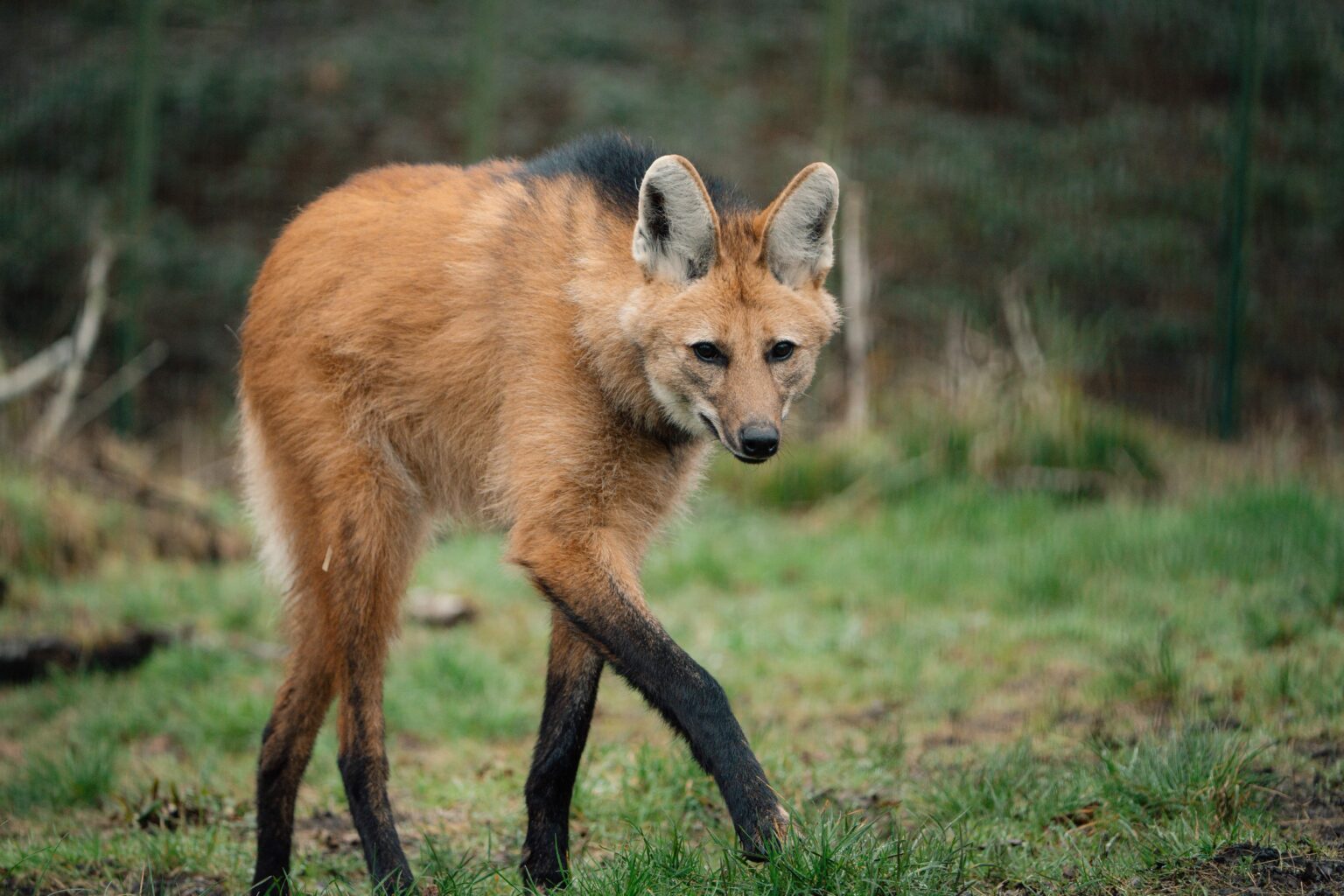


A rare “wolf” species that isn’t actually a wolf – and looks nothing like one – has made its UK safari park debut after spending six months living secretly behind the scenes.
Three maned wolves, sisters Fleur, Arabella and Luna, have gone on public display for the first time at a UK safari park, where they share a South American-themed habitat with capybaras and Brazilian tapirs.
Despite their name, maned wolves are not true wolves.
READ MORE: Baby gorilla born in one of fewer than a dozen C-sections ever performed on species
Native to South America, the unusual animals are more fox-like in appearance and are best known for their extraordinarily long, stilt-like legs.
The towering limbs allow them to peer over the tall grasslands they call home in the wild, giving them one of the most distinctive looks in the animal kingdom.
They also have large ears to help detect prey and a dark mane running along their backs that rises when they feel threatened.


Maned wolves are omnivores, feeding on everything from fruit and insects to fish and small amounts of meat.
Lead keeper at Longleat Safari Park, Wiltshire, Eloïse Kilbane said the three sisters had already spent months settling into their new surroundings before being unveiled to visitors.
“Fleur, Arabella and Luna have already been living at the park for six months whilst we prepared their new home, making it even more exciting now our guests will be able to see them,” she told creatorzine.com.
The arrival comes at a crucial time for the species.
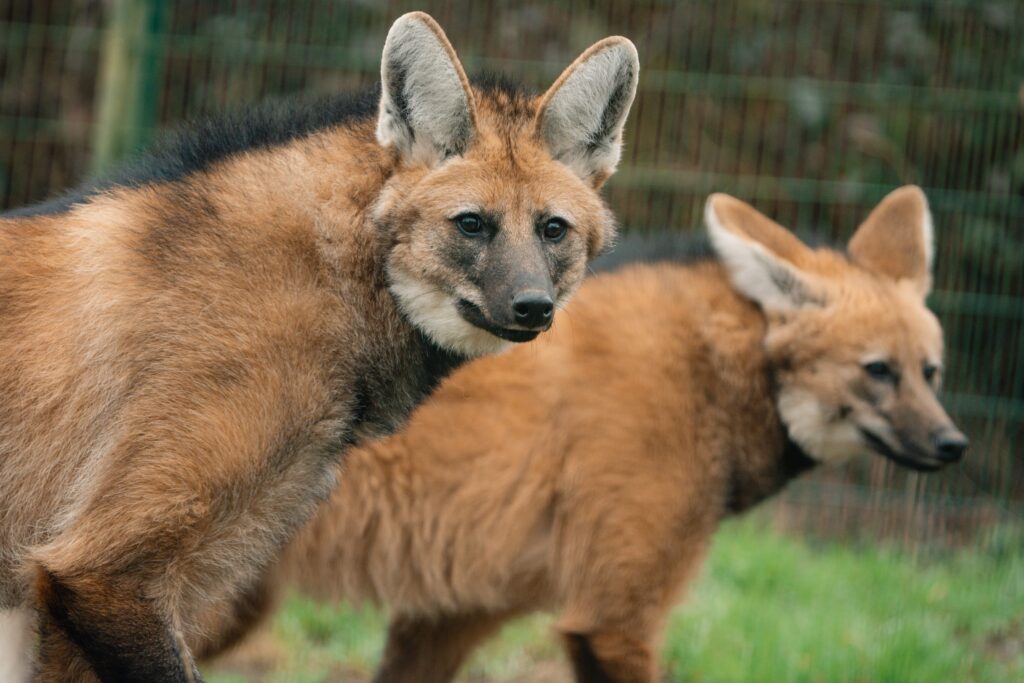
Conservationists estimate fewer than 17,000 maned wolves remain in the wild, with numbers falling by 20% in just 15 years due to habitat loss, road accidents, disease and conflict with humans.
The species is currently listed as Near Threatened by the International Union for Conservation of Nature.
Ms Kilbane said: “There are fewer than 17,000 maned wolves left in the wild and the species has seen a 20% reduction in just 15 years.
“This makes the three sisters incredibly important, even though we don’t plan to breed them currently.”
In the wild, maned wolves are solitary animals that are most active at dawn and dusk.
They are particularly fond of a South American fruit known as the “wolf apple” – a tomato-like fruit that forms a staple part of their diet.
The species can live for up to 17 years.
Kilbane added: “It’s always a pleasure to learn and care for a new species, and the maned wolves feel even more special as they are the second new species to join the Drive-Through Safari after our African wild dogs.”
READ MORE: Experts stunned after finding mad mouse had given birth in bird feeder