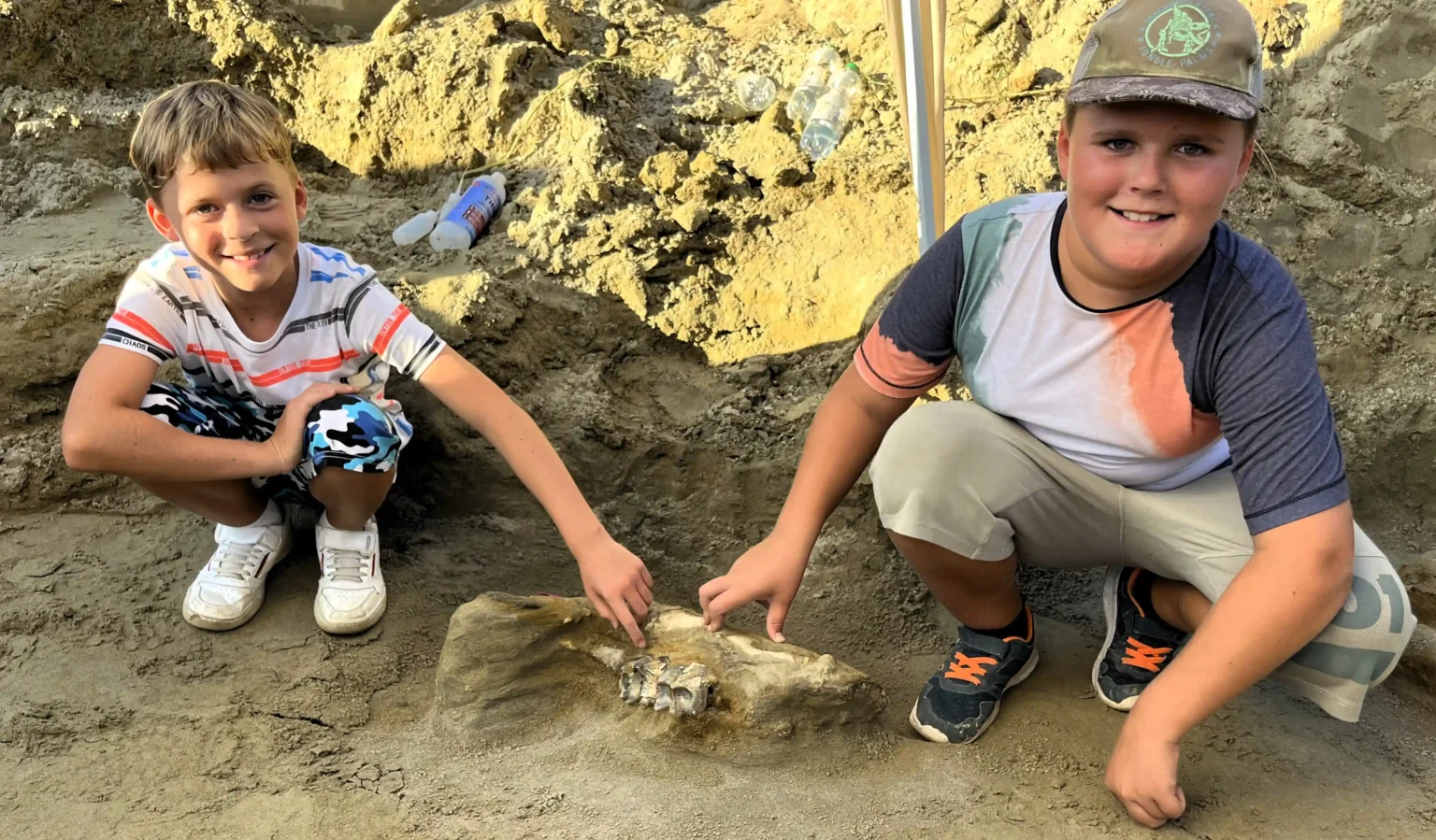


Two prehistoric giant elephants have been named after the two young lads who discovered them in a pit.
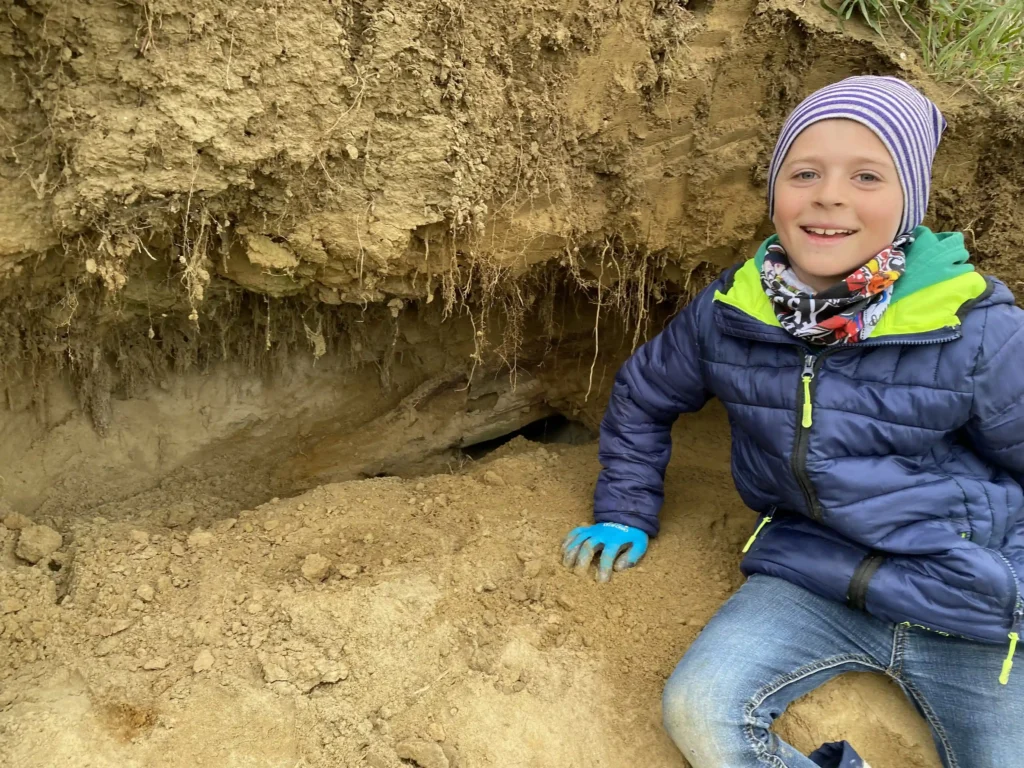
Peter Kapustin and his sons Alexander, 10, and nine-year-old Constantin often go fossil hunting at a local gravel pit.
They noticed a bone sticking out of the ground close to an animal burrow – which scientists discovered was part of the entire skeleton of two prehistoric elephants.
READ MORE: Runaway sheep caught by cops and put in back of police car
And now, the children have the pleasure of being the animals’ namesakes.
The elephants, which are being displayed at a museum, have been named ‘Big Alex’ and ‘Little Consti’ after the brothers who discovered them.

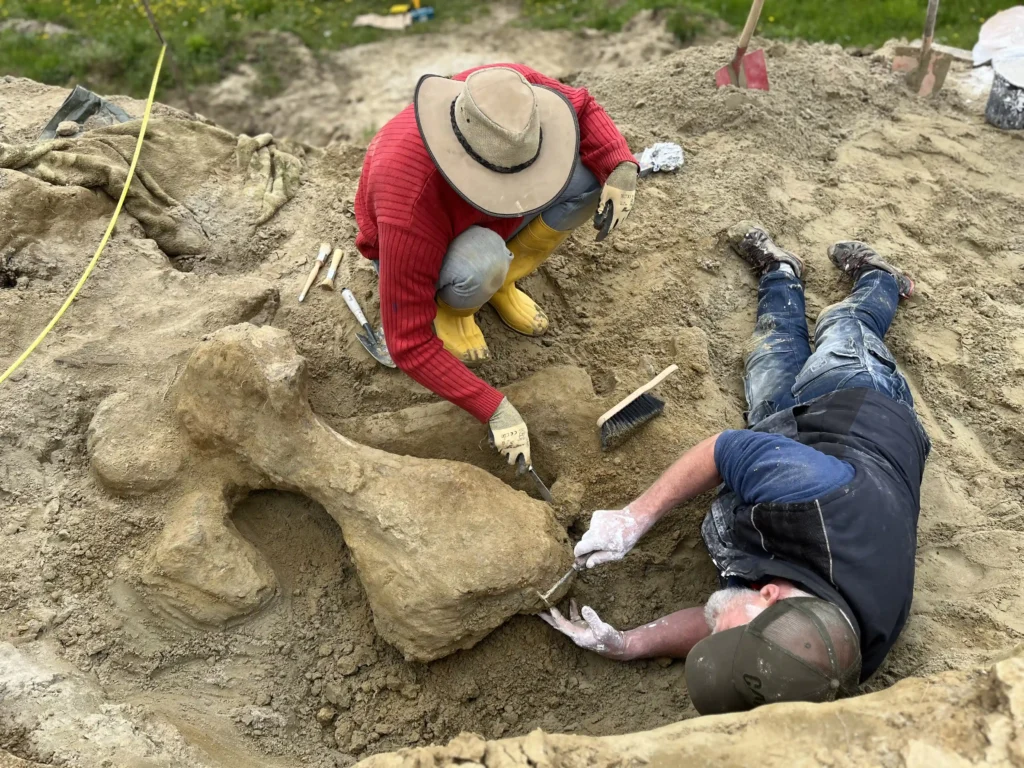
The skull of a prehistoric elephant was first found at the gravel pit in Erding, near Munich, back in 2004, causing budding palaeontologists to flock to the site.
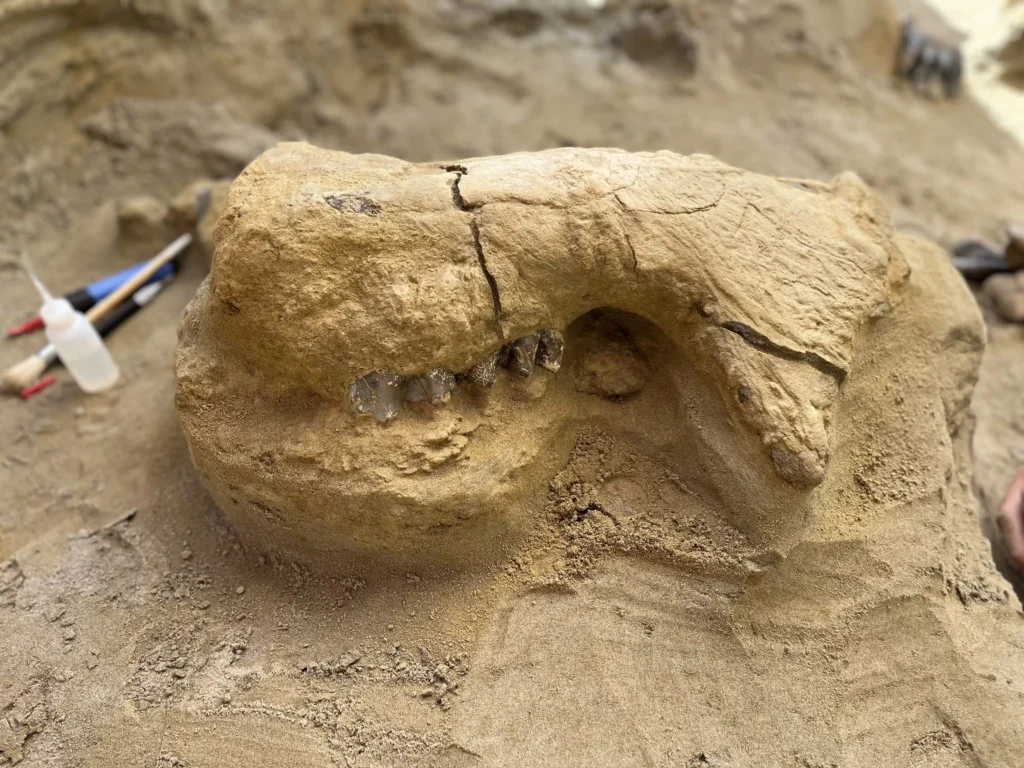
But in more recent years, the pit yielded few results – until the brothers stumbled upon their treasure in April last year.
Alexander said: “Unfortunately, when we uncovered it, a big rock fell on it and dad was afraid the bone was broken but luckily it wasn’t.”

Peter, the curator at the Prehistoric Museum in Taufkirchen, Germany, immediately recognised the bone that the kids found as a rib.
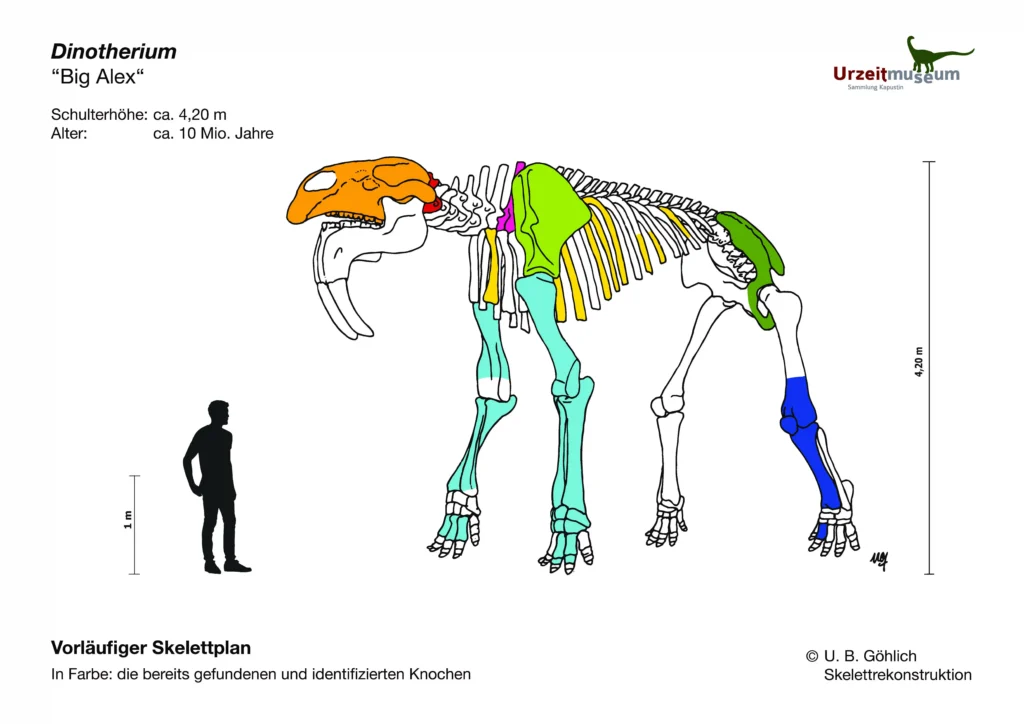
The fossils were confirmed to belong to the extinct species Deinotherium giganteum, a giant elephant that roamed the planet about 10 million years ago.

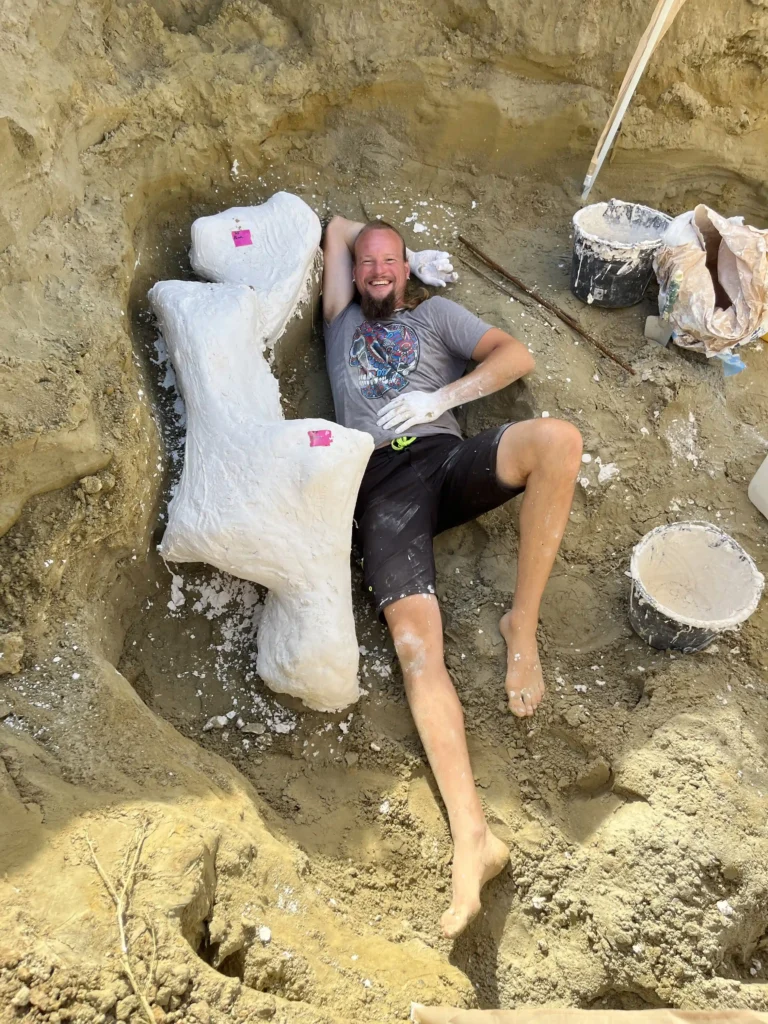
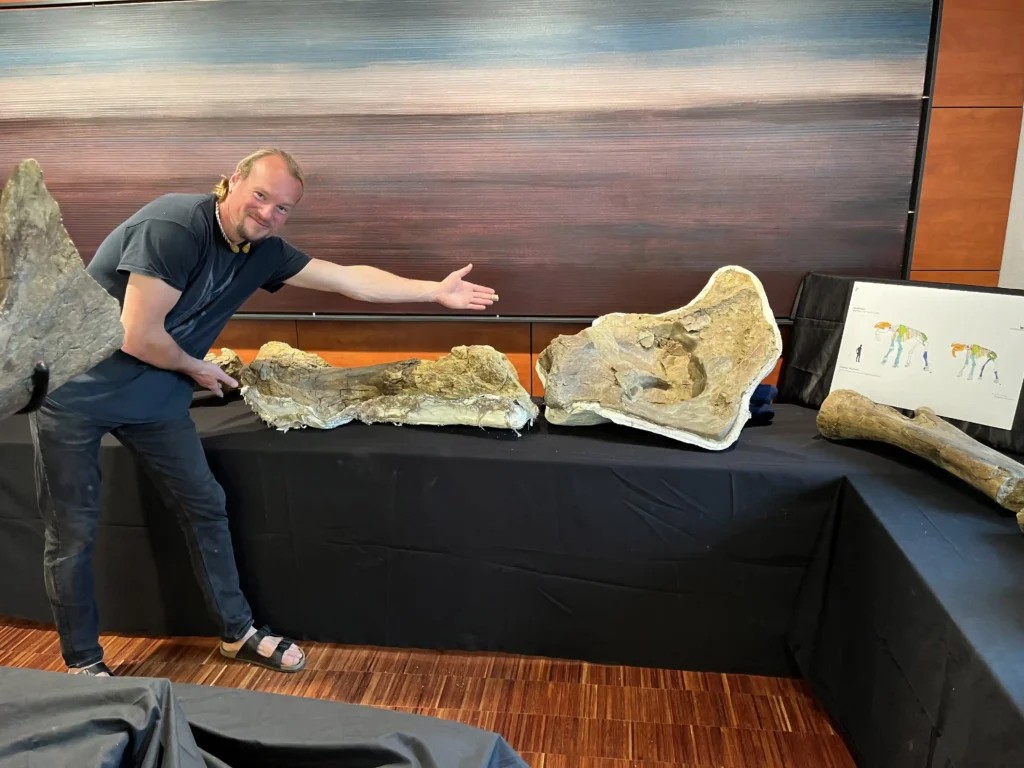
In the past year since the boy’s discovery, scientists have uncovered another 120 bones at the at the pit.
Big Alex, the larger elephant, was over 13 feet tall at shoulder height, but wasn’t even fully grown when it passed away.
The elephant’s skeleton included the skull unearthed in the pit 20 years ago.
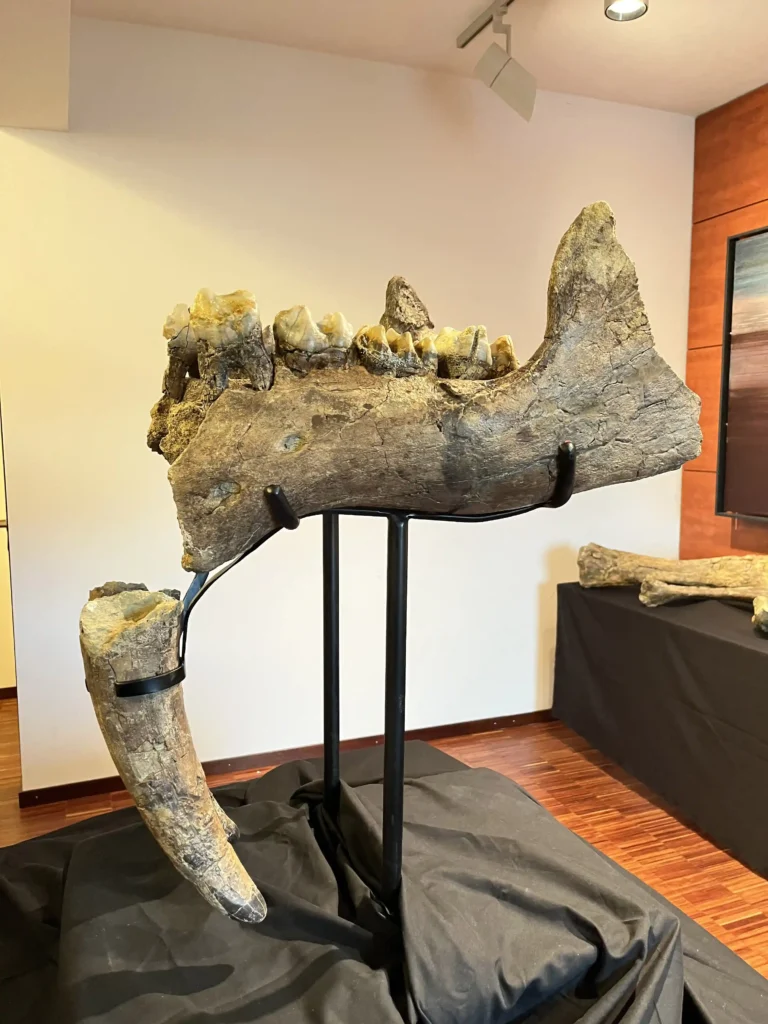
Little Consti was younger at the time of its death – but was already 10 feet tall at the shoulder.
Overall, the smaller elephant’s skeleton was better preserved.
Peter told What’s the Jam: “Their tusks came out of their lower jaw, which is quite different from what we know about elephants living today.”
Based on partial skeletons found in Europe, Asia and Africa, Deinotherium giganteum elephants went extinct about a million years ago.
They could reach heights of up to 16 feet at their shoulders when fully grown.
READ MORE: Crying bear cub is rescued from fishing net as mother bear watches on