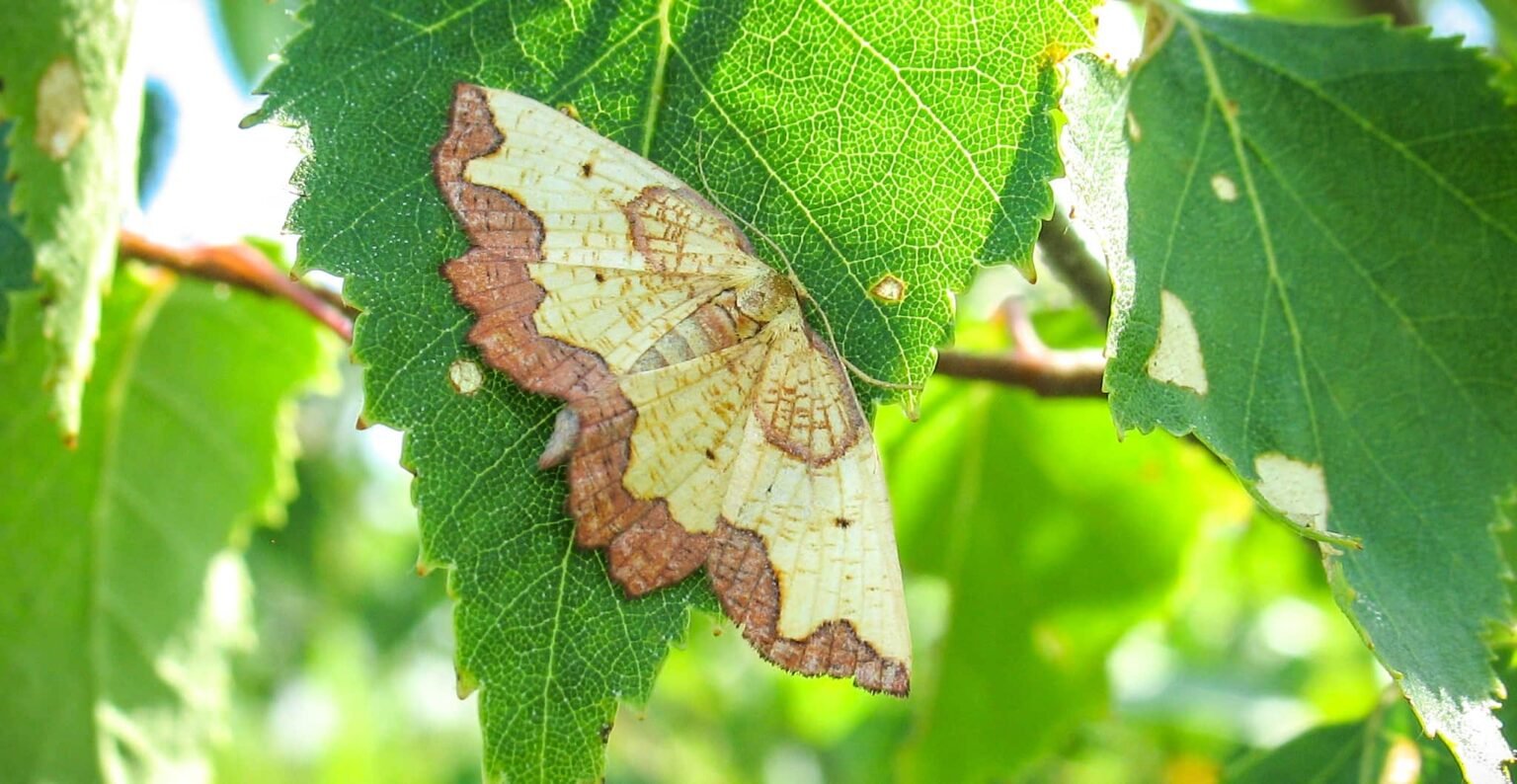


An ultra-rare “custard and chocolate” moth has been discovered at a British country estate – 74 years after it was last seen there.
The endangered Dark Bordered Beauty was found at the National Trust’s Wallington estate in Northumberland, where there had been no recorded sighting since 1952.
Ecologist Dr Dave Wainwright had spent more than two decades searching for another English colony of the rare species.
READ MORE: Rare SILVER bear cub spotted in national park
But when he returned to Wallington with colleagues, it took just 10 minutes to spot the first moth.
He described the discovery as one of the highlights of his career.
“We rocked up on site and within a few minutes we found one,” Dr Wainwright, Butterfly Conservation’s head of conservation in England, told Whats The Jam.


“Overwhelmingly, it was just a feeling of relief that we weren’t fighting the fight at one site anymore.”
The striking day-flying moth has lemon-yellow wings surrounded by a deep chestnut border – earning it comparisons to custard and chocolate.
It was once widespread across northern England and Scotland but has suffered a dramatic decline due to habitat loss.
For decades, Strensall Common in Yorkshire was its only known English stronghold.
But numbers there have plummeted from hundreds of moths 20 years ago to barely double figures last year.
A wildfire also tore through a large section of the nature reserve in May, putting further pressure on the fragile colony.


The discovery at Wallington means England now has a second known population, raising fresh hopes for the species’ survival.
Dr Wainwright has been hunting for new colonies since joining Butterfly Conservation in 2004.
He visited Wallington that year but found nothing, with the heavily grazed land then unsuitable for the moth.
He returned on 16 July with project officer Charlotte Rankin and National Trust rangers as part of a £300,000 project looking at how climate change and human activity affect rare species.
This time, the landscape had been transformed.


He said: “The site looked a hell of a lot better – really lush vegetation with lots of wildflowers.
“It only took 10 minutes to find the first one, then we all started picking them up quite regularly.
“I think the others were excited, but perhaps not as excited as I was.”
Dark Bordered Beauty caterpillars feed on just two plants – Aspen and Creeping Willow – leaving the species particularly vulnerable to changes in its habitat.
The National Trust has worked with tenant farmer Fiona Goodfellow to reduce livestock grazing and restore peatland at Wallington, allowing the plants to flourish.
The work is part of Wilder Wallington, a nature-recovery scheme spanning the 20-square-mile estate.


It aims to create woodlands and hedgerows, restore wetlands and encourage nature-friendly farming.
Wallington ranger Emily Johnson said: “We couldn’t be more excited to find that Wallington is a stronghold for such a rare species.
“We have been working hard to manage the land better for nature, and it seems to be paying off.”
The team has already recorded 130 moth species across the estate this year, while the endangered Large Heath butterfly has also recently returned to an area of bog on the same farm.
Butterfly Conservation now hopes to expand the Dark Bordered Beauty’s potential habitat at Wallington.


It is also working with Yorkshire Wildlife Trust to protect the remaining population at Strensall Common and plans to trial a captive breeding programme.
Crucially, the newly discovered habitat looks different from the conditions experts previously thought the moth needed to survive.
Dr Wainwright hopes the breakthrough could help conservationists uncover more hidden colonies elsewhere.
He added: “Now it feels like there could be other colonies out there waiting to be discovered, which would be brilliant.
“If this inspires other people to come out and join the search, that’s even better.”
READ MORE: Rare exotic bird sees twitchers flock to remote British island